Director's Cut
A Child of My Own Is the Documentary You Can't Look Away From
Filmmaker Maite Alberdi on four years inside a story with no easy answers.
By Jessica Oliva
Sept. 30, 2026
The year was 2009. Eleonor Alejandra Marín Mendoza, a 26-year-old hospital employee, found herself at the center of one of Mexico’s most unusual — and surreal — criminal cases. After faking a pregnancy and deceiving her and her husband’s families for months, she was arrested for allegedly stealing a newborn baby from one of Mexico City’s largest public hospitals, using a gift bag. Her transgression, a desperate attempt to become a mother, made headlines across the country. Even though she maintained that she’d reached an agreement with the baby’s mother, Alejandra was sentenced to 13 years in prison for kidnapping.
Thirteen years would pass before Chilean filmmaker Maite Alberdi would meet Alejandra, a time that proved pivotal for the story they would eventually tell. Around 2009, the director began capturing the first images of Tea time (La once), the documentary film that brought her international acclaim and established the intimate, observational style that has come to define her work. Alberdi was recognized as one of the leading voices in contemporary Latin American cinema: The Mole Agent, which earned her an Academy Award nomination for Best Documentary Feature Film in 2021, a first for any Chilean woman filmmaker, proved a turning point, expanding her international profile. Another Oscar nomination followed two years later for her documentary The Eternal Memory, which follows a couple quietly enduring the advance of Alzheimer’s disease. Yet, even at her busiest moments, Alberdi has never lost her instinct for recognizing compelling stories wherever they emerge.
Alberdi met Alejandra, then 39, in February 2022 while researching another project at Santa Martha Acatitla women's prison in Mexico City. The story of that young woman, who had crossed every imaginable boundary in her determination to become a mother, immediately caught her attention. “No matter what project I’m working on, or what stage of my career I’m in, I always try to stay attentive to what’s happening around me and connect with stories that truly speak to me,” Alberdi says.
Alberdi saw in Alejandra’s case something beyond the headlines that had dominated news headlines: an opportunity to explore the expectations, guilt, and social pressures surrounding motherhood. “In Alejandra, I found someone every woman could relate to,” she recalls. “Her story raised questions we’ve all asked ourselves: about the desire to become a mother, how deeply personal that desire is, and how profoundly it is shaped by outside expectations. That became the film’s central concern and the reason I connected with her. It was always about something far greater than the extraordinary circumstances of her story.”
Finding a remarkable story does not necessarily equal a film. As compelling as Alejandra’s case was, one obstacle became immediately apparent to Alberdi. Everything Alejandra described had already happened: her miscarriages, the pressure from her husband’s family, the fabricated pregnancy, and the alleged kidnapping all belonged to the past, a place fundamentally inaccessible to documentary cameras, even when archival footage exists. And in this instance, there wasn’t a lot of it.
Alberdi’s films tend to capture lives unfolding in the present, whether following an elderly man working undercover inside a nursing home in The Mole Agent or a beach lifeguard through the routines of his job in The Lifeguard (El Salvavidas). Although she knew that approach would not work here, as Alejandra was serving the final months of her prison sentence, there would at least still be time to accompany and observe her as she made her return to freedom. But the challenge lay elsewhere: How could the film convey the emotional depth of Alejandra’s past?
“A film begins for me when I discover a cinematic idea, not simply a story,” Alberdi explains. “With this project, I only realized I had a film when I understood that Alejandra’s past, her own version of it, could be told through an idea of fantasy, by placing a constructed world in dialogue with concrete reality.”
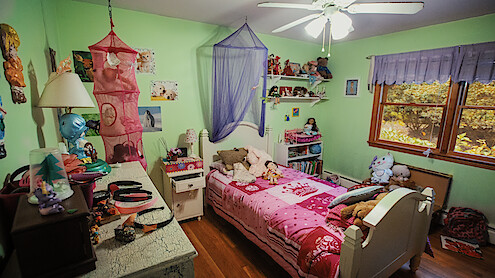
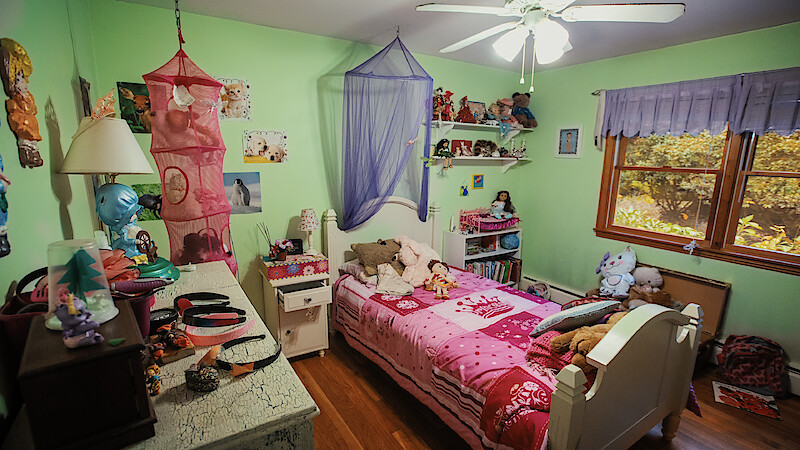
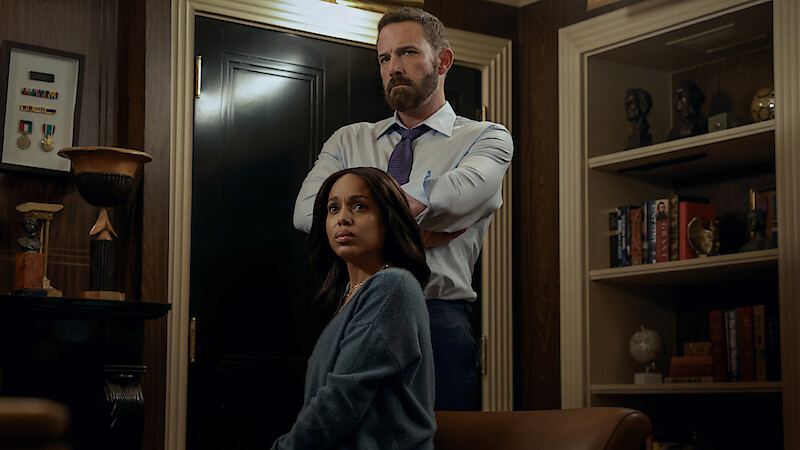
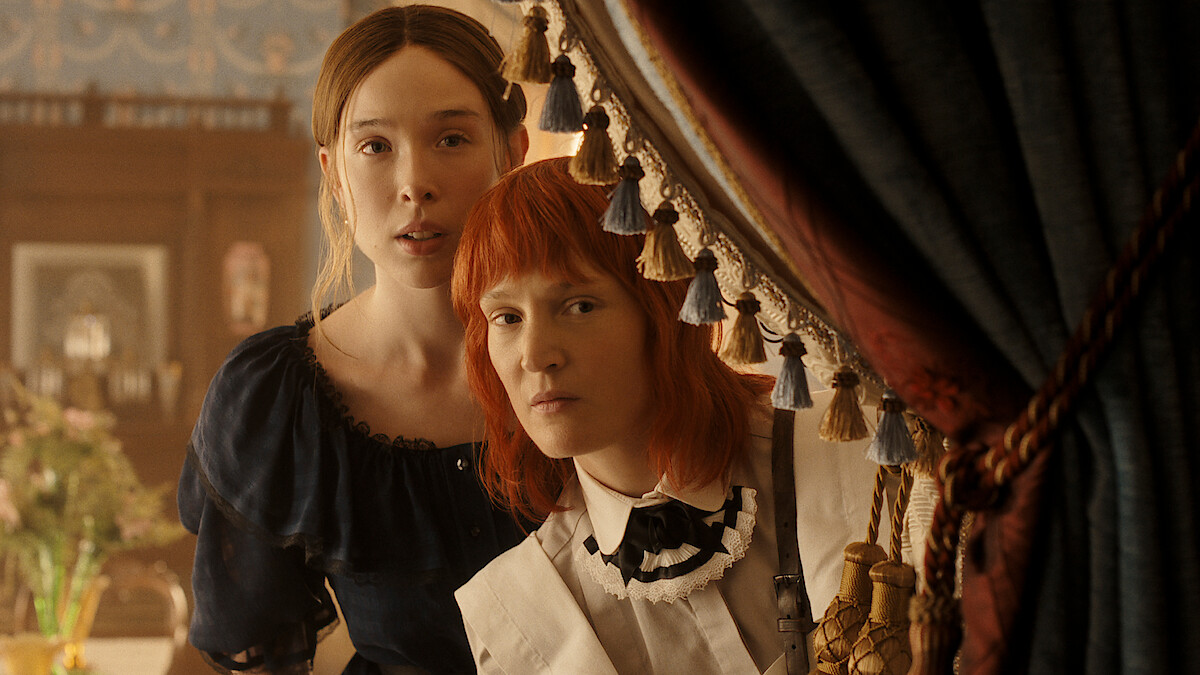
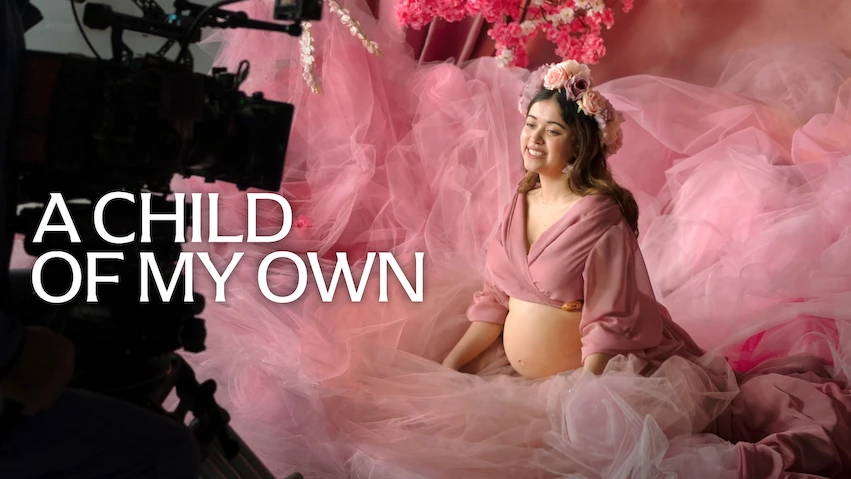
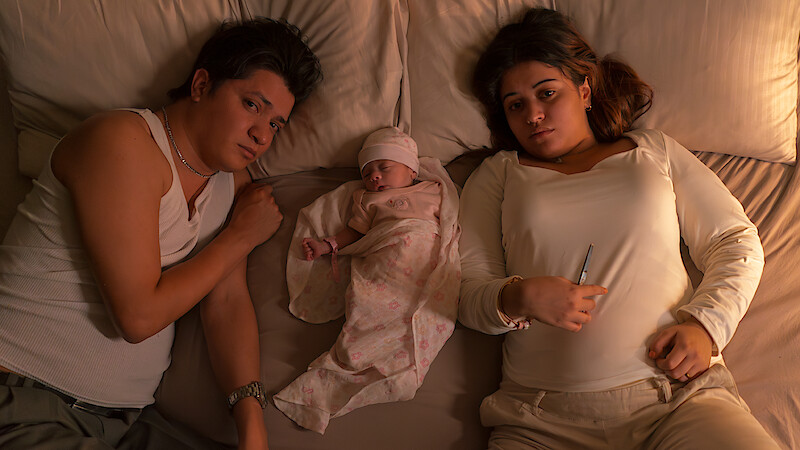
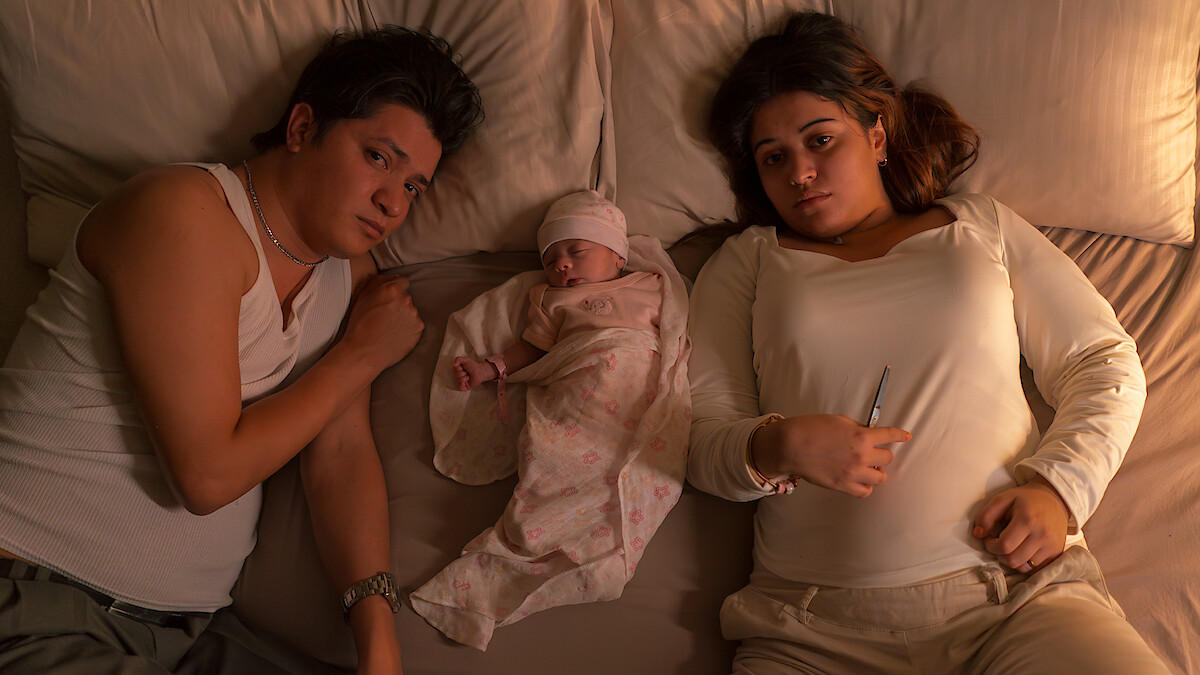
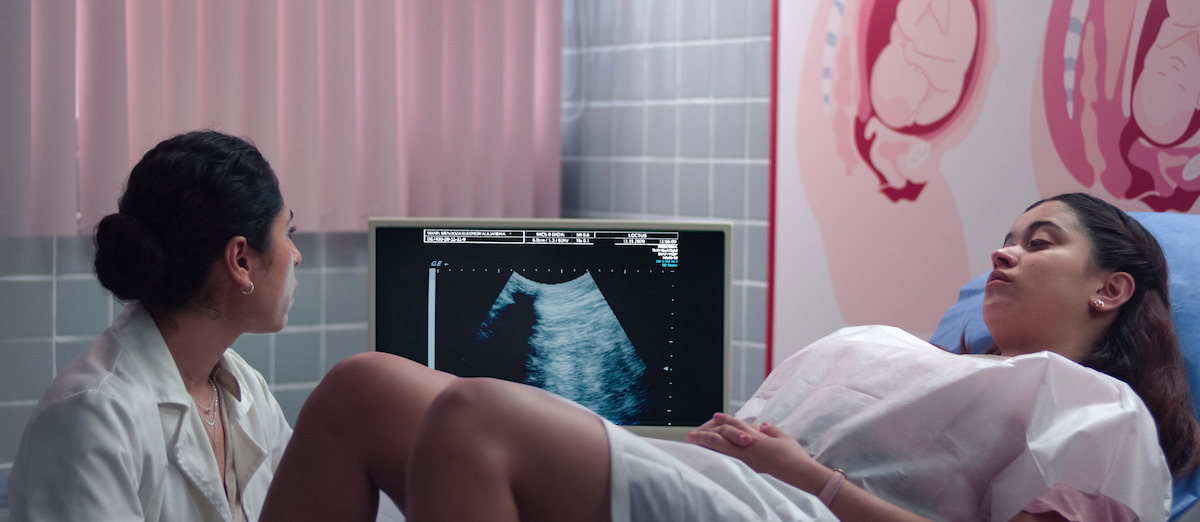
That realization became the film’s defining structure, with A Child of My Own unfolding in two distinct halves. The first is immersed in a carefully constructed retelling of Alejandra’s account of events, inviting viewers to experience the story entirely from her perspective. In this film within a film, Mexican actors Ana Celeste and Armando Espitia portray Alejandra and her husband, Arturo, a young couple unable to conceive despite years of trying. Their domestic life resembles that of an ordinary middle-class Mexican family, yet the world they inhabit feels subtly distorted: a projection shaped by the protagonist’s imagination, at times extravagant and dreamlike, as though it had emerged directly from Alejandra’s mind.
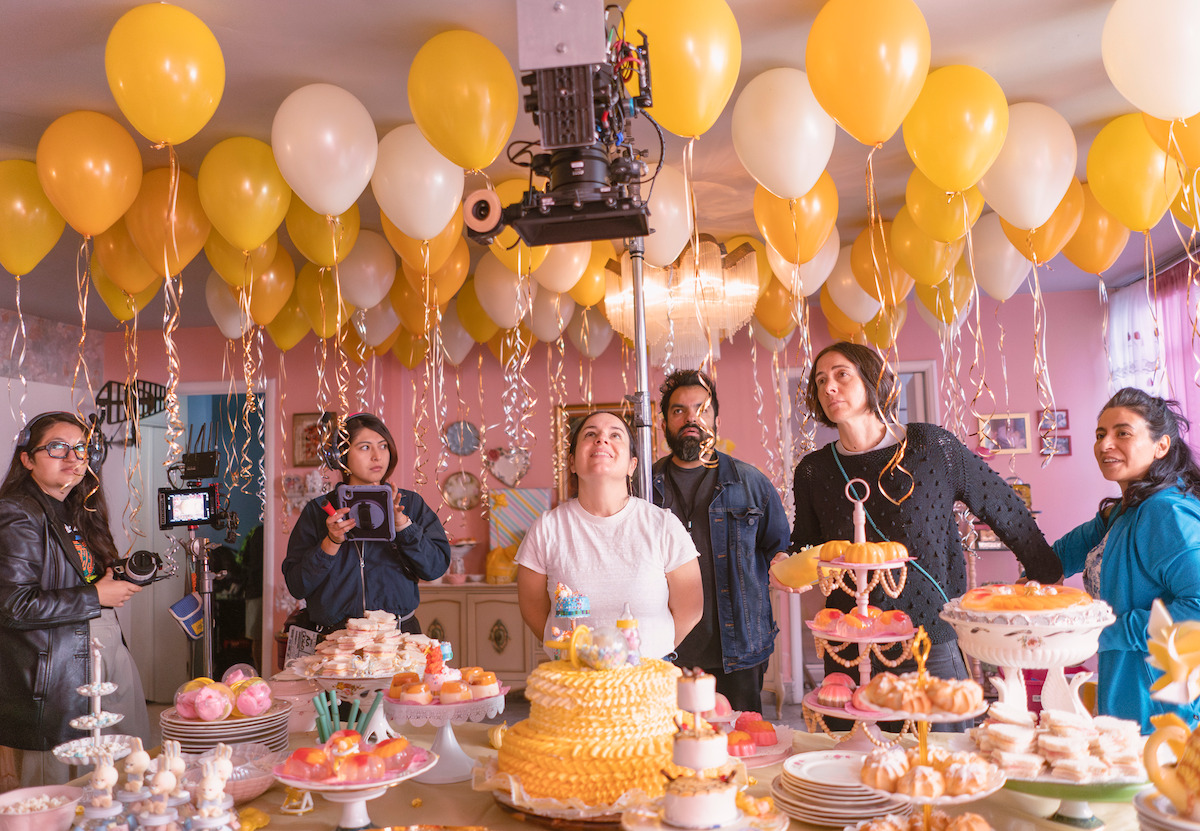
“To me, it was never simply a reenactment,” says Alberdi, who collaborated with Chilean production designer Estefanía Larraín (No, A Fantastic Woman) to bring this uncanny reality to life. “When we think of reenactments in documentaries, we usually think of reconstructing facts. But what we were staging here was a point of view. Without experiencing events through Alejandra’s eyes, it would have been impossible to connect with her. We would have fallen back on the prejudices surrounding the case, on the way the media told the story, instead of the way she lived it. Every artistic decision was about imagining her reality. I think it’s wonderful that documentary filmmaking now allows for these kinds of formal freedoms.”
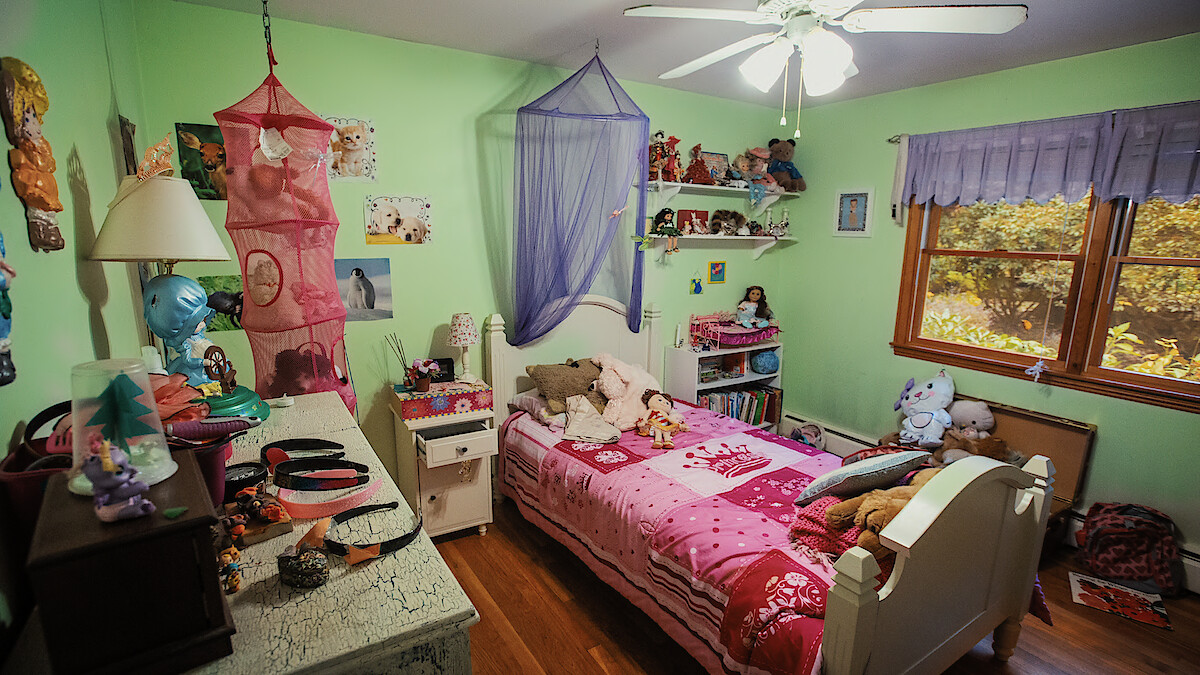
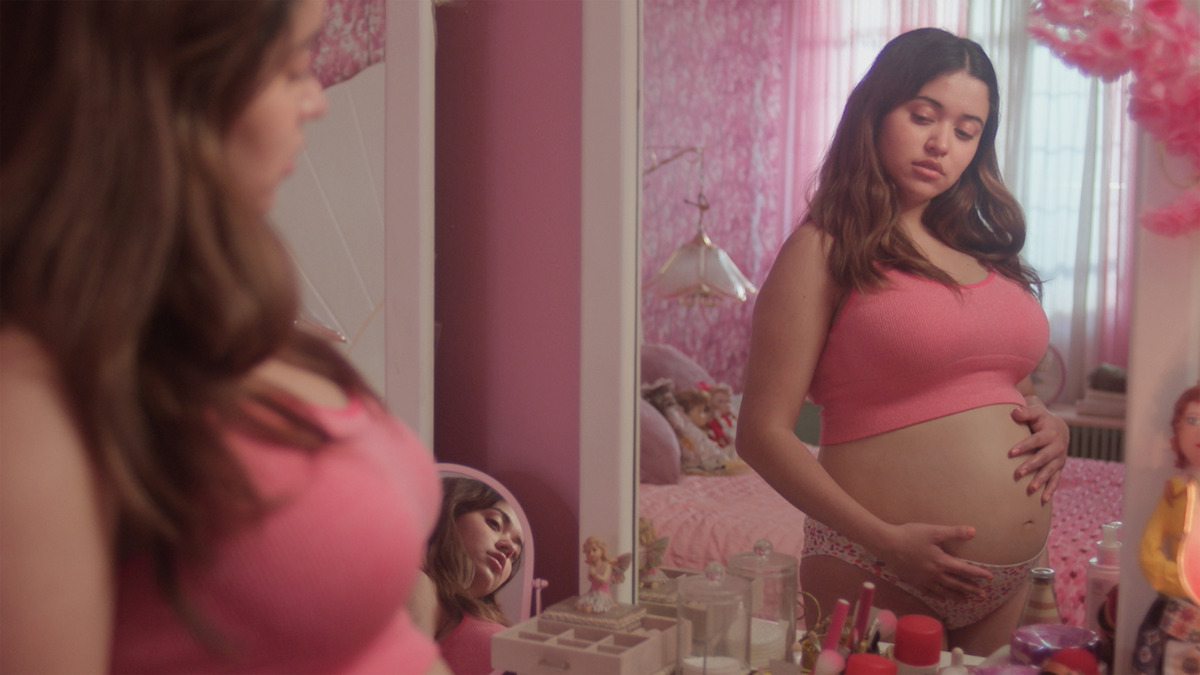
Drawn entirely from Alejandra’s recollections, these fictional sequences, which unfold in a world washed in shades of pink, follow her emotional pursuit of motherhood as she navigates social expectations and the relentless judgment of her traditional in-laws. After repeated cycles of hope followed by miscarriage, she convinces herself that her body still carries the baby she longs for.
Pink is the color of fantasy, of fairy tales and princesses, but it also evokes the conservative ideals surrounding femininity and motherhood. “There is a whole visual imagery built around motherhood that became very important to us,” Alberdi says. “We looked at everything that culture, advertising, and marketing tell us motherhood should look like. It’s an imaginary place with its own colors and symbols, an entire industry. [It creates] an idealized vision of motherhood that can ultimately become destructive for women.”
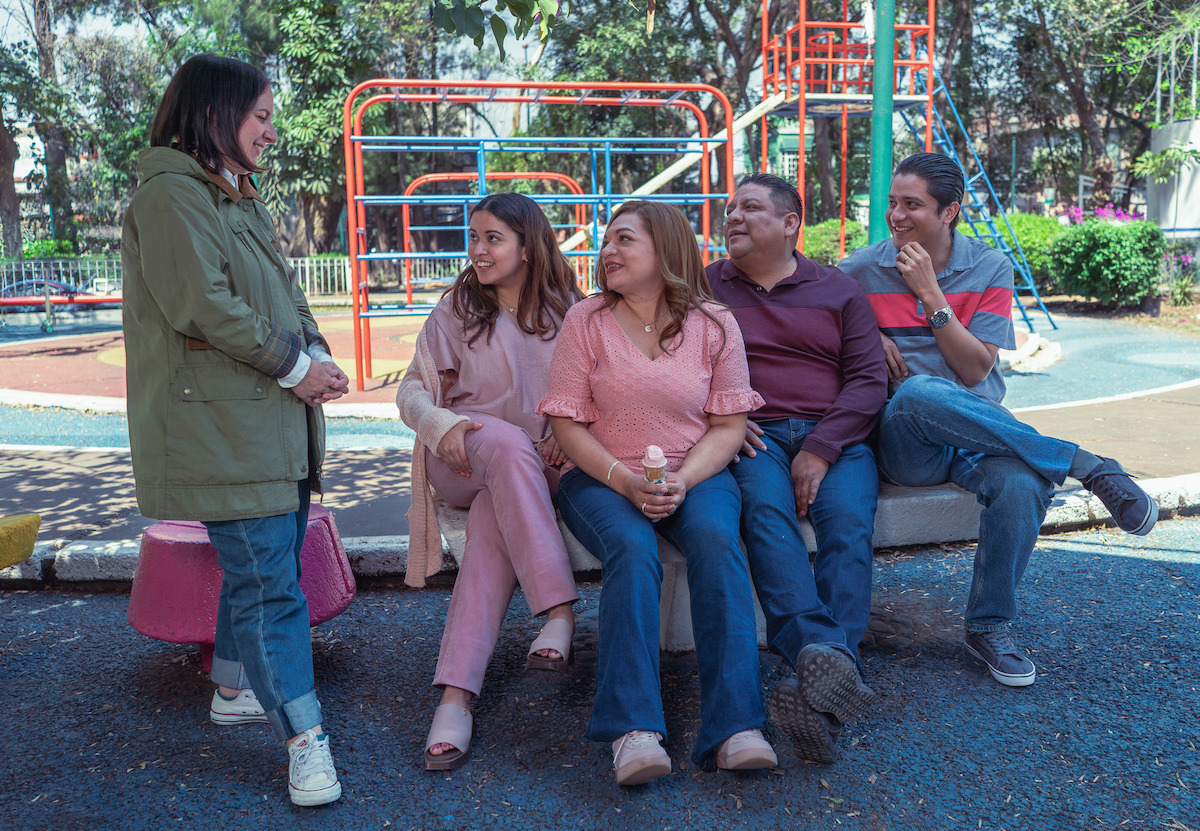
For Alejandra, it certainly did. The film’s fictional framework borrows from the language of psychological suspense, punctuated with flashes of humor, gradually pushing its protagonist toward the point of no return that culminates at the General Hospital of Mexico. Then, almost exactly halfway through, A Child of My Own takes a startling turn in both tone and form. It leaves behind Alejandra’s imagined reality and shifts into an investigation of the case itself, introducing court records, expert testimony, and the voices of others whose accounts challenge some of the things viewers have just witnessed. Among them is Mayra, the biological mother of the abducted baby, who firmly rejects Alejandra’s claim that she willingly gave up her daughter.
“Everything changed for me once I met Mayra,” Alberdi admits. Over the course of the making of the film, she and the rest of the production team found themselves gradually rethinking the relationship they had initially established with Alejandra’s version of events. Encountering other perspectives, particularly Mayra’s, forced them to step back — not to distance themselves absolutely from their protagonist, but to arrive at a deeper, more compassionate understanding of her. Why did she do what she did? What lies behind her need to tell the story the way she does? Only at the end, after showing 15 years of Alejandra’s life, does the film come close to answering those questions.
For Alberdi, allowing a documentary the time it needs to arrive at a genuine point of view is a moral imperative. Rather than charting Alejandra’s transformation, A Child of My Own is structured around the evolution of its director’s own understanding of the story, a four-year process of observing, investigating, questioning, and accompanying her subjects. “Without time, I would never have known where to stand,” Alberdi says. “Without time, documentaries cannot develop a point of view, a gaze.”
A Child of My Own is also the first documentary Alberdi has filmed entirely in Mexico, a country she believes shares striking similarities with Chile. The parallels include the way both societies idealize motherhood while simultaneously failing to provide adequate public care for women. In Mexico, where conservative ideas about gender and family continue to shape public life, Alberdi says psychological support for women who experience miscarriage remains virtually nonexistent. “The situation in Chile is just as precarious,” she says. “To me, that’s one of the greatest tragedies in Ale’s story. She received psychological support once she entered prison, but not when she was going through her miscarriages. In Chile, it’s still common for women who have lost a pregnancy to share hospital rooms with mothers who have just given birth. It’s deeply traumatic.”
In the end, A Child of My Own is not the story of a crime, nor of an extraordinary act or an isolated curiosity. It is the story of women like Alejandra and Mayra, whose lives have been shaped by trauma, loss, gender expectations, and the profound impact these forces can have on mental health within a system that continues to stigmatize miscarriage and fails to provide adequate care. “This story raised questions about motherhood that felt entirely new to me, questions we rarely have the space to discuss openly. People end up sharing their own experiences [after seeing the film],” Alberdi reflects. “The conversations become a kind of collective catharsis.”