Big Chicken A Fast Food Conspiracy: Mo Gilligan Interview - Netflix Tudum
Interview
Mo Gilligan Ate Fried Chicken for a Month. Did He Walk Away Unscathed?
The comedian chats about his documentary Big Chicken: A Fast Food Conspiracy — and its consequences.
By Ingrid Ostby
Aug. 7, 2026
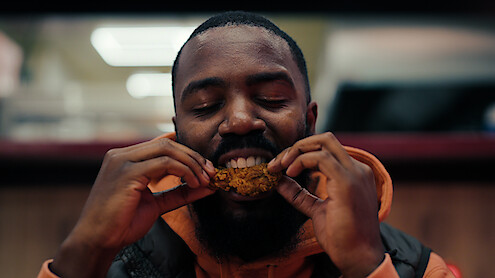
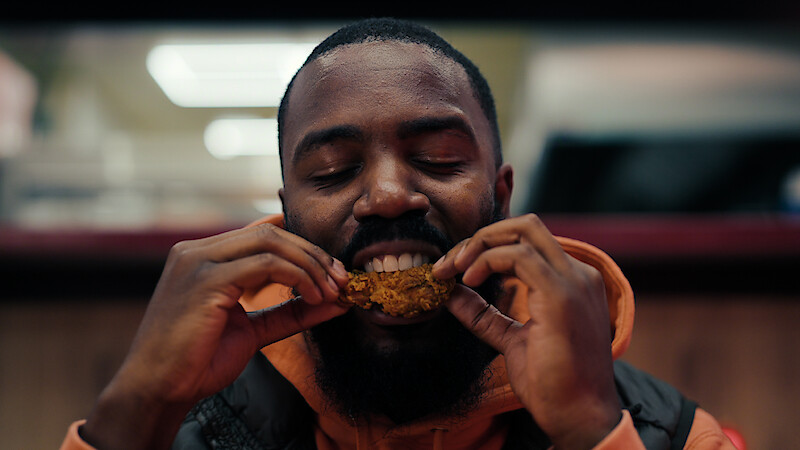
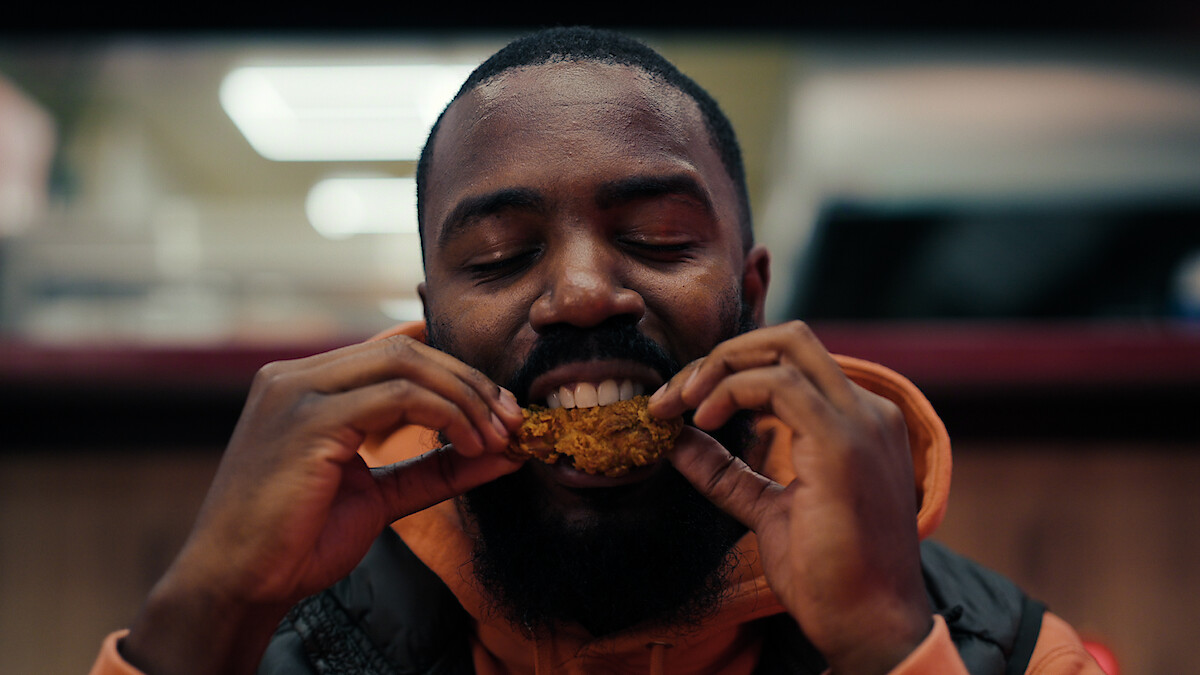
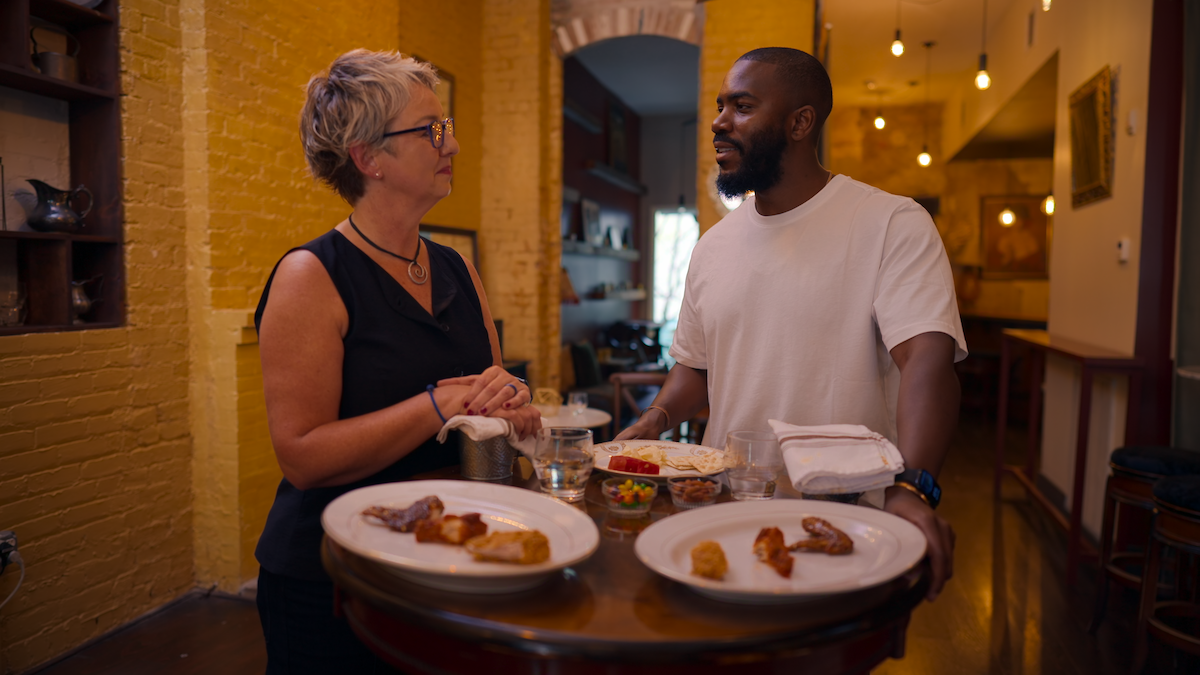
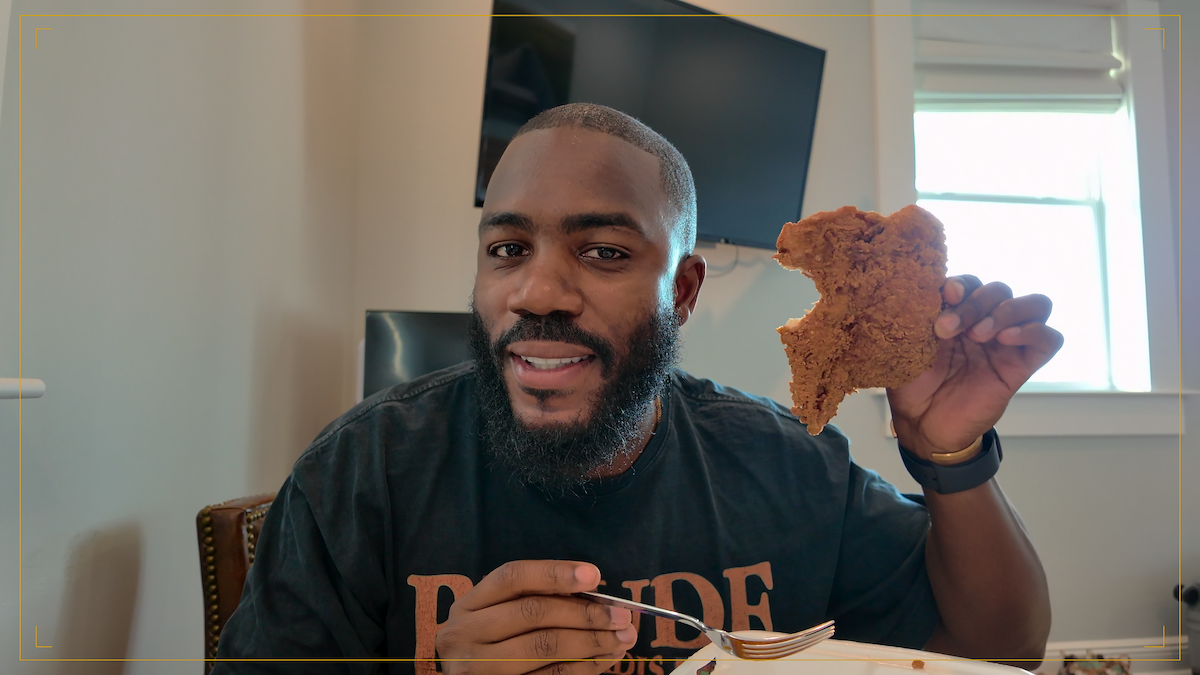
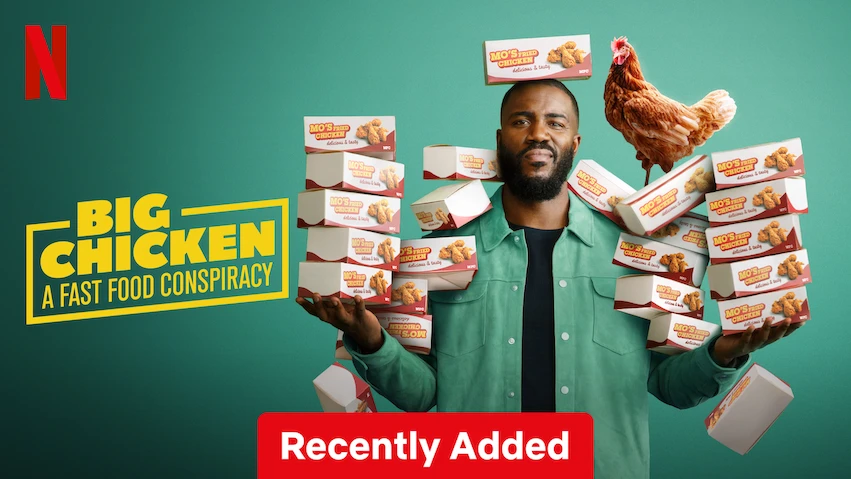
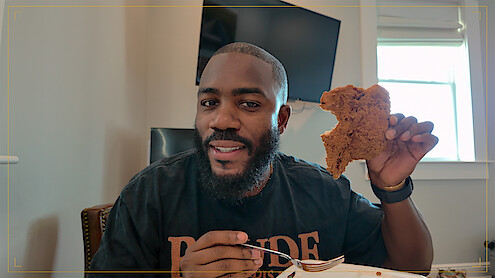
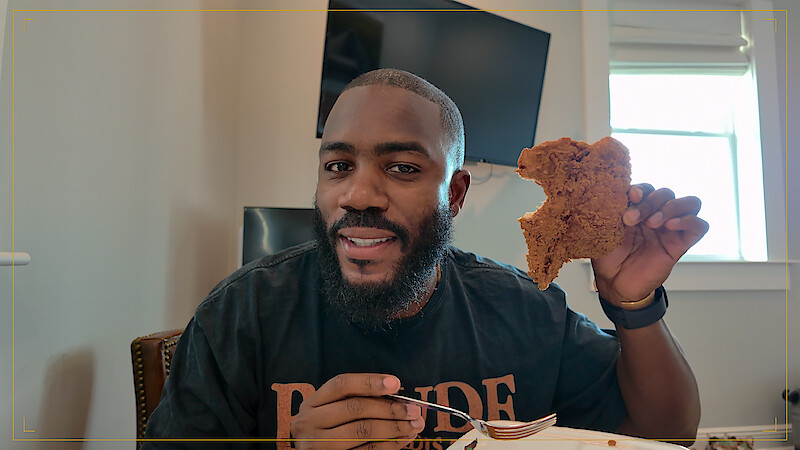
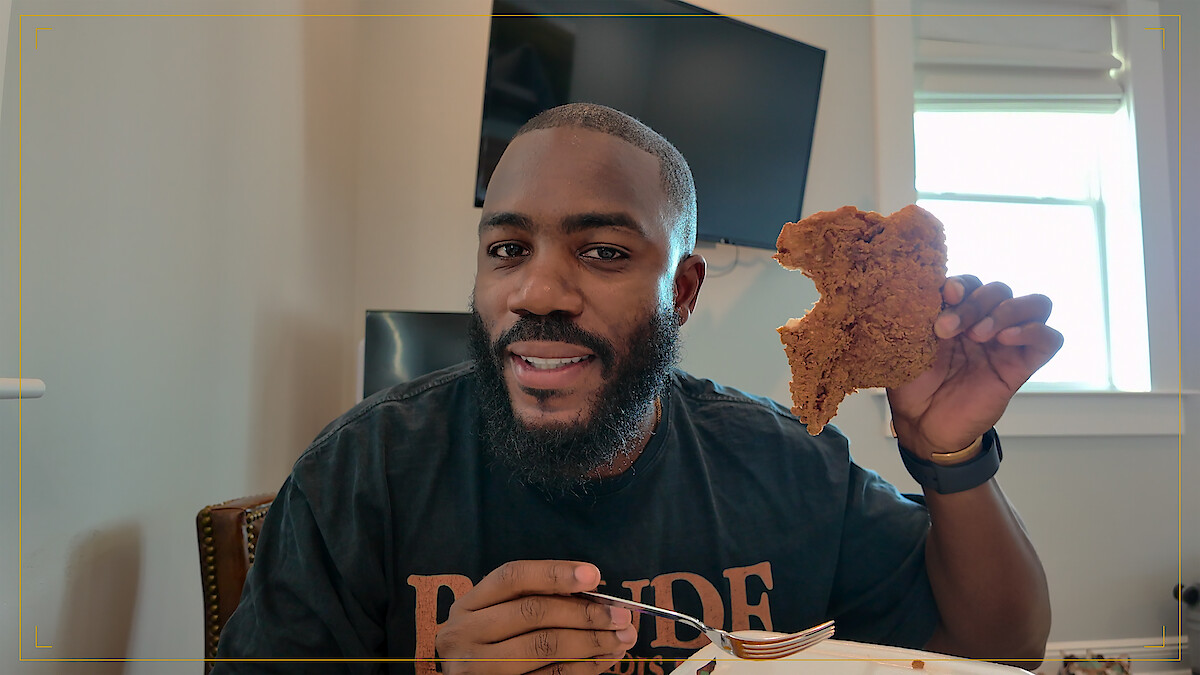
BAFTA winner and stand-up comic Mo Gilligan loves fried chicken … so much so that he’s willing to eat it for 28 days straight for breakfast, lunch, and dinner. He wants to see how it affects him, his body, his mind — and learn more about how the chicken industry affects the world. In the documentary Big Chicken: A Fast Food Conspiracy, the comedian eats at chicken shops across the UK (and hops across the pond to some of America’s fried-chicken hotspots) to investigate Britain’s crispy, crunchy, and addictive £12-million‑a‑day habit.
At first, Gilligan thinks he’s about to embark on a delicious adventure, but the physical and psychological impacts hit him harder — and faster — than he ever expected. As he talks to experts about what’s going on with his body and mind, he also attempts to hold Big Chicken industry leaders to account, and even accompanies activists on a late-night visit to a factory farm. Tudum spoke with The Lateish Show with Mo Gilligan host about the documentary, the aftereffects of his monthlong chicken diet, and his hopes for the future of food.
Produced by Mindhouse (Louis Theroux: Inside the Manosphere), Big Chicken: A Fast Food Conspiracy was directed by Liana Stewart and executive produced by Aloke Devichand and Nancy Strang.
How did you feel going into this, before you began going to chicken shops three times a day?
Mo Gilligan: At first, when [the idea] was presented to me, it just felt like the dream job. It was like, “Oh, wow, you get to eat fried chicken for breakfast, lunch, and dinner.” Not that I ever eat it for breakfast, but I was like, “It can’t be that bad.” I was very, very naive at first. Very quickly on, it started to get very miserable. I could see the weight change happening very quickly. And I didn’t think it would affect my mental. I was just like, “Does food do this?”
You’re somewhat of an unlikely person to lead this documentary — you’re a comedian, not a reporter or someone embedded in the food industry. What did you hope your unique perspective would bring to the film?
Gilligan: I’m not the person in terms of telling [others], “Hey, you really want to do this and you really want to do that.” But I felt like, with me being a comic and doing stand-up, there’s a relatability there that feels like, “Oh, I feel like I know this guy and he’s not an investigative journalist and he has no agenda.”
Your friends suggest in the film that tackling the topic of fried chicken may be risky given the stereotypes associated with it. Then you learn about the food’s roots in slavery and how the recipes were co-opted and commercialized by fast-food franchises. Were you even more conflicted about your journey after learning this history?
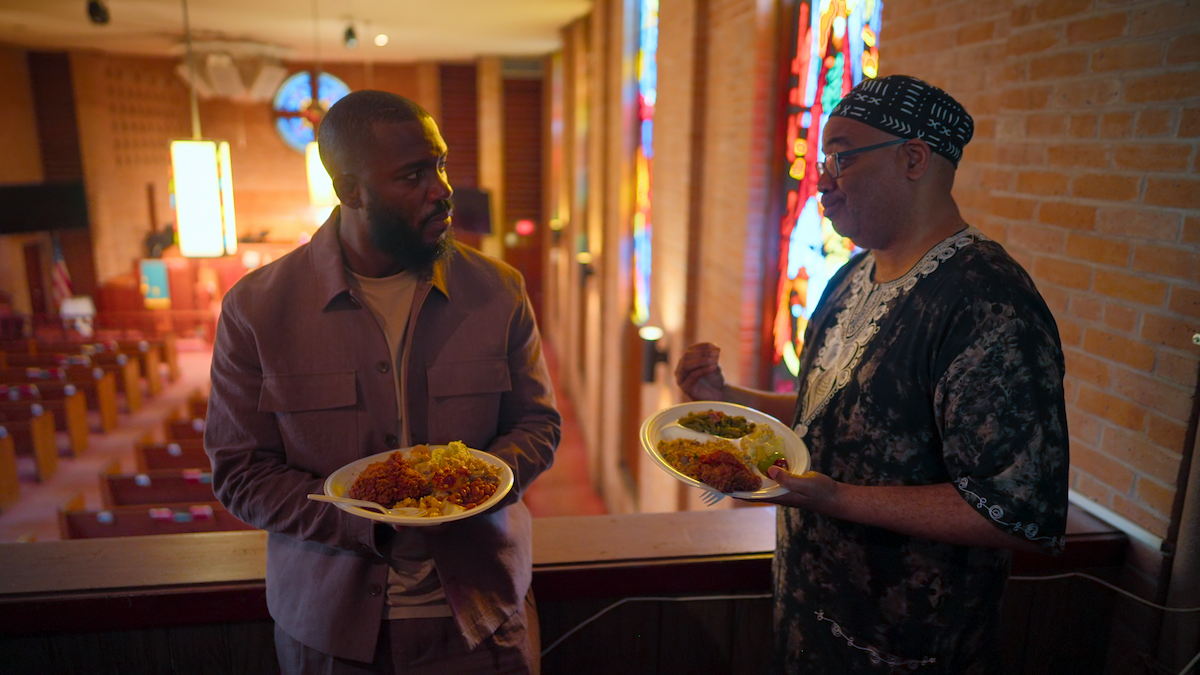
Gilligan: I had told my friends. They [said], “You sure you want to do that as a Black man, eating chicken on screen?” I was like, “Why is that a thing? Why do we say that? Why do I feel that as well?” Meeting the soul food scholar Adrian Miller, it was like, I’ve always wanted to know this. But [Miller] was also like, “Well, it’s also about taking the recipe back in some ways.” Having this on a Sunday with your family, that’s where the dish is meant to be and that’s how this dish used to be.
Knowing the history of where it comes from definitely changed my perception. Having that ownership did feel like I’m getting something back. And I’m also playing my part as well, because I’m doing something so extreme and putting my body on the line so people can understand the effects of it.
How long did it take you to recover from your eating habits during this monthlong adventure? Have you eaten fried chicken since?
Gilligan: Soon after I finished, it was very hard to get back in the gym and get motivated. I just didn’t have any energy. I didn’t have energy. I just wanted to run, go on an exercise bike. So, that took two, three months. [It was] probably six months afterward when I genuinely had a piece of fried chicken again. It was almost by accident because I wasn’t seeking it out. I was just at an event, had a chicken wing, didn’t think of it.
Why is it that it’s more expensive to get fresh fruit and vegetables than it is to get 20 pieces of chicken?
Has your diet changed since filming?
Gilligan: Yeah, massively. Eating that food, consuming it in that way, and knowing that I’m more likely to become diabetic as it’s hereditary in my family and I’m at an older age now … when I’m looking at what I’m going to eat at 1:00 in the morning after a long day on the road, I’m now looking at the healthier option. If I do get some chicken, then I’m going to make it my own way. There’s more joy in knowing that you could’ve just got this ordered in, but you’ve cooked this.
It’s easy to say this stuff, but there’s someone out there who’s struggling. And they’re like, “But I got work in the morning and I finish at 10:00 p.m. and the only thing open might be a Popeyes or, over here in the UK, a Morley’s.” So, hopefully [Big Chicken] might just plant the seed.
By the end of your journey, KFC Global hangs up on you when you try to get answers about the industry, and they declined to provide an official statement for the documentary. Were you surprised to not hear from them?
Gilligan: I knew that no one would get back to me. I’m always a firm believer in, sometimes silence is loud. The fact that they didn’t [respond], it just made it a little bit louder than it needed to be, from their part. The only person I really got to speak to was the lobbyist[Richard Griffiths of the British Poultry Council].
Are you worried Big Chicken is going to come after you after this?
Gilligan: Not really. I’m a very small pawn in this. But if I’m the person they go after, it is what it is, it’s too late now. But no, I feel like I’ve done something for the greater good. When you have something like this, there’s always going to be some backlash. But sometimes it’s a good thing, it creates conversations. And I think that’s what you want. You want to make something that people at least talk about.
How has the documentary opened your eyes to systemic injustices within the food industry, especially after visiting Chicago and meeting with community leaders about food deserts?
Gilligan: It lets me know, once you start following the money, how deep it really goes. I was quite oblivious of that. You wouldn’t think that something as small as fried chicken and chicken in general is that powerful in some ways.
Going to Chicago, I’m meeting people and they’re like, “We would love to get fresh fruit and vegetables, but we don’t have access to them.” That just should be a norm for everyone. Why is it that it’s more expensive to get fresh fruit and vegetables than it is to get 20 pieces of chicken? That, for me, is something that I just couldn’t understand. And with low-income families, fast food — predominantly fried chicken because it’s one of the cheaper meats as well — that’s going to be the one that everyone’s going to go to.
And also, understanding that this isn’t a cultural problem. This isn’t something that just affects poor people. This isn’t something that affects just Black people. This is something that affects everybody.
This isn’t something that just affects poor people. This isn’t something that affects just Black people. This is something that affects everybody.
At the end of Big Chicken, we see that you’ve been working with Bite Back, a group that challenges the marketing of junk food and advocates for food policy changes in the UK. How else has this work shown up in your life since filming?
Gilligan: For myself, it’s making my own change before I can explain it to the rest of the world. It has to start with myself and my own habits first. I'm someone who does eat meat. I’m not someone who’s going to go through this process and say, “Hey, by the way, I’m a vegan now. You should be a vegan, too.” Because going on this journey, I’ve learned that vegetables are more expensive than chicken. It was never really about eating the food and putting anyone off of it. It was just to see the effects of what it might do in an extreme way as well.
If you’ve got the income, then you can really pick where you want to get your food from. Now, if you don’t, and you’re like, “I don’t have that money,” but you know that you’re like, “I can actually make fried chicken for myself and my kids, and it doesn’t have the amount of chemicals. It isn’t baked in a ton of oil,” then you realize, “I feel like I’m eating something that feels at least a bit more healthy.” That’s hopefully the change that I might be able to implement.
The documentary can be quite bleak at times. What hope do you have walking out of this experience?
Gilligan: Hopefully, if this is going to create some change in the next maybe 20, 30 years, it’s something that people can see in schools, universities, then I think that’s the wider impact. And just having the conversations at a surface level. You can have conversations in the salons and the barbers of like, “Oh, have you seen the global impact or the waste?” I never thought of waste when I ate this food. That was the last thing I ever thought of.
So, knowing that there is a total other side of this and just knowing who the big players are within Big Chicken, there is now a spotlight on that. As a younger generation, I never would’ve known that this is the impact of my chicken wing and where it comes from. We all should know where our food is from. We all know when we go online, “Do I accept the cookies? Do I not?” And if the same thing could be said for the fast food industry, that would definitely hopefully make a change in some way.
Award-Winning Documentaries to Stream NowReady to feel inspired?