Explainer
Who Gets the Villa at the End of The Decameron?
Creator Kathleen Jordan and the series’ stars break down who lives, who dies, and who is the rightful heir.
July 25, 2024
The Decameron begins with an invitation.
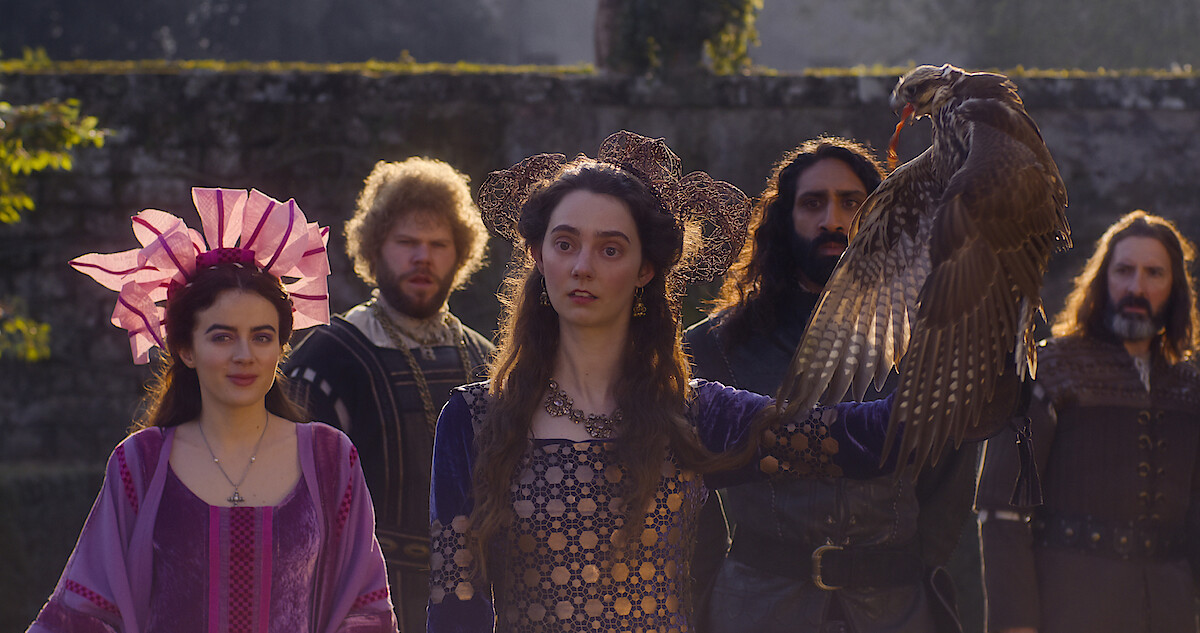
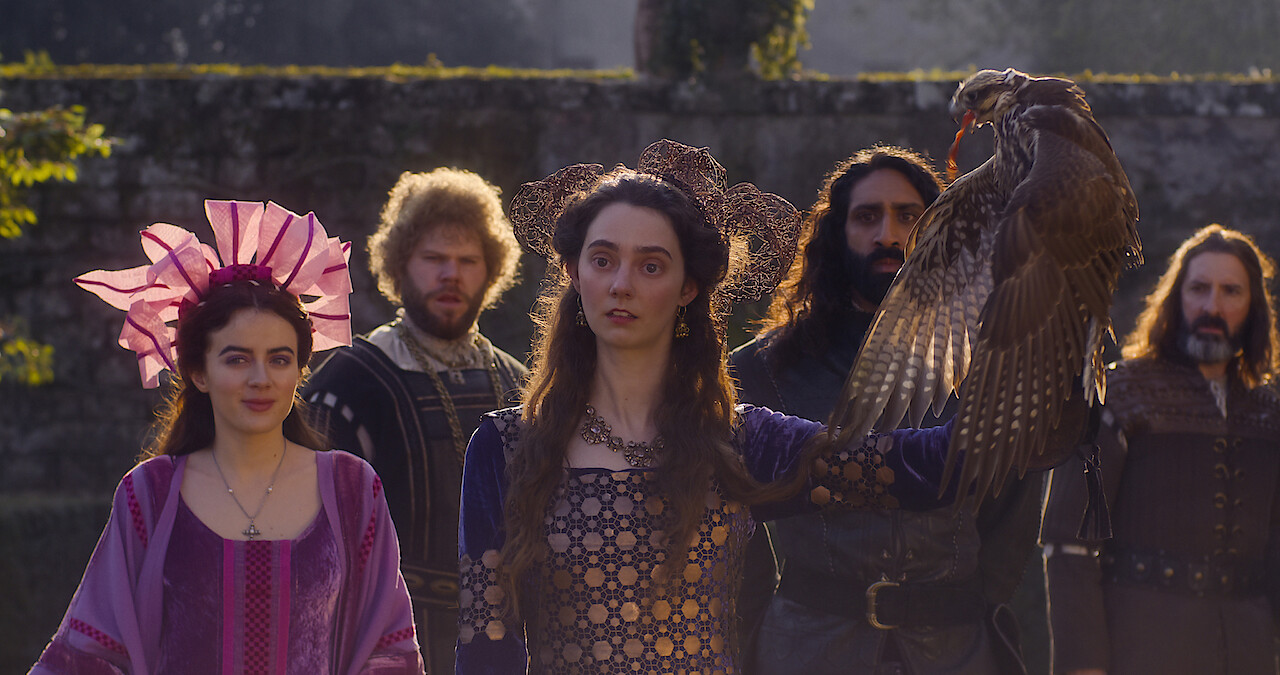
Visconte Leonardo invites a group of (mostly single) nobles to escape the bubonic plague ravaging 1348 Florence and reside at his Italian countryside oasis.
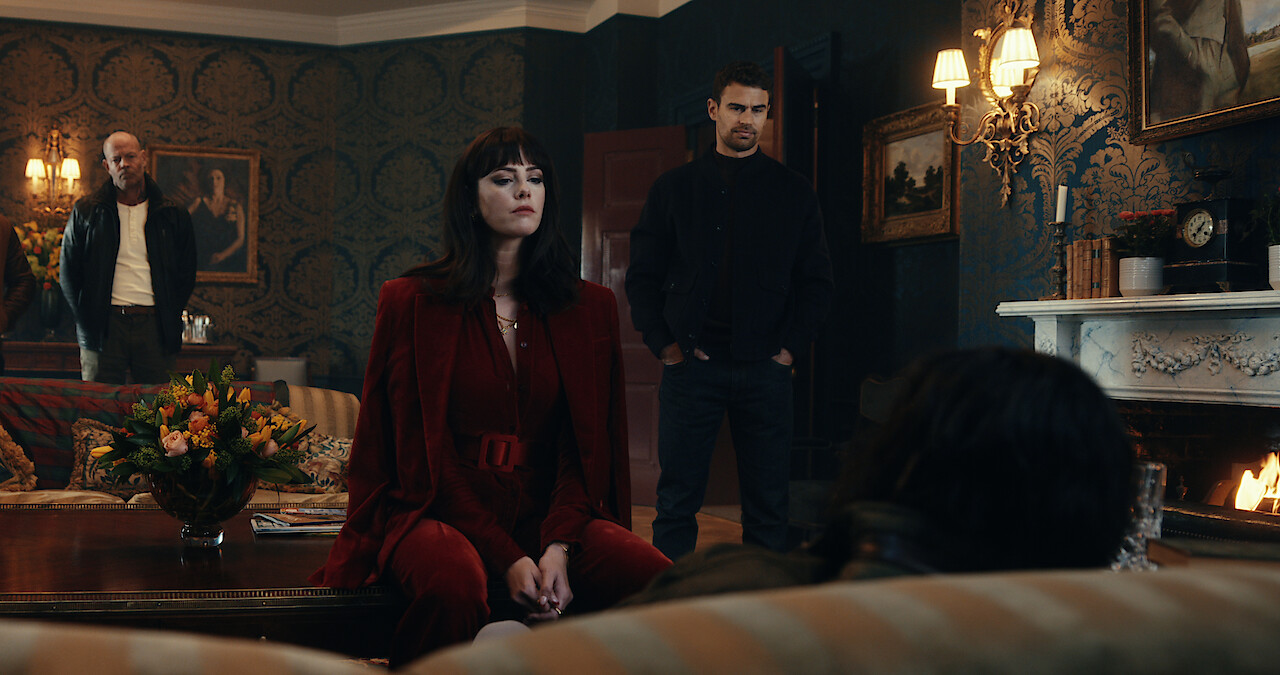
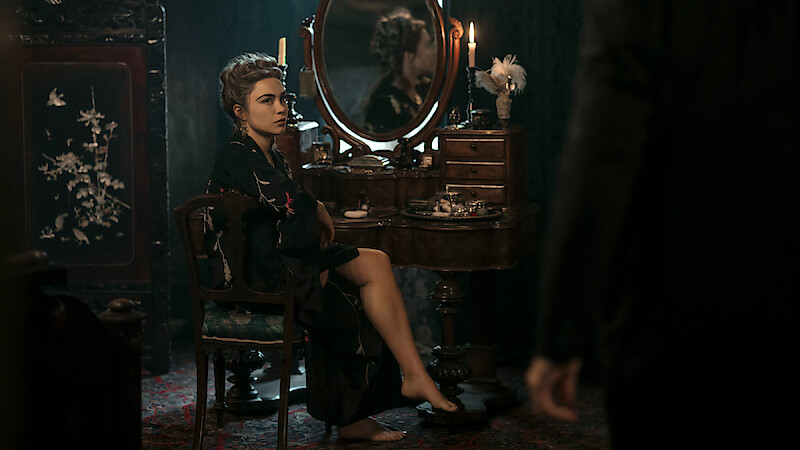
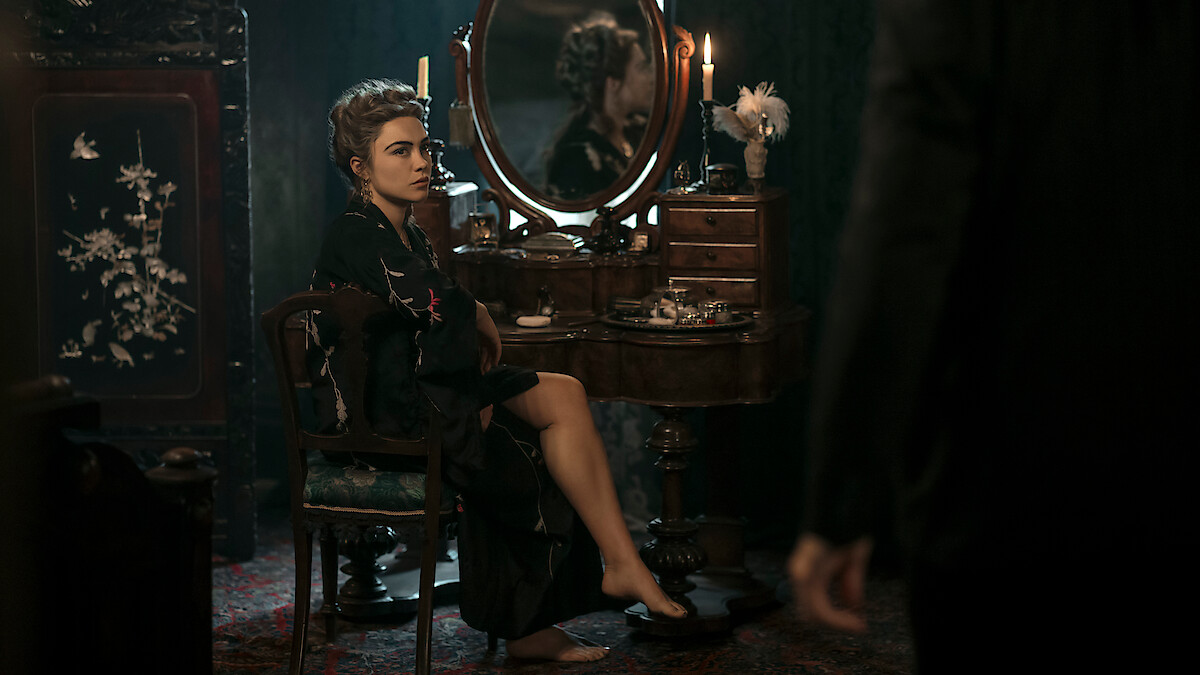
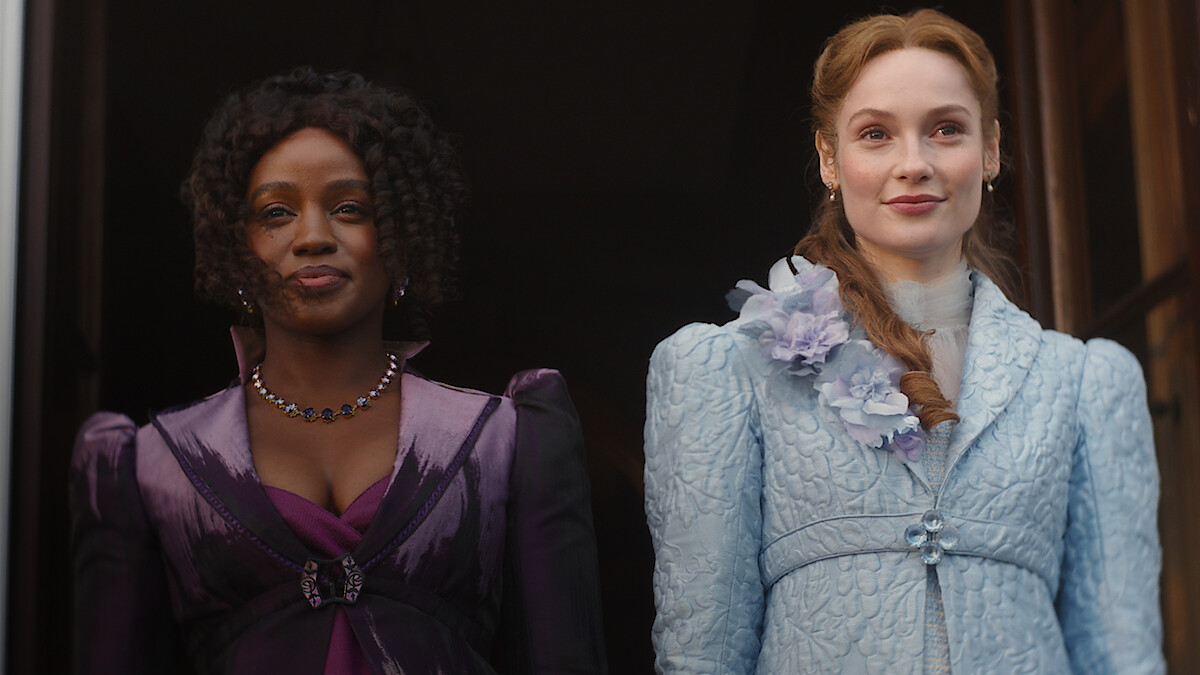
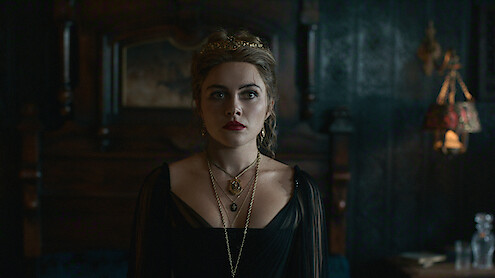
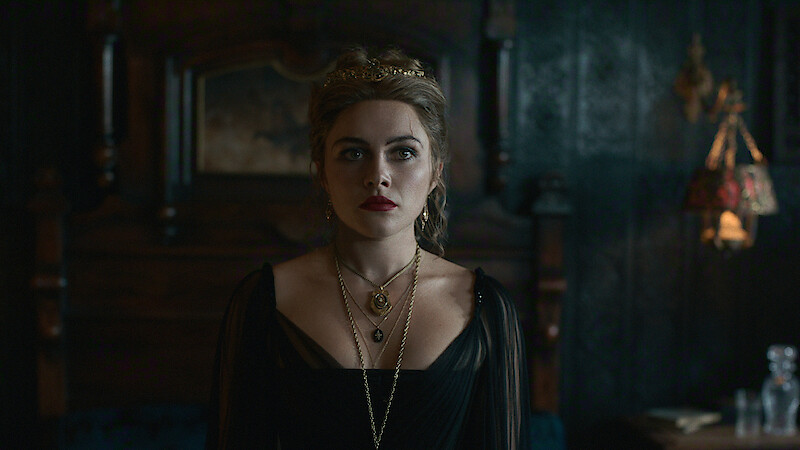
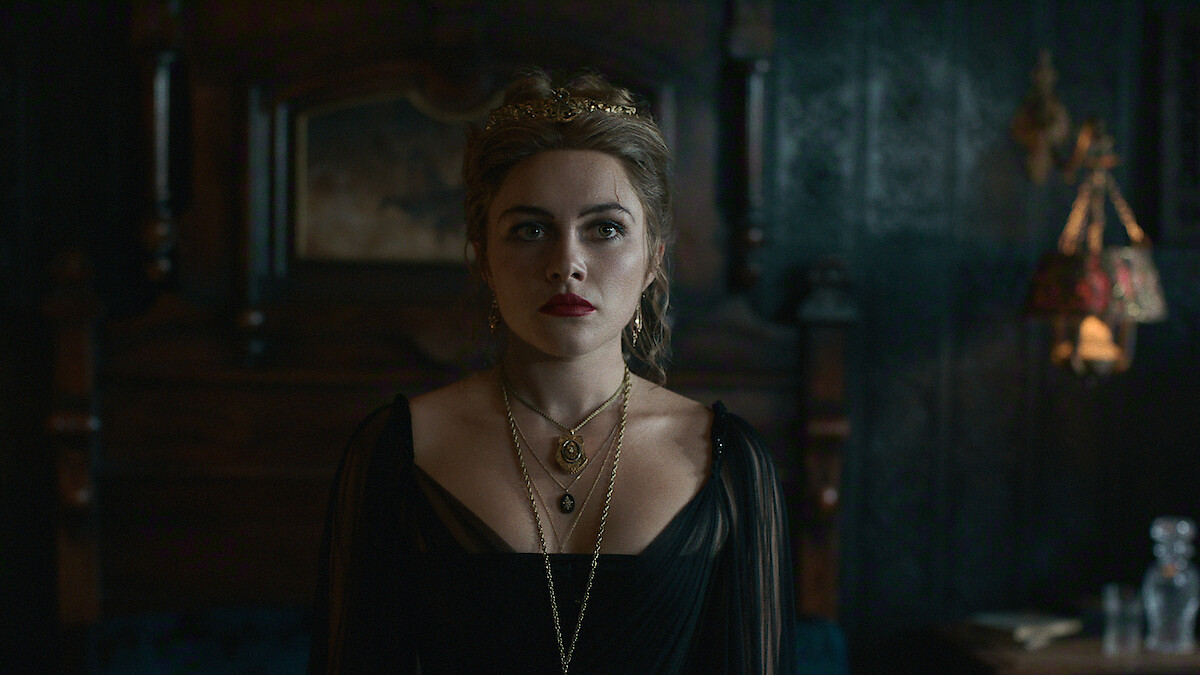
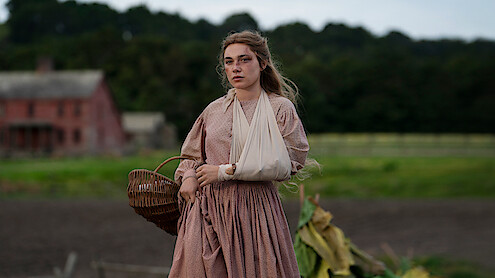
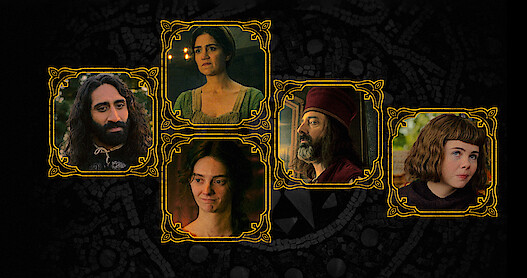
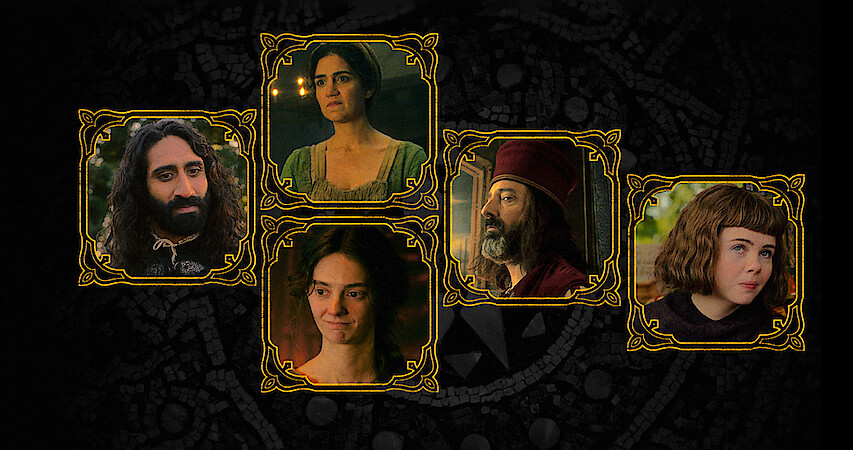
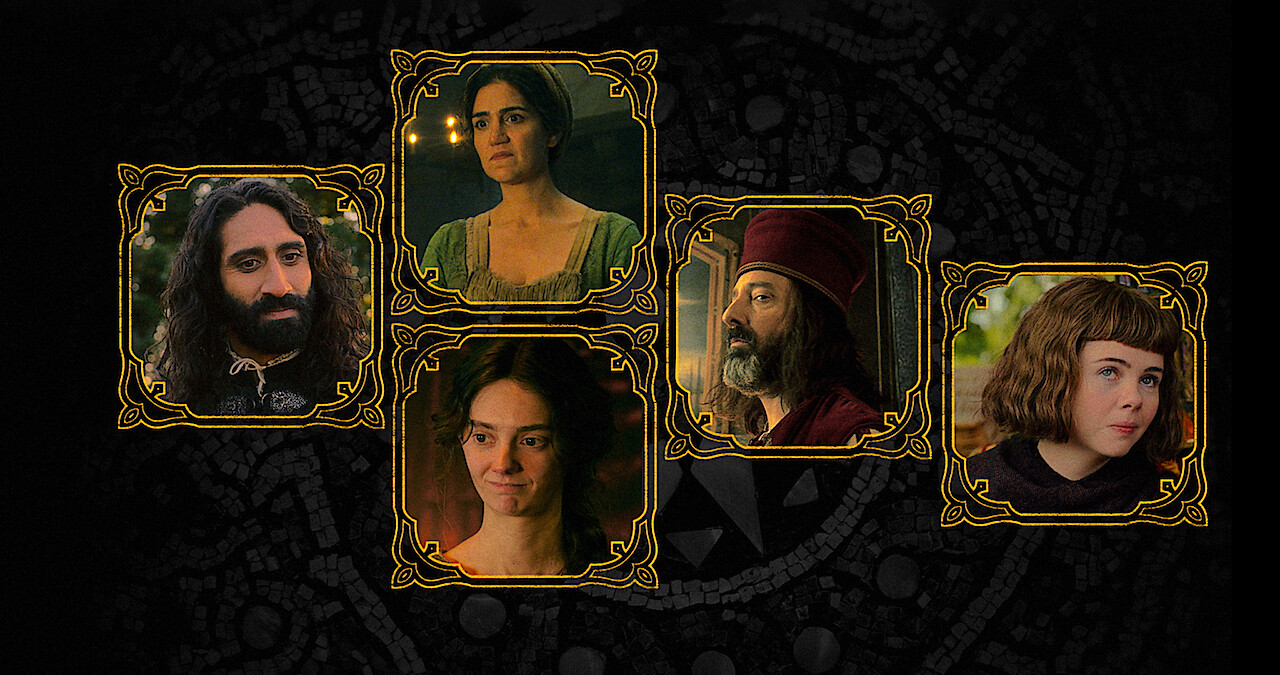
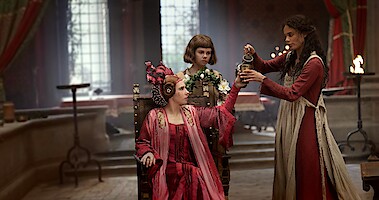
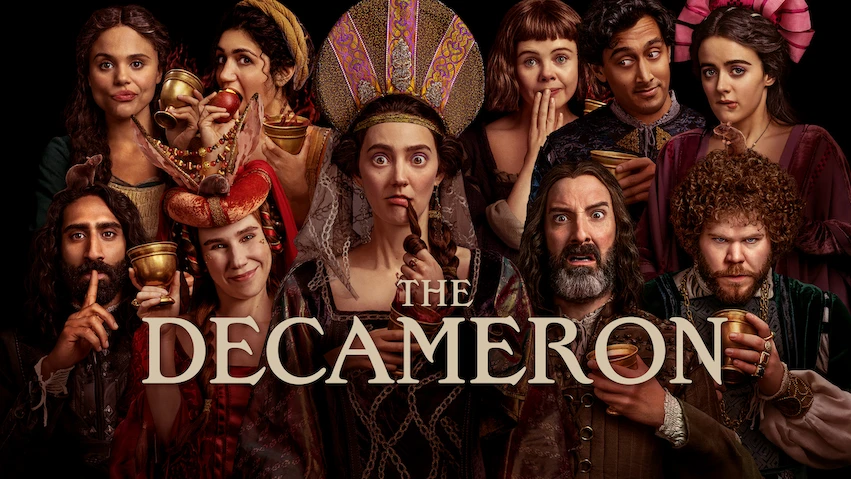
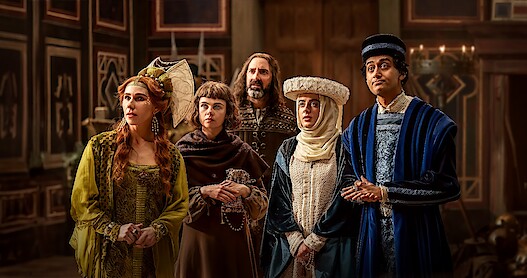
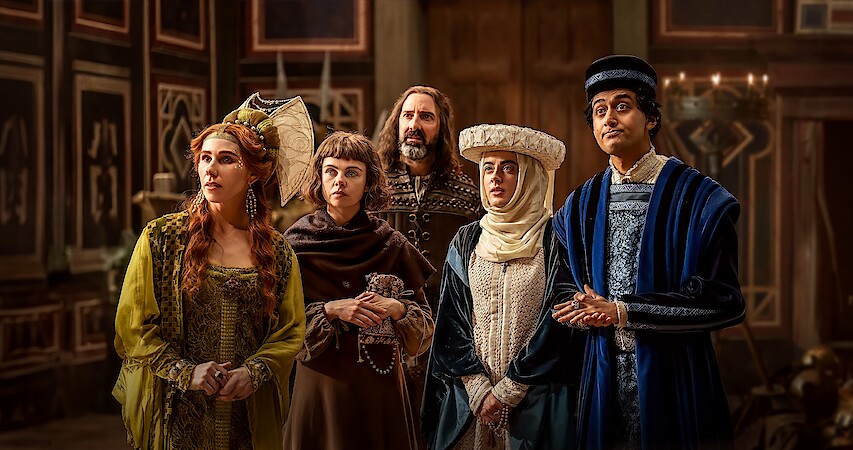
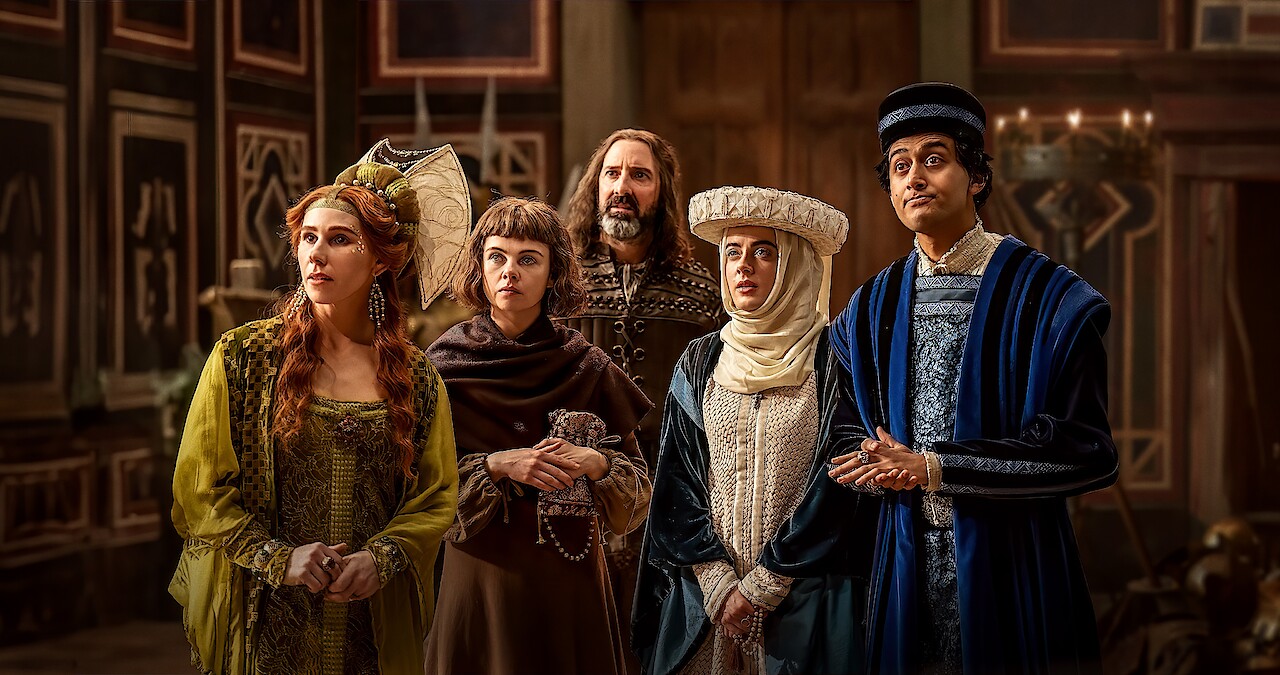
The honored guests include his bride-to-be Pampinea (Zosia Mamet) and her loyal handmaiden Misia (Saoirse-Monica Jackson); Panfilo (Karan Gill) and his pious wife Neifile (Lou Gala); Tindaro (Douggie McMeekin) and his doctor Dioneo (Amar Chadha-Patel); and his cousin Filomena (Jessica Plummer) who brings her servant –– and secret half-sister! –– Licisca (Tanya Reynolds).
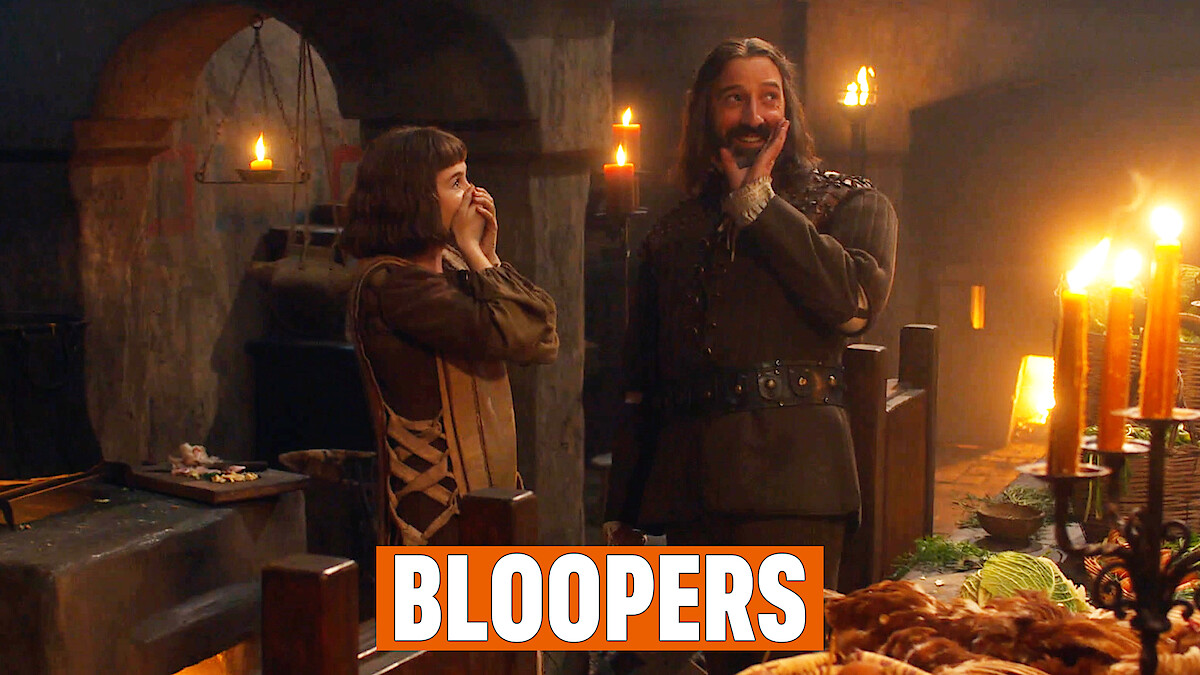
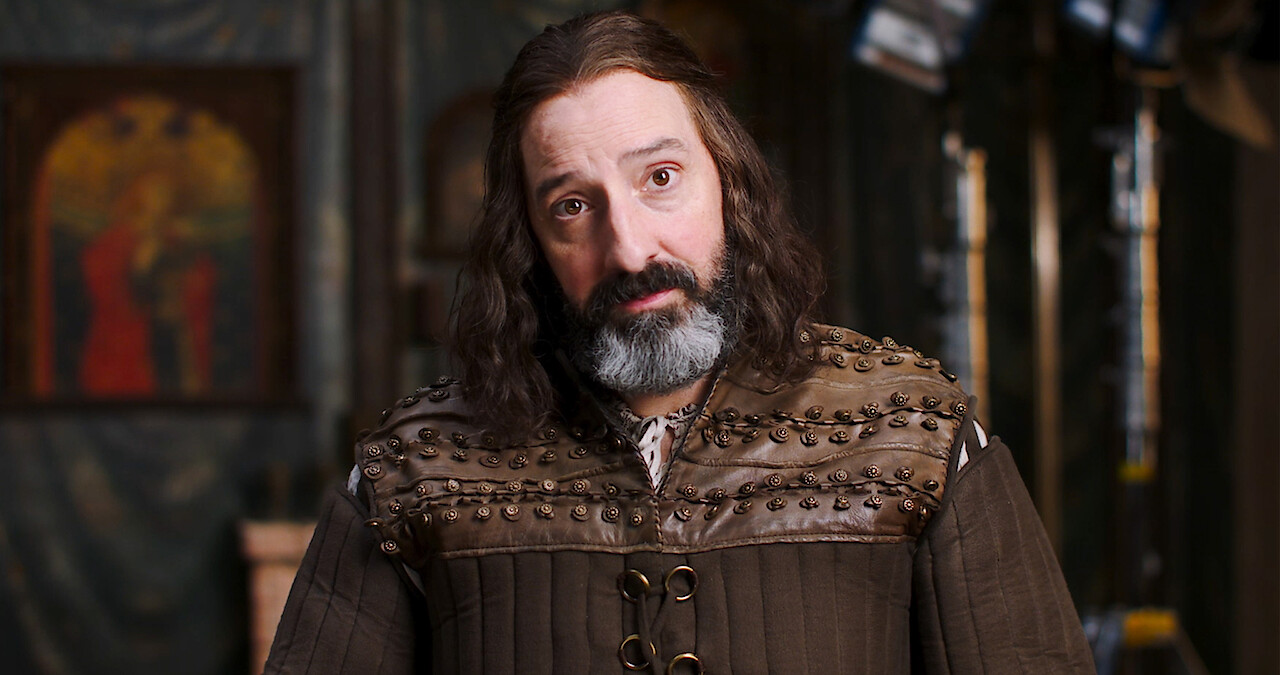
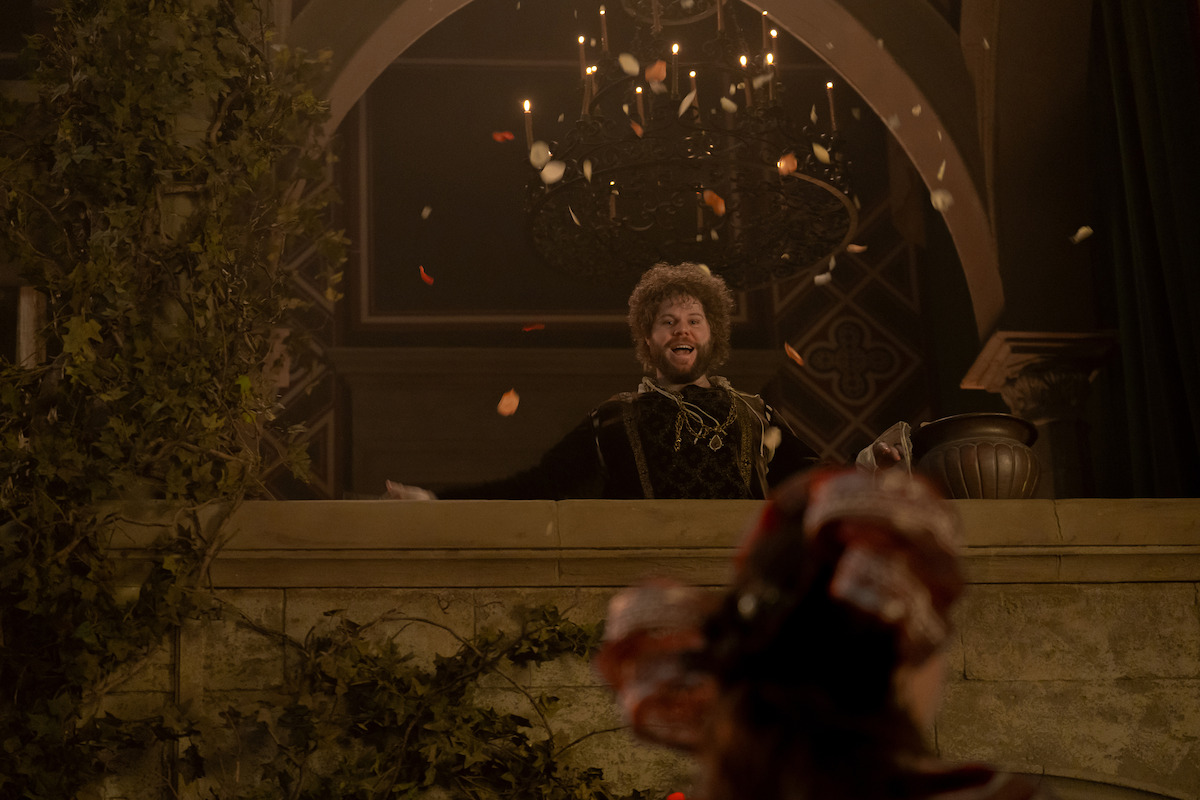
When every guest turns up with their own hidden agenda, Leonardo’s humble steward Sirisco (Tony Hale) and cook Stratilia (Leila Farzad) are there to greet them. Why isn’t Leonardo there, you ask? Well, hold your horse-drawn carriages, because Leonardo has actually died, long before any of the guests even arrive. And that’s just the beginning of the pandemonium that ensues when nobles and merchants and servants are simply trying to survive a pandemic.
Reynolds compares the roller-coaster ride of a series to a Love Island love nest that “descends into Lord of the Flies chaos.”
With the pestilence raging outside the villa walls throughout all eight episodes, who dies? Who survives? And who is the rightful heir to the villa if Leonardo is dead? Below, Tudum goes inside The Decameron ending with showrunner and creator Kathleen Jordan and the series’ stars.
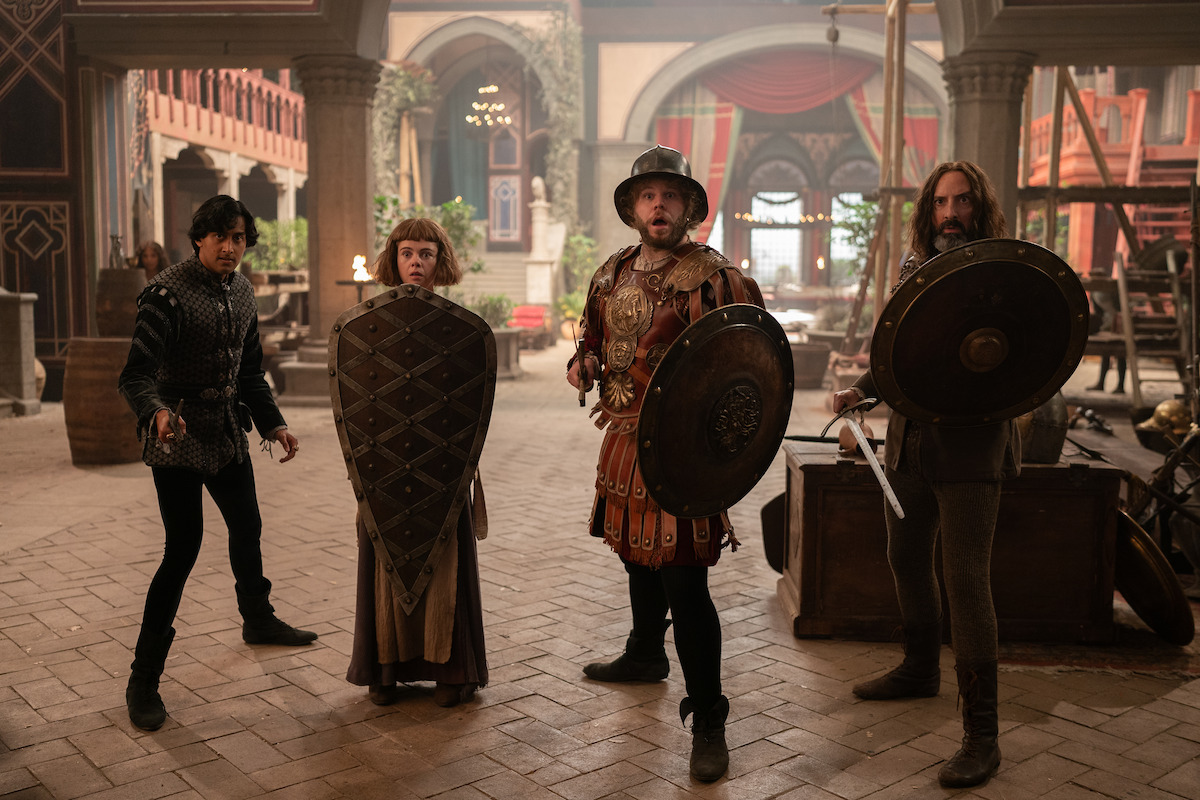
By the end, the only remaining survivors of Villa Santa are: Sirisco, Licisca, Filomena, Misia, Stratilia, and Jacopo (Aston Wray), the son of Stratilia and Leonardo.
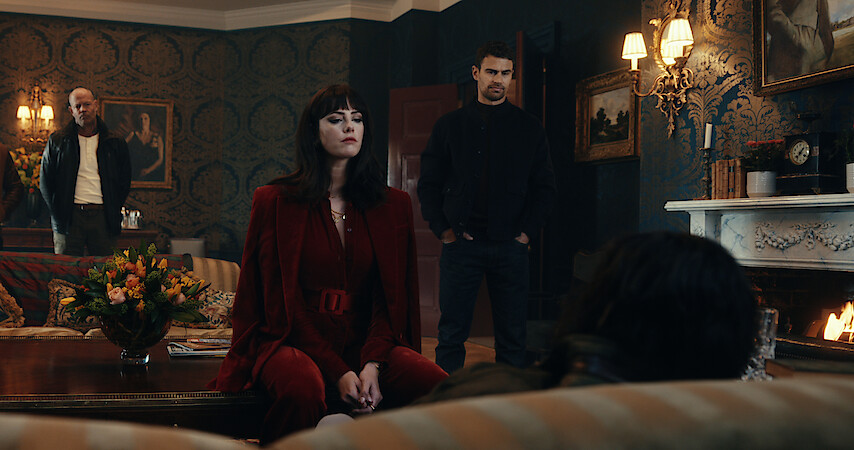
How did we get there? Well, by the time the series reaches Episode 8, uncompromising mercenaries storm the gate ready to claim Villa Santa for themselves. Pampinea tried to bribe them to flee with her dowry, but they just take her money and fight the guests anyway.
Tindaro has fallen for his lover Stratilia and come to care for Jacopo like a son, while Panfilo is leaning into nihilism after his wife and best friend Neifile die of the plague. So, to help the remaining residents –– comprised of mostly servants –– make it out the front door, the nobles distract the mercenaries and sacrifice themselves. Tindaro is stabbed and left bleeding on the floor, and Panfilo is shot with arrows.
Originally, Jordan had a general idea of who would live and die by the end of the season — but just a general idea. “I had no idea how I would get there,” she says.
Throughout filming, she and on-set writer and producer Steve Unckles would rewrite and reimagine a lot as they went along, according to how the characters played off one another. She didn’t want to cut off collaboration too early with her company of actors.
Yup! While Sirisco lives in the series, Jordan actually had a version in which he perished. “He got so taken with the power that he had coming off of this face-off with Pampinea, that that power grew too big and made his head too big, and he sort of went out in a blaze of glory,” says Jordan.
But she’s glad they didn’t end his story that way. Sirisco had lessons he really needed to learn. In the beginning, “he’s obsessed with being needed. But by the end, he sees he’s not needed and he learns to stick the landing and need himself in a way,” she says.
Oh yeah, and Licisca is furious that she spent her life cleaning up after her own family. While Reynolds found this out only halfway through filming, Plummer knew early on to include that part of her character’s backstory. “Filomena was very comfortable in Licisca feeling less than in order for her to feel more than,” says Plummer. “That was definitely one of the key reasons for her love and hatred towards Licisca, having that bond. But also being quite jealous at the same time.”
Reynolds thinks that Filomena probably had a bit of an inferiority complex because of the way that their father, Eduardo (John Hannah), seemed to favor Licisca, even though she was a servant. Since, just like her character, Reynolds didn’t know her lineage, she thought their relationship was building toward something else entirely. “At first, I thought that they were going to make us lovers,” she says. “I mean, yeah, there were moments I thought that was where it was going. And I was like, ‘Interesting.’ So when Kathleen came to tell me what the deal was, I was like, ‘Oh, that’s not what I was thinking, but I love it!’ ”

Licisca has had it with Filomena, now that she’s learned that Filomena kept the secret that they’re sisters for most of their lives –– probably when Filomena stopped being friends with her, back when they were both 12. “Eduardo is the real villain in it, I’m sorry,” says Plummer about their father forcing Filomena to never tell. “Jess would get really defensive of Filomena when we were filming,” reminisces Reynolds. After a lifetime of cleaning up her poo, it’s understandable that Licisca isn’t quick to forgive.
But it takes Filomena screaming for help when the door leading to freedom is only steps away for Licisca to realize that love has long claws. “She said ‘sorry’ so much. I basically had to almost die,” says Plummer. Licisca began her journey in the series by making the snap decision to push bratty Filomena off a bridge in order to feel liberated for the first time in her life. But this time, when faced with a similar choice, Licisca realizes that without Filomena –– who she now knows is her sister –– she really will be untethered.
“She’s like, ‘I can leave. And freedom, it’s right there. I could probably do it. But then the only person who has ever meant anything to me is in this building, and I have to save her. Because we did have something really special when we were kids, and maybe there’s a chance that we could get that back,’ ” says Reynolds. “She’s [got a] proper heart of bronze. She might push you off a bridge, but she also might then save your life a bit later.”
So, aside from Tindaro and Panfilo in the finale, Dioneo, the “medieval fuck boy” himself, dies in Episode 5 after partying with Leonardo’s cousin Ruggiero (Fares Fares), who shows up at the villa with some disease-ridden friends. And because Neifile also reveled with the new arrivals, namely hooking up with Ruggiero (!), she later dies of the pestilence, too, in Episode 6. Her death devastates Panfilo, especially since they were finally starting to be honest with each other about their horniness — for other people.
Jordan knows that a series about the Black Death begets a lot of real tragedy. “But there’s also a lot of proud and beautiful death and rebirth,” she says. “I think that Neifile has her complete rebirth into her next life. I believe that she exists beyond. I believe that of Panfilo, too.”
We can’t forget about Misia killing Pampinea though …
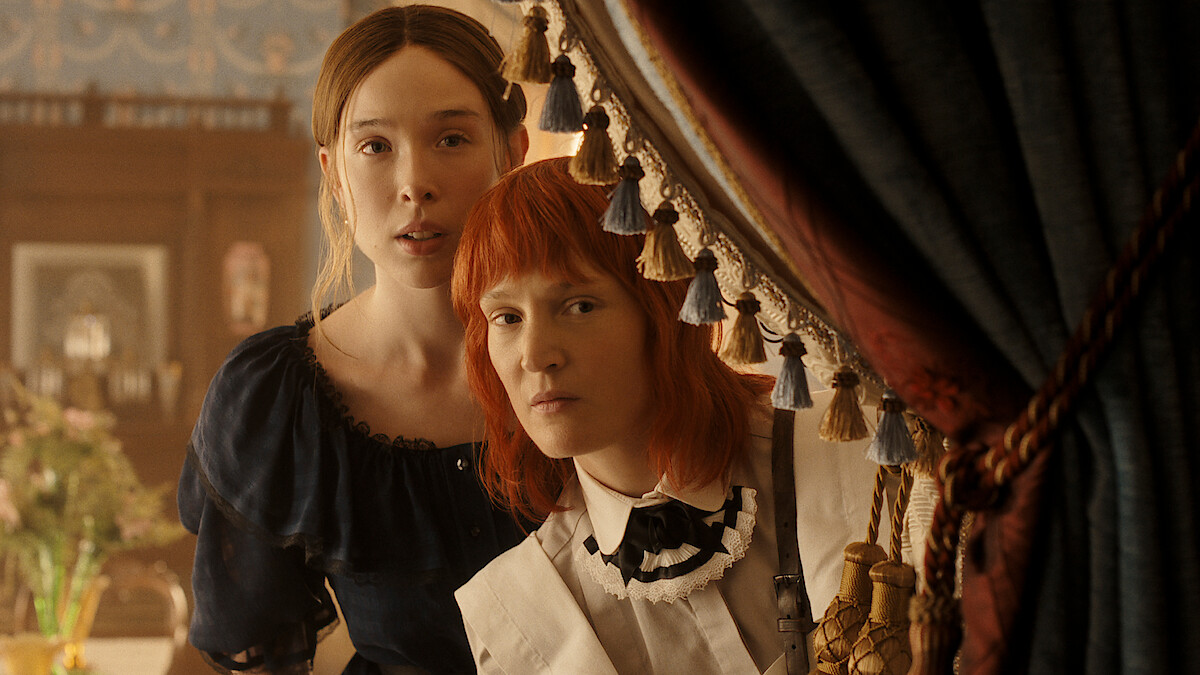
Jackson knew Misia would kill Pampinea, so she was working toward that climax all season long. “It could only be her to kill Pampinea because if anybody else had [done it], she would’ve killed them first,” she says. From the start, it’s clear their codependent dynamic is unhealthy and that all of Misia’s self-worth is tied up in pleasing her mistress.
Steadfastly loyal to Pampinea, she even goes so far as to kill Ruggiero when Pampinea asks her to, as a means to protect Pampinea’s unborn child –– who she tells Misia they’ll raise together. “When [Misia] says, ‘Loyalty when things get hard isn’t loyalty at all,’ I feel like that’s how everybody thinks,” says Jackson. “That’s what you’re even told when you’re getting married. That’s where she really, really struggles. So she knows if she’s still alive, that she’ll be constantly caught in this trap.”
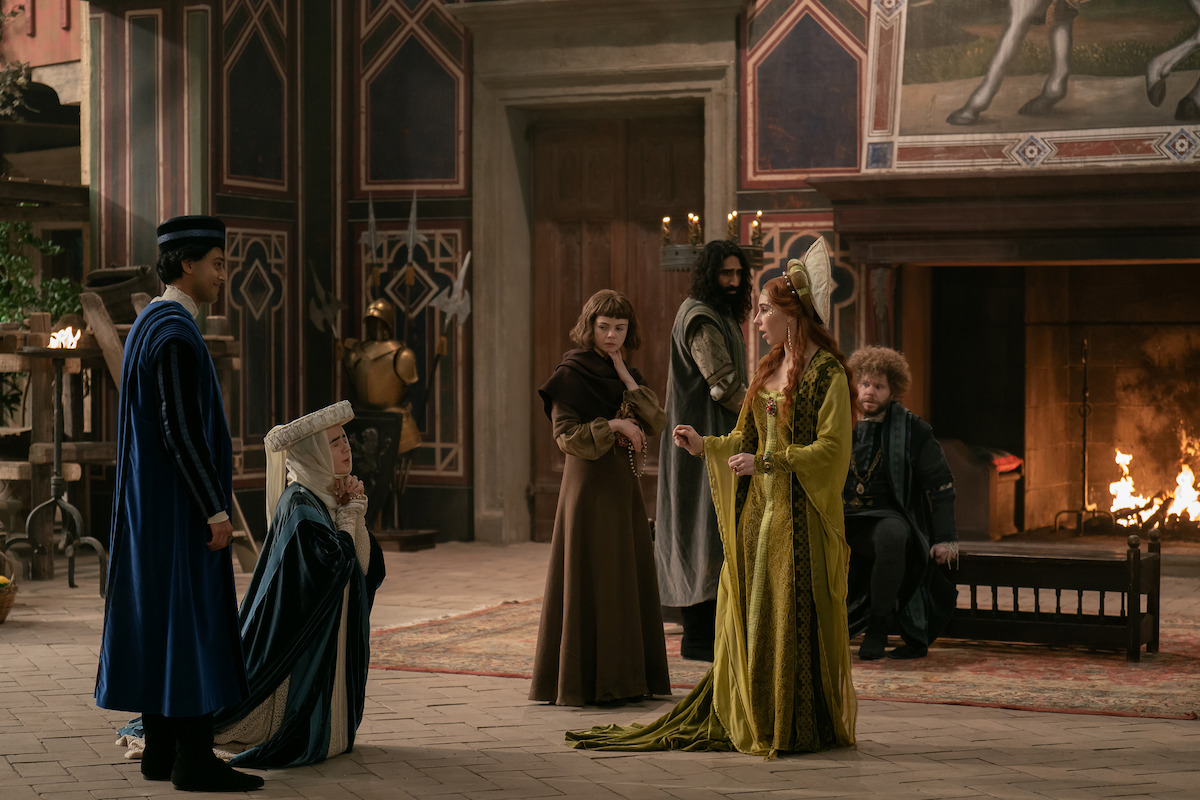
When Misia loses her love Parmena (Tazmyn-May Gebbett) in Episode 1, the opportunity to bring new life into the world with Pampinea was a real anchor for her to latch onto amid her grief. “It’s unfathomable to her that [Pampinea] would make that up,” says Jackson. “She really feels like that will be family to her, and it might [mean] a chance of her having some sort of legacy or being able to express some love and someone being able to honestly and authentically express it back to her.”
But when she learns Pampinea was never even pregnant, “that’s the turning point where she's like, ‘You’re unbelievable!’ ” says Jackson. When she hides Pampinea in the barrel in the kitchen and lights it on fire in the finale, you can see a myriad of emotions –– from disassociation to nostalgia to relief –– swirling on Misia’s face before she just keeps moving forward. “It’s the biggest thing that she does the whole series — I think it’s the biggest thing anybody does the whole series,” Jackson says.
In Episode 7, Stratilia tells Licisca that Leonardo said he would bequeath Jacopo all that was his, making Jacopo the rightful heir to the villa. But as the finale stands, Villa Santa is currently in the mercenaries’ hands, at least for now.
“I think there is a world where Stratilia and Jacopo go back to the villa,” says Jordan. “But I also liked them seeing it as this symbol of all that went wrong, this obsession, possession, and material. At the same time, you can’t blame somebody for wanting a place to live. So yeah, we’ll see. Who knows?”
After the survivors leave the villa, they head into the Italian woods and end the season sharing laughs and stories in a serene glen. Reynolds and Plummer thought it felt like a lovely commune. “They’re all people who have escaped the class structure that’s bound them for their entire lives,” says Reynolds. “[They’ve] all been, for the most part, serving other people and [they] are finally free of that.’ ”
Jordan thinks Filomena and Licisca need to go back to Florence and see if Eduardo is really dead for some closure. In the finale, Filomena is also “boo’d up” now with her girlfriend, Misia. “That’s something that’s always been bubbling away for Filomena, but she’s just not made it make sense in her head,” says Plummer. “Then meeting someone who she can respect and [who] shows her kindness and is in her corner [makes her] realize that those feelings bubbling up are more than just friendship.”
But that doesn’t mean Misia is along for the ride back to Florence. Plummer thinks Misia is still in love with her ex. “Misia needs to figure that out, and then maybe they can reconnect later down the line. They’re definitely going to stay friends.” Reynolds says that otherwise, “it’s bad for the commune.”
Jackson thinks Misia needs a break from being attached to someone in general. In killing Pampinea, “she just went through the biggest breakup of her life and she has a lot to process,” she says. “I would like her to find some self-efficiency on her own, without someone trying to take a bit of her spark.” Jordan agrees, saying, “There’s something beautiful about [Misia] setting off on a life all by herself,” and wishes the same for Sirisco. “He needs some alone time because he has to learn how to be alone.”
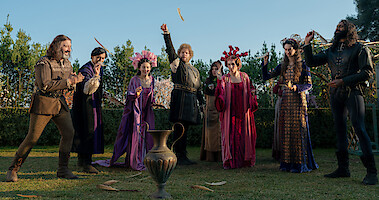
At the same time, the characters are living through a plague. So the final scene in the forest could be interpreted as a post-life moment. “That wasn’t necessarily my full intention, but I kept hearing that as we were making it, that it felt sort of otherworldly and heavenly,” says Jordan. Hale didn’t think of that reading while filming, but he’s a fan of the idea. “I also think about them eating the fake, almost this kind of magical orange thing — I mean, this just turned into The Chronicles of Narnia!”
Whether they’re dead or alive, Jordan wanted that cheerful scene of camaraderie to be a reflection on “telling each other stories to survive,” she says. Not to get too meta, but, as she says, “we’re entertaining one another in the short time we have on Earth. That, to me, feels like the whole point.” Amid so much loss and meaningful, sad death, Jordan wanted to end the show with a sense of hope. “I believe in a hopeful worldview.”
Hale also adores the season finishing on a bookend moment for Sirisco and Misia. “In the pilot, Misia slaps me, and there’s obviously this crazy tension,” he says. “The very last moment of the entire series is us so intimate and almost this father-daughter situation. I love the bookend of that, I really do.” Jackson was grateful to see Misia end the show with a hopeful, nearly childlike air, as she sweetly interrupts Sirisco telling his final story. “I always say that she’s like Benjamin Button, but backwards,” she says. “She starts such a jaded woman with the world on her shoulders, and she slowly becomes more free and liberated and restful.”
Relive the debauchery of The Decameron now, only on Netflix.