Explainer
The Boroughs Ending Explained: Who Lives and Who’s Permanently Retired?
The cast and showrunners dig into those explosive finale revelations.
May 26, 2026
The Boroughs creators Jeffrey Addiss and Will Matthews (The Dark Crystal: Age of Resistance) received keen advice from executive producers the Duffer Brothers (Stranger Things) about how to end the first season of a new series.
“They were like, ‘Listen, you don’t know what’s going to happen,’” Matthews tells Tudum. “‘You’ve got to tell a complete story so that there’s an emotional satisfaction to the end of the season, and then crack the door on the story going forward — but don’t tie yourself down because who knows what the story will be going forward.’”
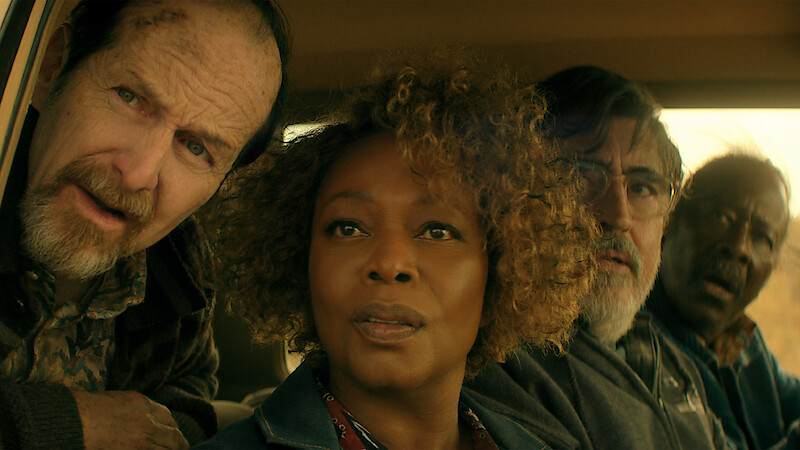
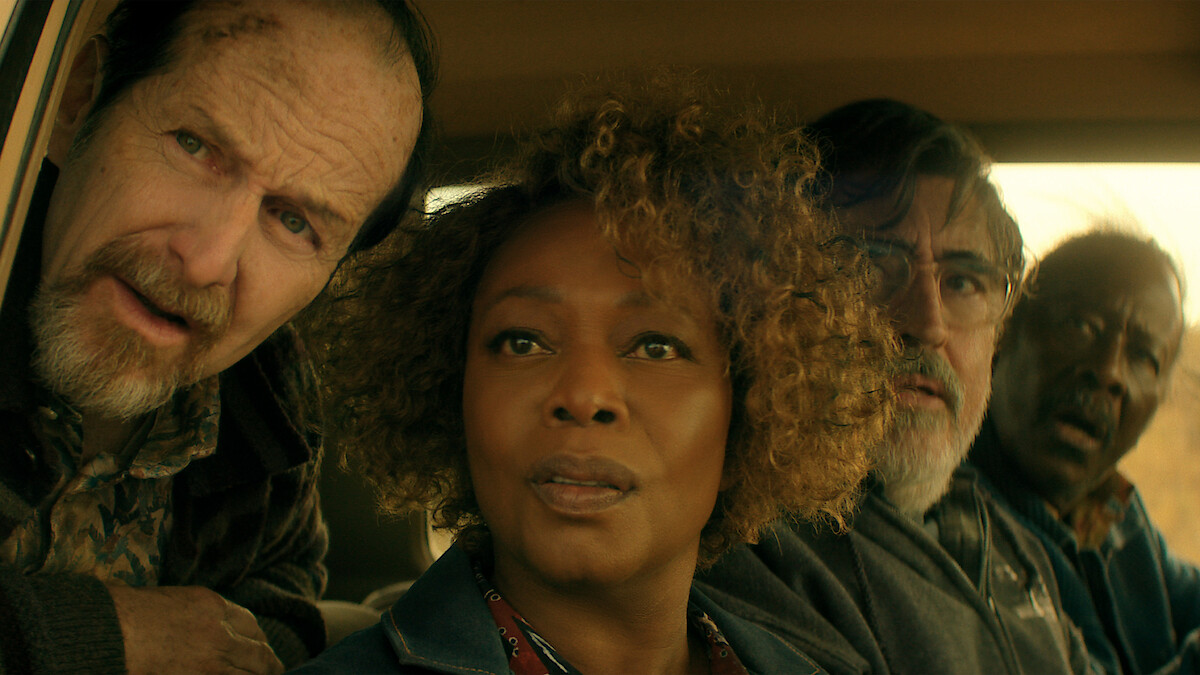
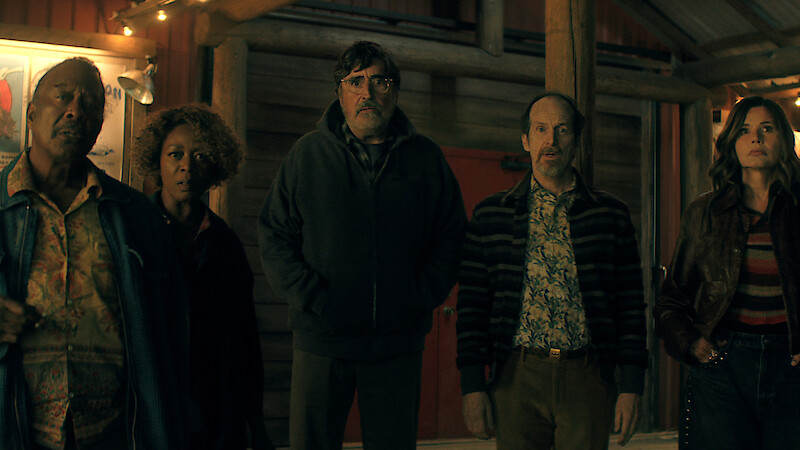
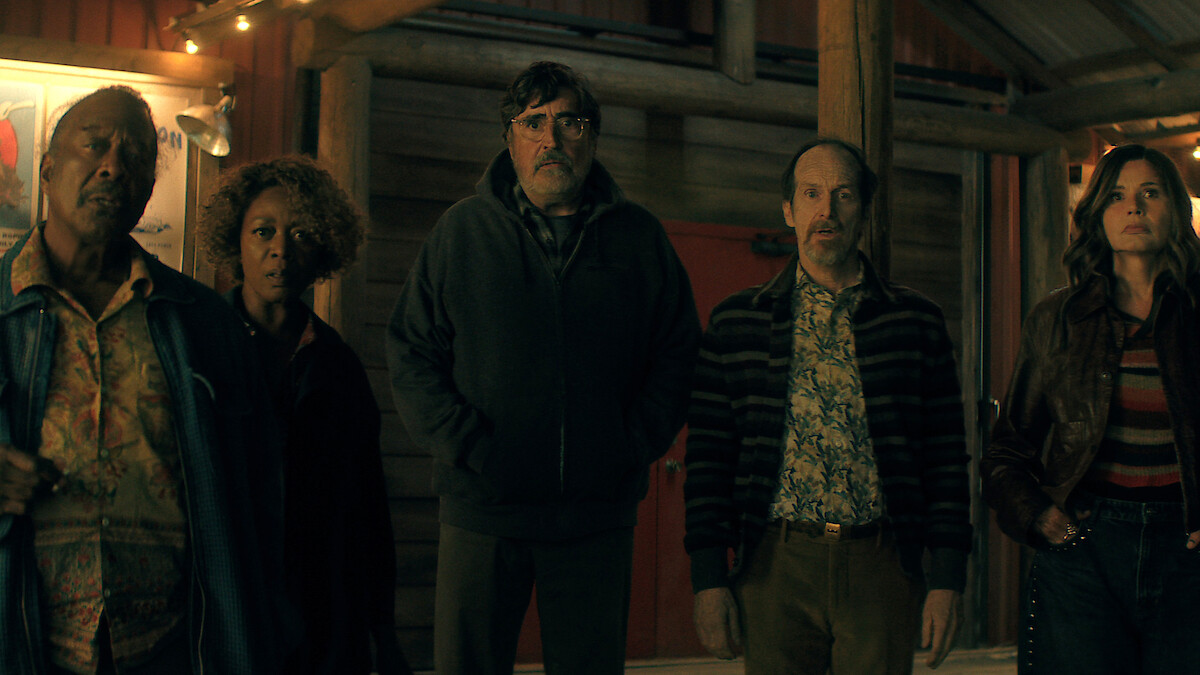
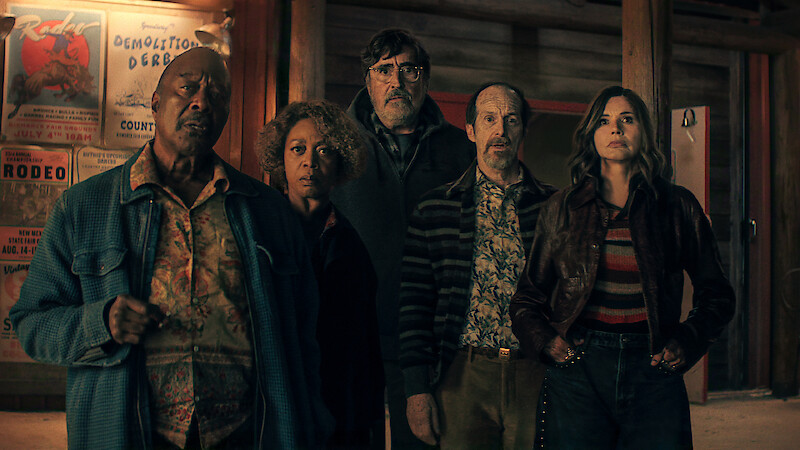
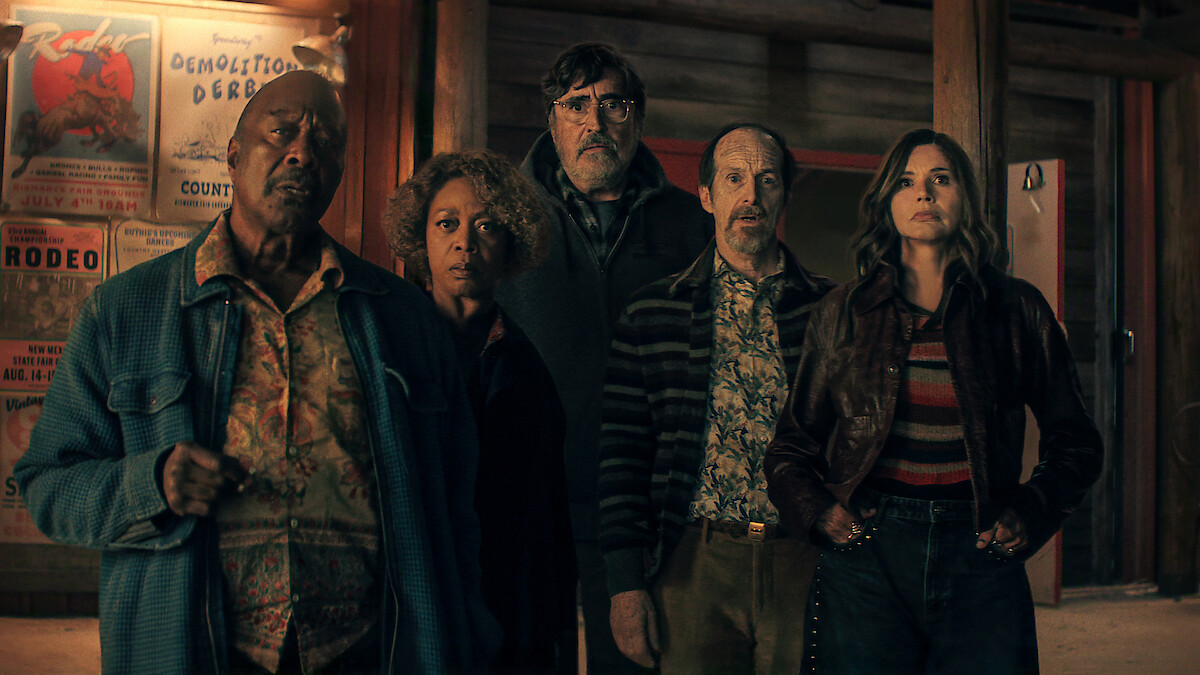
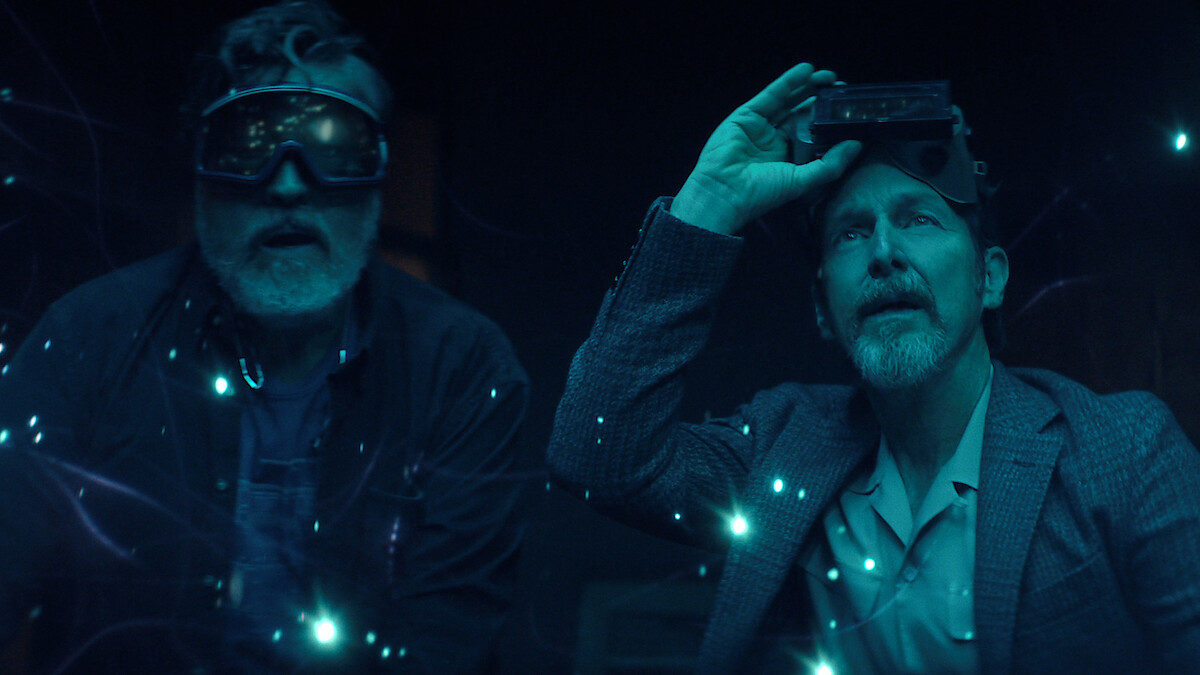
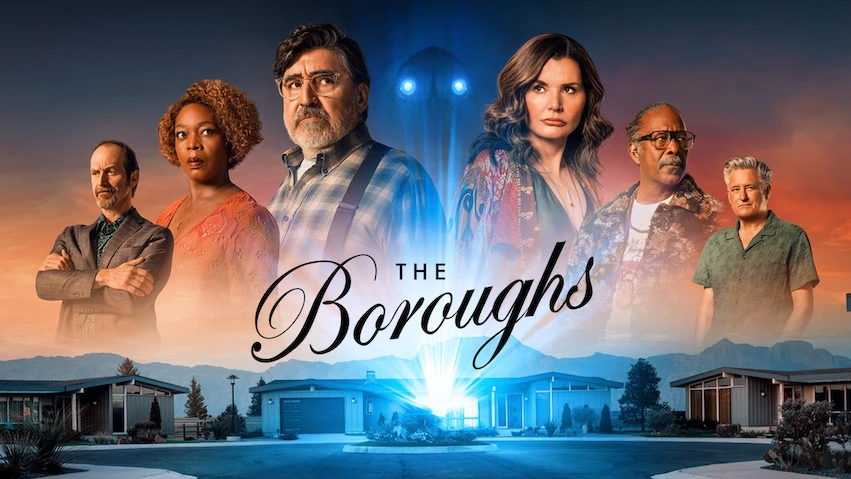
Taking the Duffer Brothers’ guidance to heart, Addiss and Matthews wrap Season 1 with a gratifying end to Sam’s journey of grief. When we first meet Sam (Alfred Molina), he’s a grouchy widower wishing nothing to do with The Boroughs, the desert retirement community where he’s just moved. But by Episode 8, he’s found himself among new friends — including Renee (Geena Davis), Judy (Alfre Woodard), Art (Clarke Peters), and Wally (Denis O’Hare) — who help him start to live again. And in the season’s final moments, we’re left with a hint of another fresh adventure for the ex-engineer — more on that below.
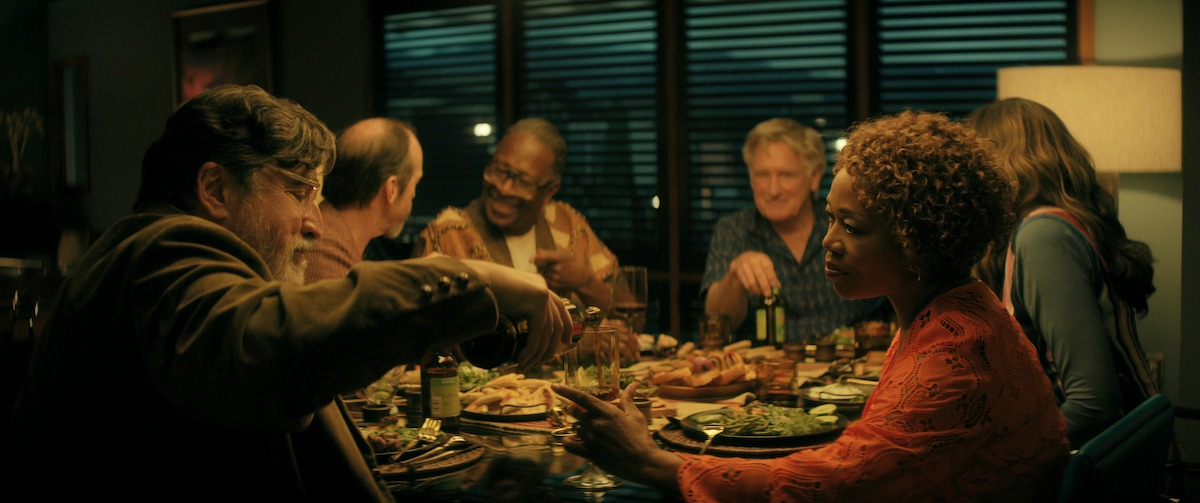
First, Sam and his crew must defeat The Boroughs’ charming CEO, Blaine (Seth Numrich), and his picture-perfect wife, Anneliese (Alice Kremelberg), who’ve been using the picturesque New Mexico neighborhood to cover up an ugly secret.
When Sam Cooper, a former engineer who’s grieving the recent death of his wife, moves into the titular retirement community in Episode 1, it’s presented as a quiet, idyllic neighborhood in which to spend one’s golden years. The sun is shining, and friendly residents greet him from golf carts passing through the perfectly manicured cul-de-sacs.
“The Boroughs is a good place,” Sam’s neighbor Jack (Bill Pullman) assures him. “We take care of each other.”
But then Sam has a nightmarish encounter — which leaves Jack dead — and unearths the startling truth: Strange creatures have been stalking the neighborhood at night, feeding off residents’ brain fluid over time. At first, Sam’s concerns are dismissed as the delusions of another old man, but he finds allies among his new neighbors. They’re suspicious about why some of them are developing serious medical conditions. When Edward (Ed Begley Jr.) is diagnosed with Maxwell’s, it’s described as a “rare neurological disorder that causes the brain to wither and die.”
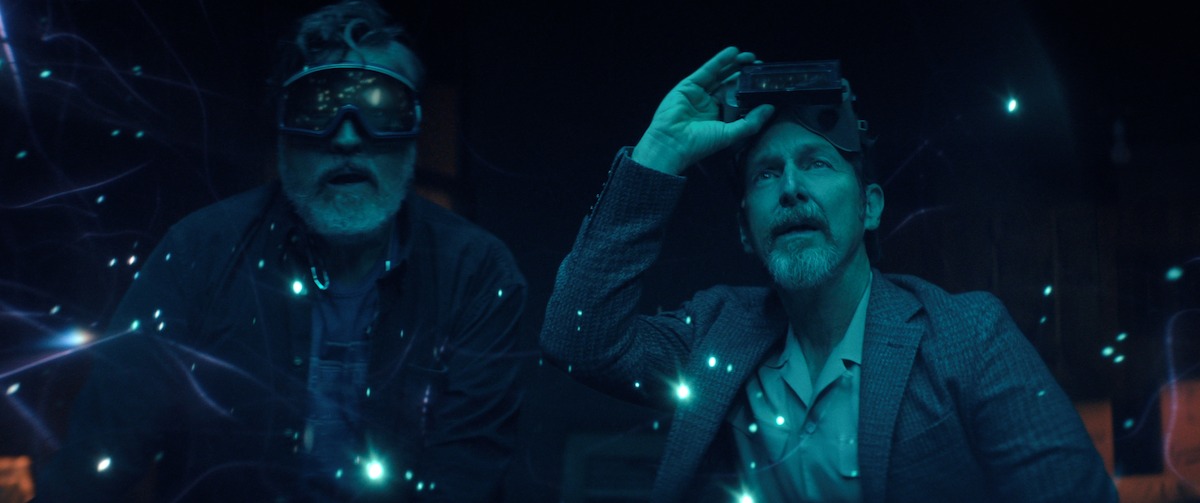
What Sam, Renee, Judy, Art, and Wally uncover over the course of Season 1 is that Blaine and Anneliese have been sending the children of the supernatural being known as Mother (Nancy Daly) — more on them below — through tunnels hidden underneath the Boroughs to extract brain fluid from sleeping residents, which they also feed to Mother to keep her alive. This is so that Blaine, Anneliese, and certain Boroughs staff members can feed off Mother’s blood — that strange golden goo Paz (Carlos Miranda) recalls seeing Hank (Eric Edelstein) drink — which freezes those who consume it in time and keeps them young.
But years of being drained of her blood have taken their toll on Mother. Confined to a hospital bed in Blaine’s secret lab and withering away, Mother wishes to end her suffering by dying.
Here’s what we know about Mother so far: She’s a supernatural being with extraordinary powers, and she doesn’t experience time in a linear way. As far as her origin, “She doesn’t know,” the Duchess (Mary McDonnell) says in Episode 7. “She didn’t even know her name. The folks who drink her blood call her Mother.”
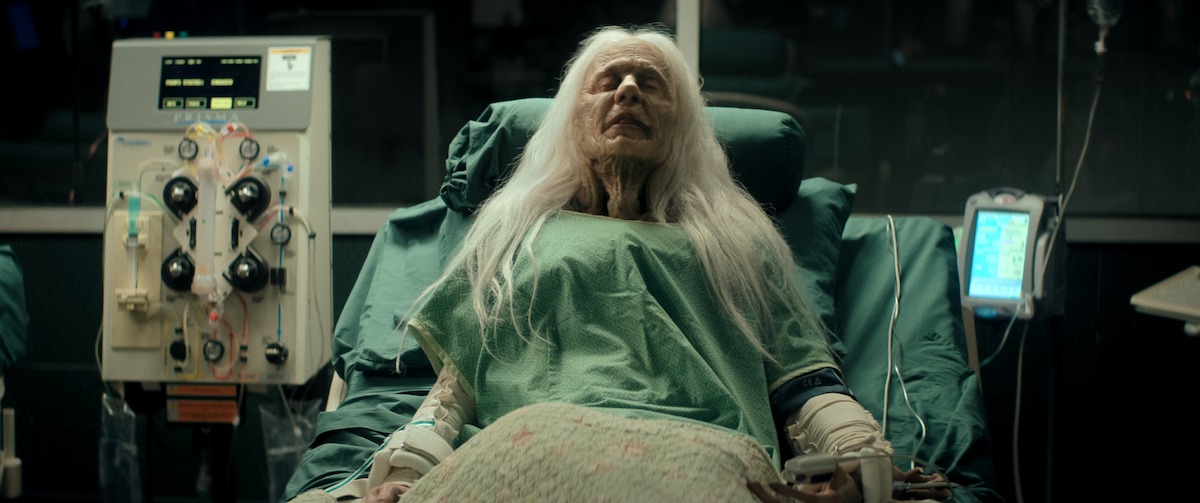
We get our first glimpse of Mother in Episode 6, when Wally witnesses one of Mother’s children feeding on her brain fluid in Blaine’s secret lab. She’s not a grotesque creature, but rather a white-haired elderly figure who looks almost … human. According to The Boroughs’ creators, that was intentional.
“We liked the idea that you are what you eat,” Matthews says. “Blaine and Anneliese take on some monster qualities because they’ve had so much goo, [which means] Mother would take on some human qualities because they’ve stuffed her full of so much brain fluid.”
Mother’s appearance is also a play on the fear of aging. “We think of age as a little scary, a little other, a little alien, a little different,” says Matthews. “And you see this creature who is played by a woman [Nancy Daly].”
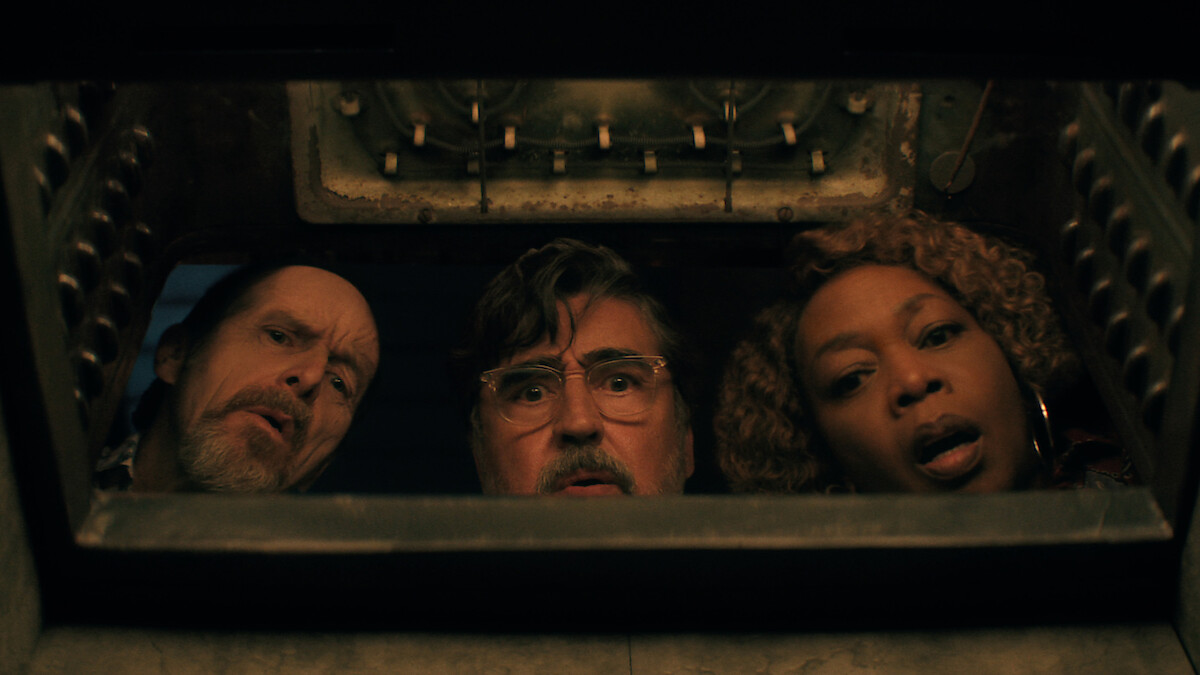
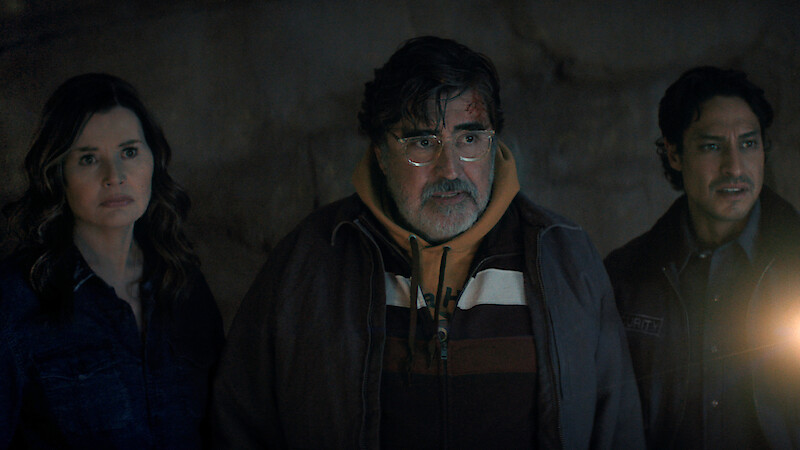
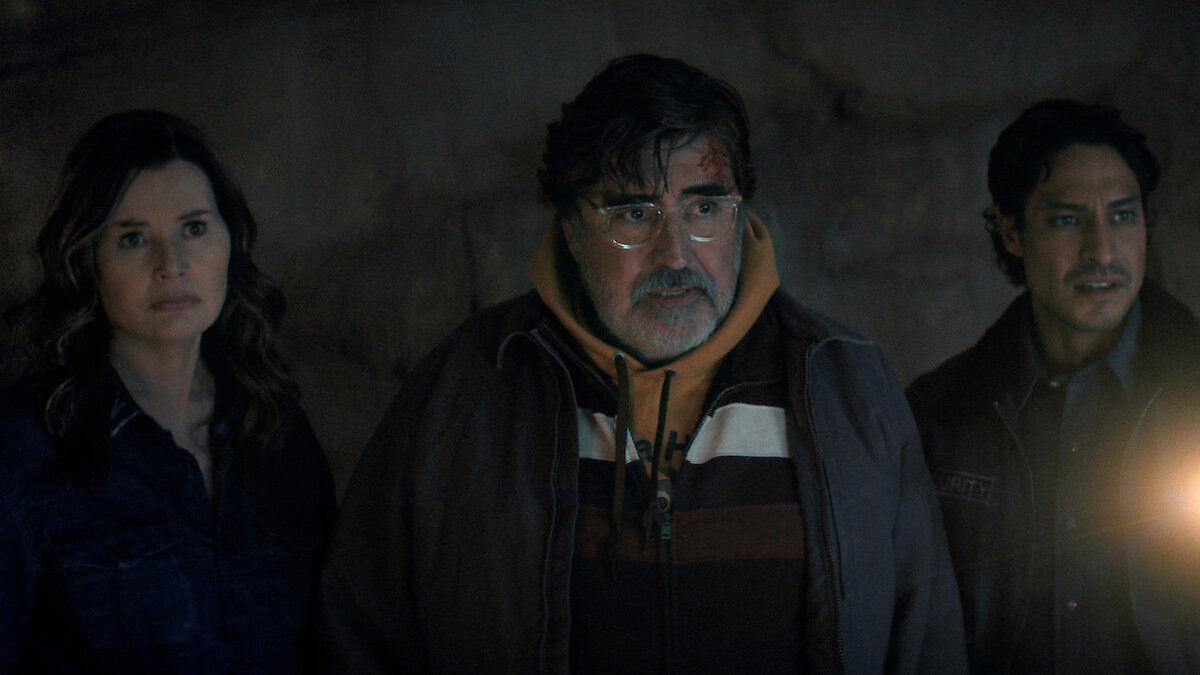
After figuring out that Mother intends to die, Sam drives the supernatural being, who Wally broke out of the lab, to the Cave of Wonders — a makeshift sanctuary nestled in an old mine shaft underneath The Boroughs. It’s there that Mother and her offspring, the leggy creatures that have been sneaking around the retirement community, die together. Mother’s body glows while she’s surrounded by her children, and then it explodes in a wave of light. And Sam, who escorted Mother to her final resting place, is there to witness their deaths. Blaine, who attacks Sam out of revenge for the death of his wife, also dies when Mother’s body explodes. But Sam’s life is spared.
That, we learn, was Mother’s doing. Grateful to Sam for facilitating her wish to end her life, Mother grants Sam extra time with his wife, Lilly (Jane Kaczmarek), whose death Sam has been grieving. For a moment, Sam finds himself back in his former home, where Lilly is waiting for him. When Sam questions how this is possible, Lilly tells him, “She’s saying thank you. Time is a gift.” They share one last dance to Bruce Springsteen’s “Thunder Road,” a favorite of Lilly’s, and Sam finally gets the closure he was denied by her sudden passing.
“If Sam’s arc is about going from not accepting that death is part of life to embracing it, then he starts in a very sad place, missing Lilly,” co-showrunner Matthews explains. “We thought to help complete that arc — to heal that wound and create a little closure — [was] to give him this magical moment.”
Matthews adds that it’s “also not entirely clear how in control Mother is of her own powers.” The showrunners saw this tender moment as “another way to look at how Mother’s relationship to time is different.” In Episode 7, the Duchess, a resident of the special care unit at The Boroughs called The Manor, reveals that Mother doesn’t experience time in a linear way. Similarly, when he first moves to The Boroughs, Sam’s “relationship to time was different because of his grief, so maybe now we can see how his relationship to time can be different because of his healing,” Matthews says.
In Episode 8’s final moments, Sam nurses a forehead cut in his bathroom when something strange happens: His reflection glitches like TV static.
“[Sam] glitching in the mirror is a hint at where we hope to go [next],” Addiss says. “We wanted to have some fun.”
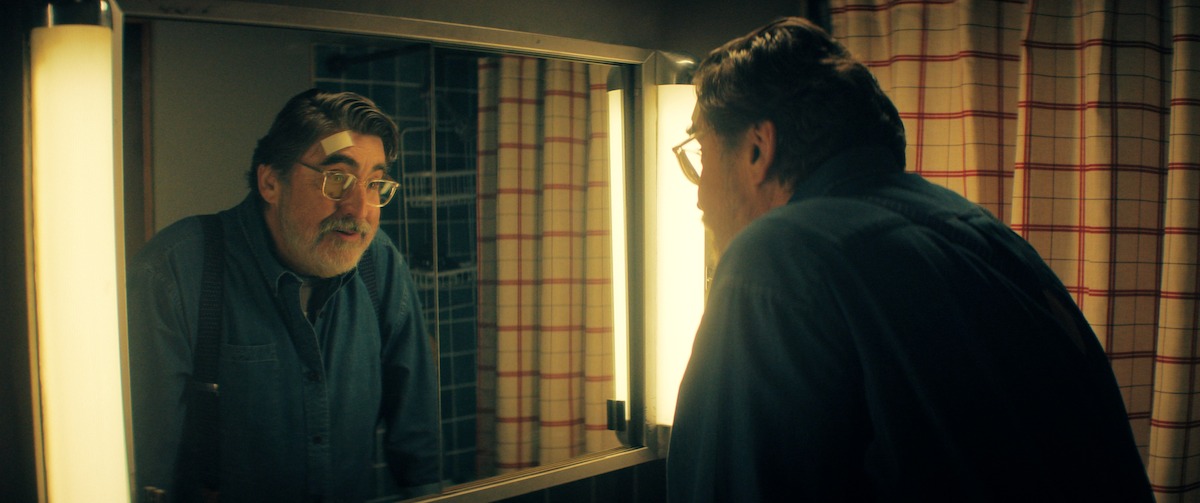
Addiss reveals that the ending is also a “little bit of an homage to Stranger Things.” Like Will Byers (Noah Schnapp) vomiting a slug at the end of Stranger Things’ first season — an unforeseen consequence of his time in the Upside Down — Sam’s glitching in The Boroughs finale alludes to potential effects from his time in the Cave of Wonders.
The Duffer Brothers, certainly no strangers to planting intentional pop culture references, approve of Matthews and Addiss’s nod to Stranger Things. “Matt and Ross saw what we were doing and laughed and supported us in doing that, which was very kind of them because we did it out of love,” Addiss says.
The mirror scene is not the first time that we’ve seen glitching in The Boroughs. Sam sees visions of his wife glitching throughout Season 1, and even Blaine’s dream in Episode 5 features Anneliese glitching in an open casket. In the end, that was all just Mother’s way of communicating.
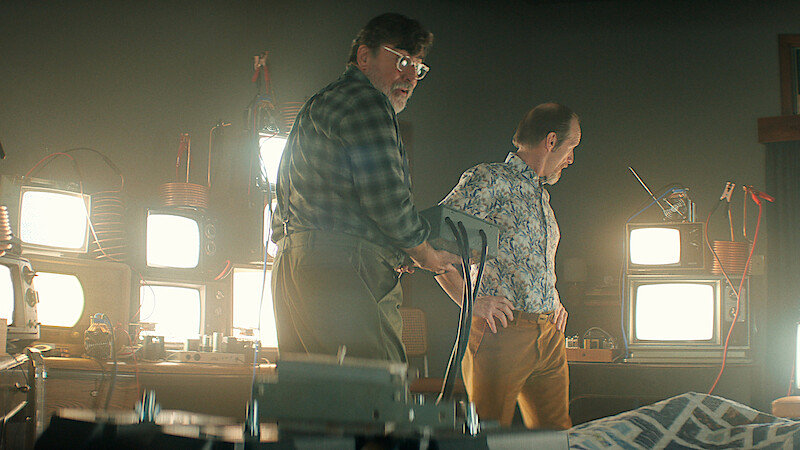
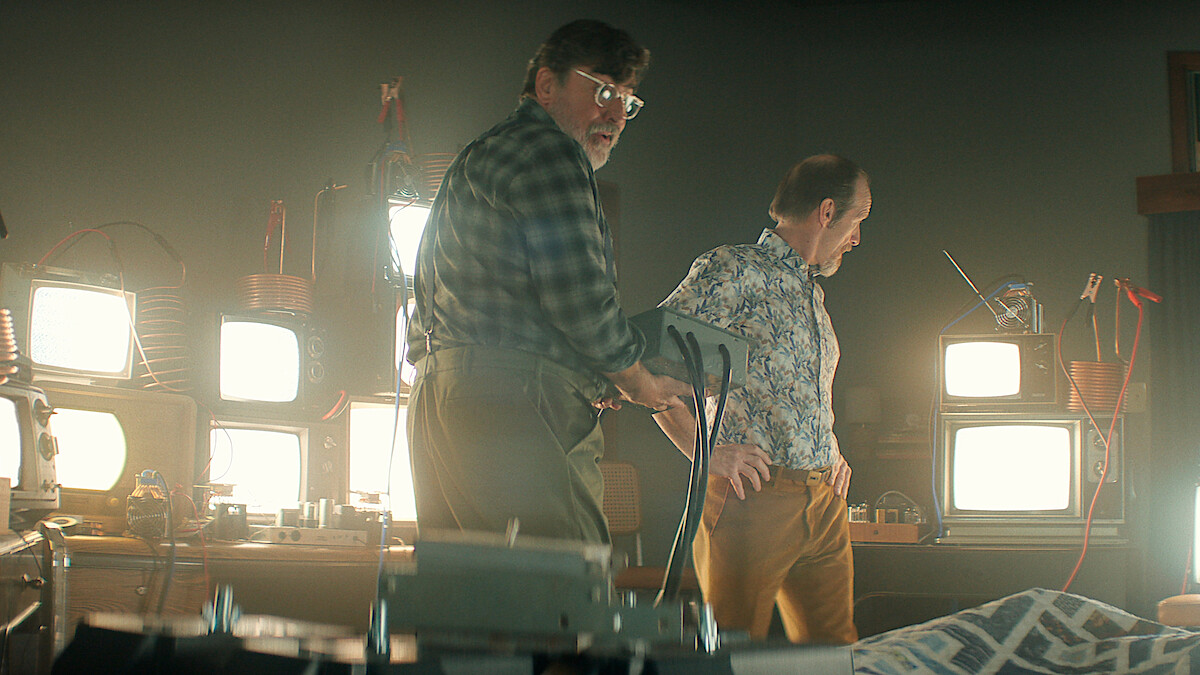
“Mother puts out a signal, a sort of SOS, and that message gets picked up by people who are sensitive to it,” Addiss explains. “Mother is transmitting a signal, and that’s why we played with the idea of old TVs and this idea of transmission. There’s something happening, something going through the air.”
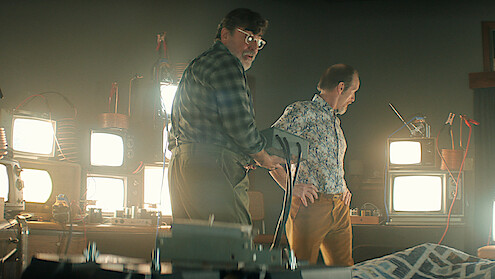
Earlier in Episode 8, before Mother dies, a weakened Anneliese meets her end when she and her husband are trapped in Sam’s accelerator — the device he constructed from old TVs to trap the creature that killed Jack and that failed to work in Episode 4.
Sam’s device finally works, thanks to his daughter Claire’s (Jena Malone) tinkering in Episode 7, but it’s really Anneliese and Blaine’s hubris that ends up being their undoing. “When Kayleigh (Beth Bailey) tries to warn them, they don’t really take [her] seriously,” Matthews says. “They’re so obsessed with each other and so confident in themselves that if they’d gotten out of the way, it would’ve gone better. But they don’t think much of anyone else.”
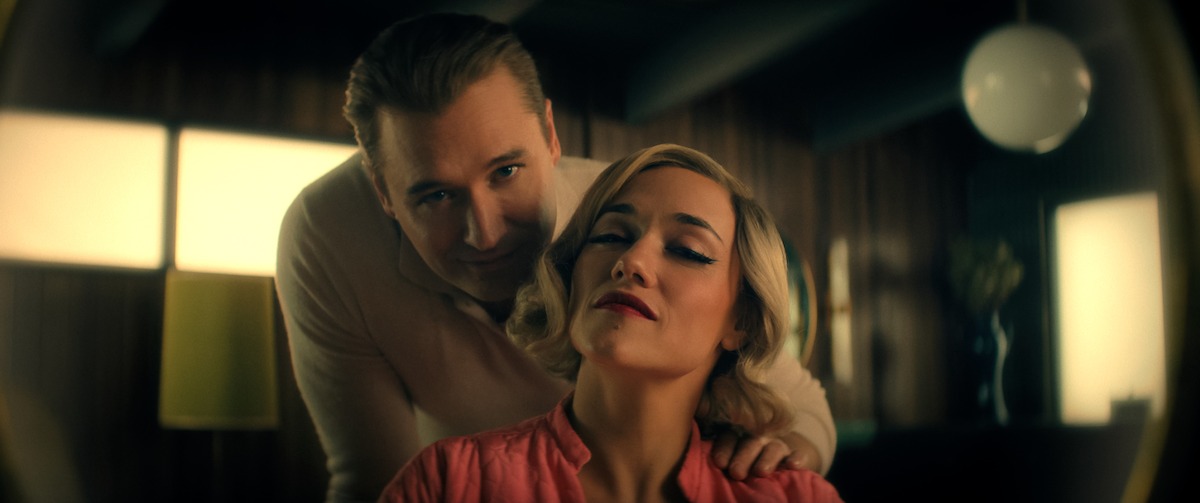
So when the beam hits them, the couple are trapped in place. “They’re not able to really escape, and their last moment is a little tragic. They start to say, ‘I love,’ and then don’t even get to say it,” Addiss points out, noting that Blaine and Anneliese were modeled after Old Hollywood stars like Paul Newman and Joanne Woodward.
Judy also dies in a scene that takes place just before Mother makes it to the Cave of Wonders. Judy succumbs to the injuries she suffered earlier after being stabbed by Anneliese, with Art (Peters) pleading for her life. But then Mother revives her with a glowing hand that Addiss calls a “fun nod” to E.T. the Extra-Terrestrial (1982). The moment, Addiss explains, speaks to the show’s core theme of life.
“If your heroes are older, I think there’s an expectation that they’re going to die or somebody’s going to die along the way,” says Addiss. “We wanted to play with that expectation but ultimately make the choice on the side of life. She’s not done. She’s got more to do, and Mother brought her back, maybe for a reason.”
“It changes you,” Woodard says of her character’s death and resurrection. “[Mother] was that someone that [Judy] wanted to destroy.”
Like the residents of The Manor, Sam is able to hear Mother’s messages — though he doesn’t understand what she’s trying to tell him at first. Mother is able to get through to Sam because his experience of time is different.
“He’s always stuck in the moment that he lost [his wife], so he’s got a foot in two different times,” Addiss explains. “He’s here with you, but he’s always, in some way, with her, holding onto that moment because of the loss. That’s how much he loved her. And so his experience of time is a little bit fractured. That forms the connection because Mother doesn’t experience time in a straight line either.”
Molina took that connection seriously and during filming, grew protective of Daly, who plays Mother. “I became terribly fond of her. In the [show], Sam eventually says, ‘No, we can’t destroy her. We have to save her,’" says Molina, recalling pushing Daly in the wheelchair and growing concerned because the floor was uneven. “And every time [the floor] was catching a wheel, I was worried that it was making Mother bump, and I kept saying, ‘This is going to hurt her. It’s not good for her back.’ I became very protective of her.”
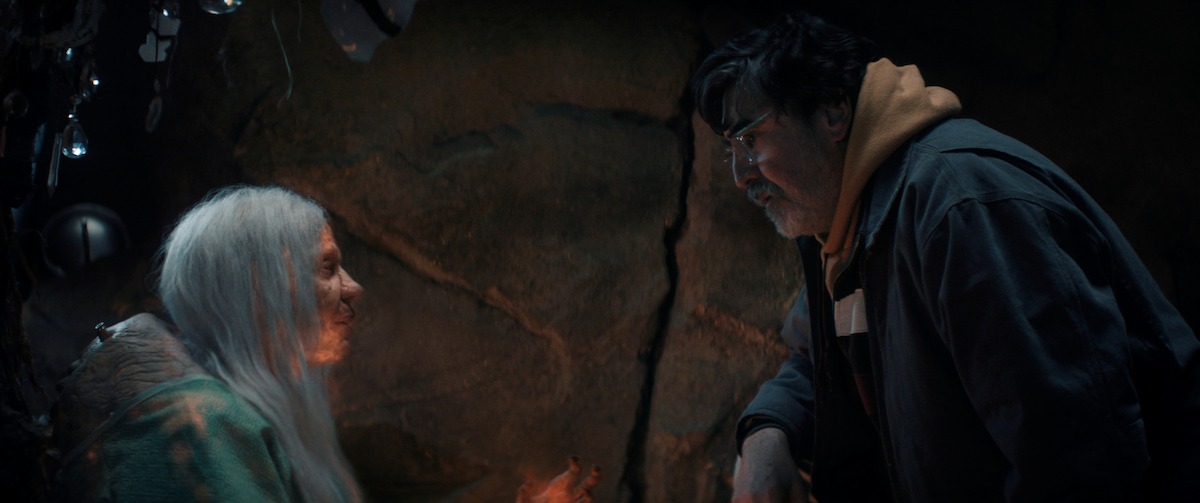
Addiss and Matthews considered making Sam “more of a special magical hero,” says Matthews, but they liked the idea that anyone can be a hero. “It’s the choice to become a hero that is the heroic quality, not bloodline or destiny or fancy training from a wizard when you’re a kid,” Matthews says. “We liked the idea that Sam is just a guy. He has this unique opportunity, and he takes it to become more than he is.”
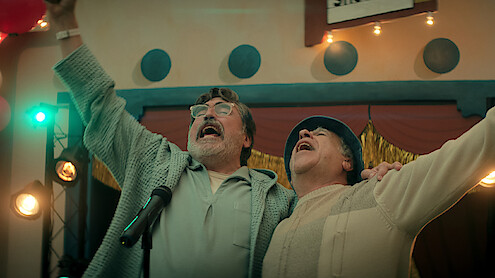
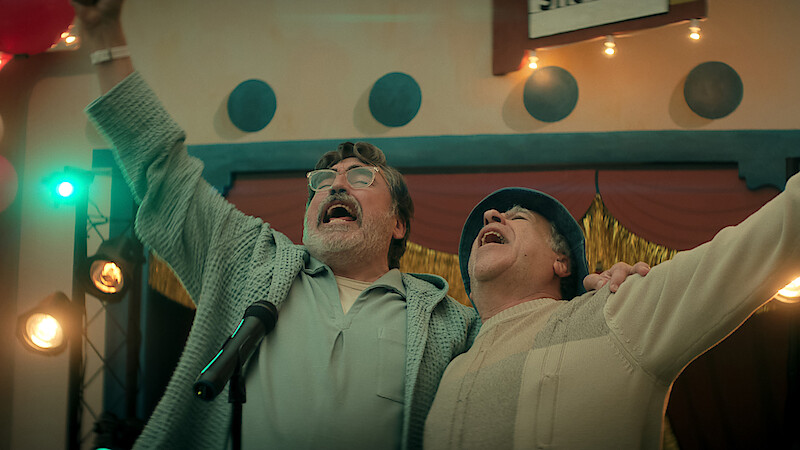
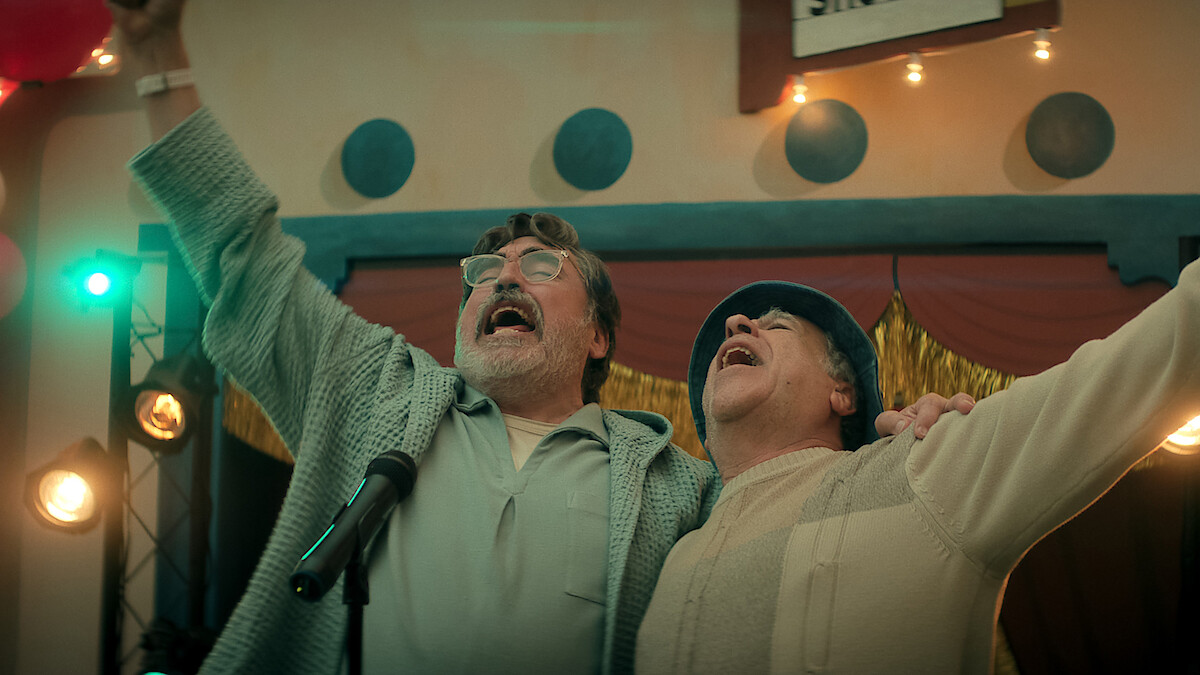
The showrunners also wanted to ensure that the residents who live in The Manor are a crucial part of Sam’s journey. We see this in Episode 7 when Gigi (Anna Deavere Smith), the Duchess, and the others help Sam escape during a karaoke rendition of Bruce Springsteen’s “Thunder Road” (one of several key times the song plays in Season 1).
“They connect to each other through song, and they’re celebrating. They’re having fun,” says Addiss. “We didn’t want it to be scary for them. We didn’t want it to be calamitous. We didn’t want to feel like they were in danger. We wanted to feel like they were part of this story, because they are. Because they experienced time in a different way, and because they have these memory issues — that doesn’t mean they can’t be heroes as well and help in their own way.”
Matthews and Addiss wrote a scene that explains exactly where the tree came from, but they never filmed it. So for now, its origins remain a mystery.
“We ultimately decided to hold that answer [for future seasons] of what the tree is and why the tree is where it is because it’s all connected,” says Matthews.
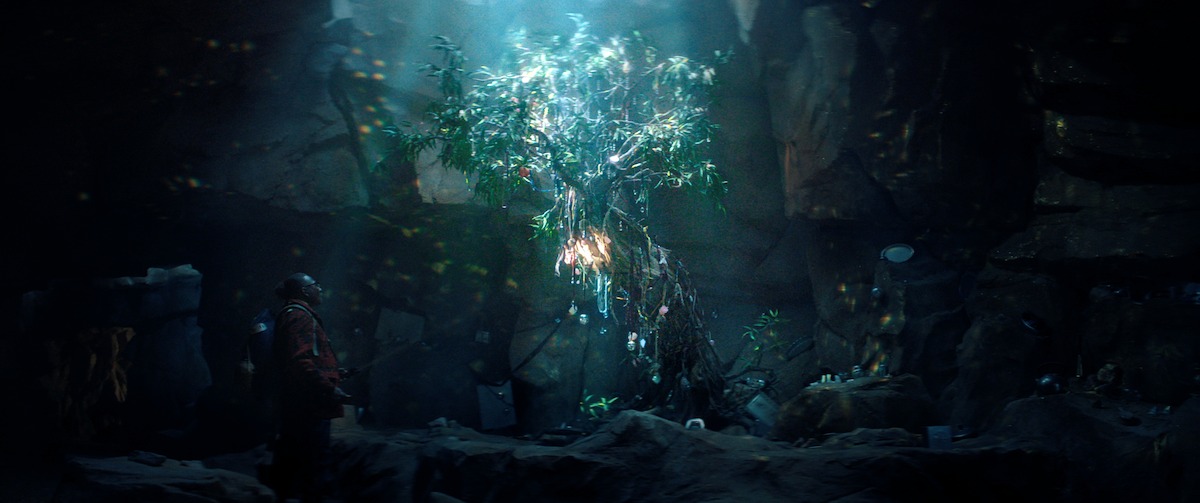
When it came to Art, who discovers the tree along with a magical peach that makes him suddenly youthful, the showrunners “liked the idea of seeing someone have the best version of this fantasy of being younger.” This was without the downside of having to “drain people and be a little bit evil,” Matthews explains.
Art enjoys a lovely day, to the tune of the aptly chosen Bill Withers 1977 single “Lovely Day.” But when he finishes eating the peach, he reverts to his normal age. Actually, he vomits everything he consumed that day and endures excruciating pain while his body changes back to the way it was.
“Ultimately, there’s a price to pay,” says Addiss. “You can’t mess with these kinds of forces without at least getting a stomachache.”
But for Art, it’s a price worth paying. “It’s better to have lived young twice than to just be young once and forget about it,” Peters says of his character’s experience. “In that, I think that there’s a recognition of the value of life and the moments that are there and [a reminder] to treasure them more than anything else.”
With Blaine and Anneliese dead, along with Mother and her children, the fate of the remaining Boroughs staff is yet to be seen.
“We get the impression that it's not going to end well for the people who are drinking goo [to go] without goo,” Addiss says of the staff’s fate. “When Hank (Eric Edelstein) says, ‘I'll let time do what it does best, wipe things clean,’ I think that feels like a pretty good hint that it's not going to go well for him without the goo. They’ve got some tough times ahead because time's going to catch up to them.”
In the season finale, after helping Mother die and defeating the season’s big bad — Blaine and co. — the gang wraps up with a relaxed gathering of family and friends. Sam has made good with his daughter, and Art and Judy have reconciled their fractured marriage.
Plus, Renee and Paz are planning an Italian getaway, which Davis concedes is a new step for her character. “I think [Renee] probably had several younger boyfriends and [at first], maybe thinks that this one is going to be similar,” says Davis. “She evolves through this relationship, and then they’re talking about their future so it's exciting.”
Meanwhile, Wally is embracing life despite his fatal cancer diagnosis. “I think what’s really great is that he comes to it super late,” says O’Hare. “In [Episode 8], he’s basically going, ‘Nuh-uh. You guys aren’t dying, so none of you get to have an opinion. I’m dying. I get to have an opinion.’ And even when Renee sort of wakes him up, he’s not happy about it. It’s that sense of, ‘Is it worth it to alter who you are and live a bit longer, or is there something about being true to your integrity and having maybe a shorter life?’ It’s a brave thing.”
The Boroughs asks, “What will you do with the time you have left?” But the series is not about death. “It’s a show about life,” says Addiss. “The answer for Sam is to make new friends and have more adventures. That’s what I wish for the people that I love in my life — more adventures. That’s what I wish for my grandmother, who lives in a retirement community right now in her 90s and has just started acting.”
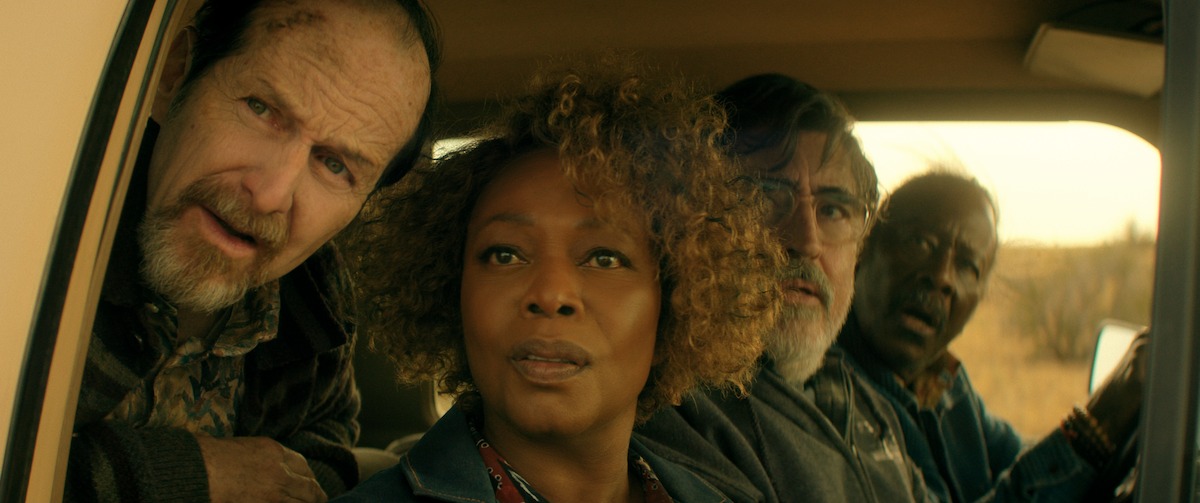
That message is punctuated by Bruce Springsteen’s “Born to Run,” a classic anthem about escaping the mundane, which plays as Episode 8’s credits roll. The 1975 track is the title song of the singer’s third studio album, which also features “Thunder Road.”
“Because ‘Thunder Road’ was such an important song for the whole show,” says Matthews, “we thought going out on a different Bruce song was an important sort of bookend to that.”
“‘Born to Run’ is a joyful song. It’s a young person’s song,” Matthews adds. “It’s full of possibility. And it’s about what Jeff [Addiss] said about the next adventure. We’ve got to get out there. We’re born to do, to go, to see, to experience. It’s not the end of [the crew’s] adventures because they were — like we all are — born to run.”
Stream all eight episodes of The Boroughs now, only on Netflix.