This article contains major character or plot details.
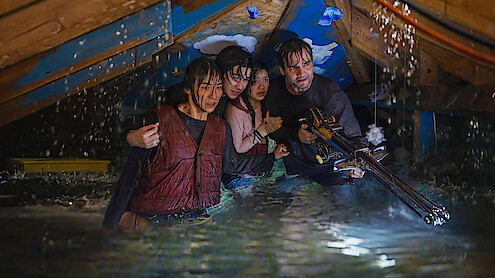
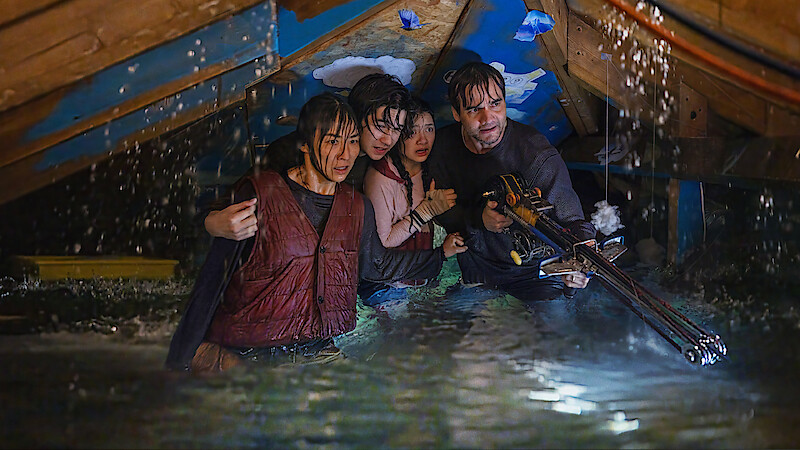
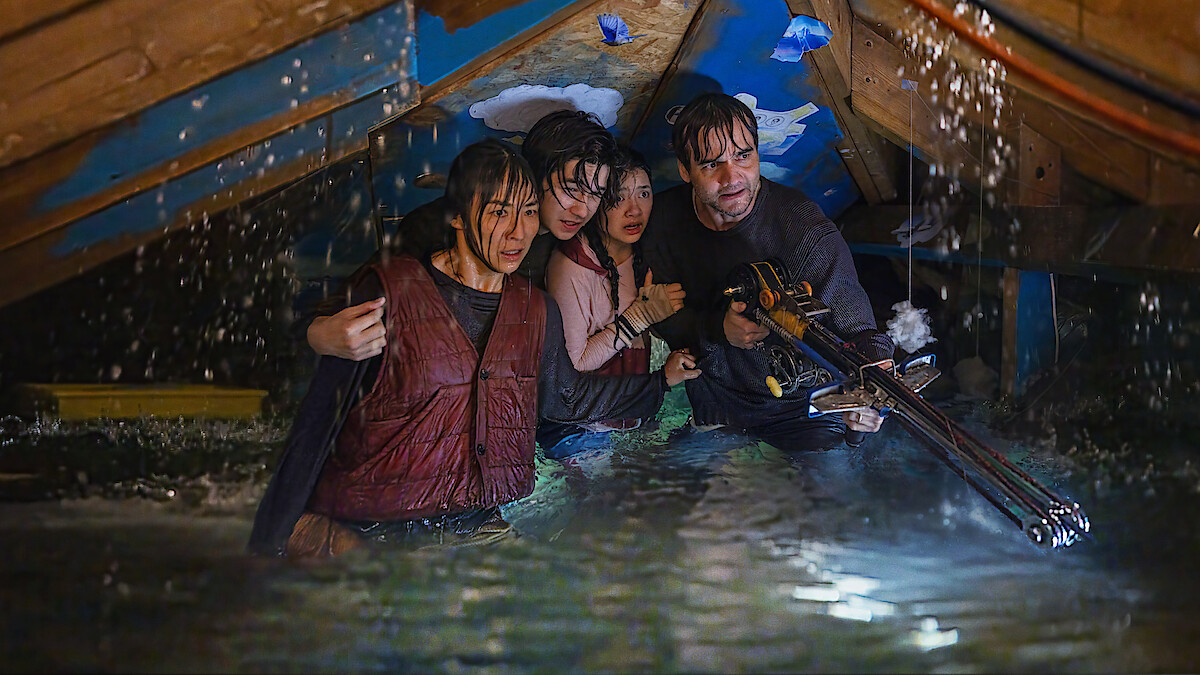
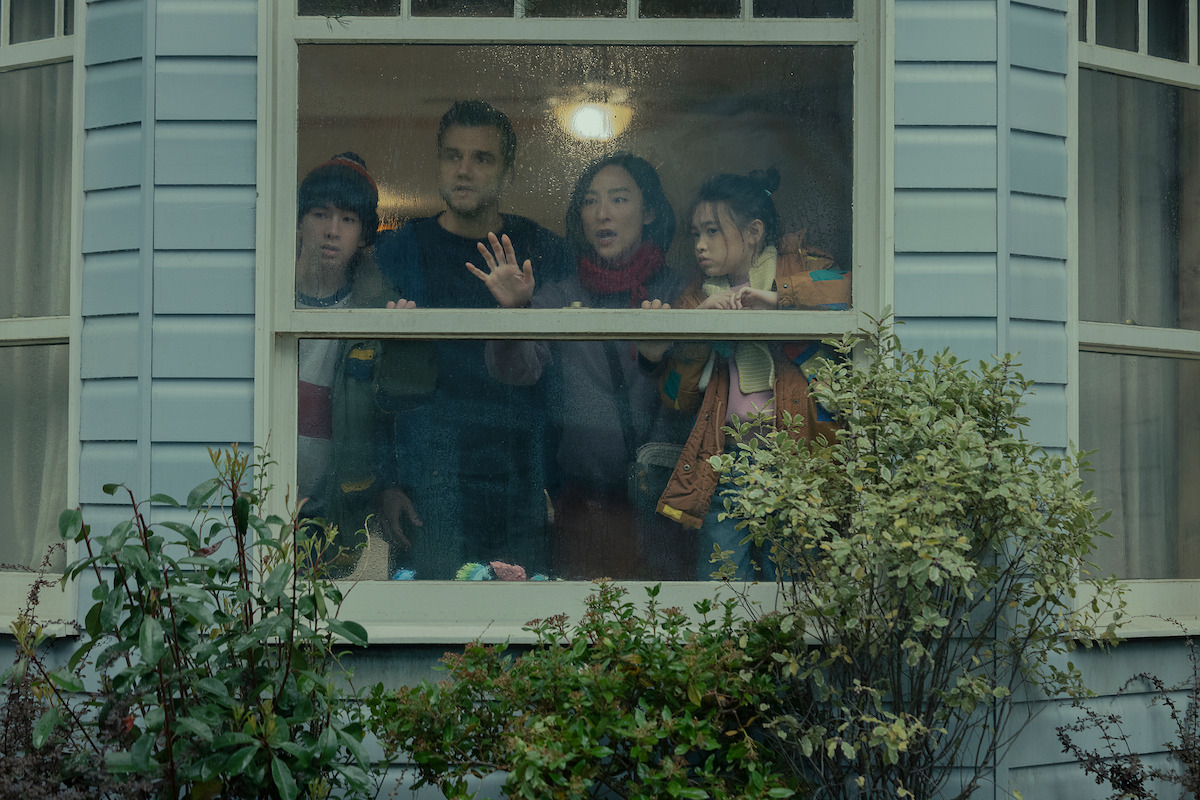
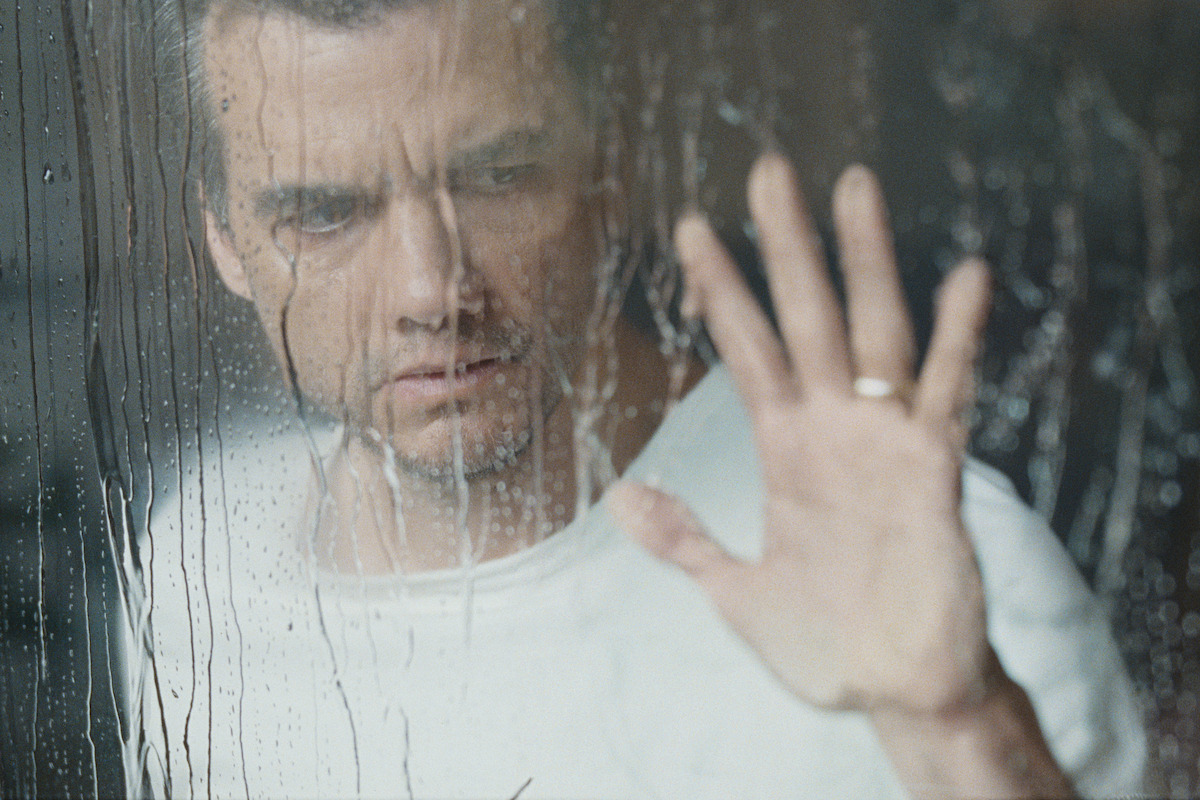
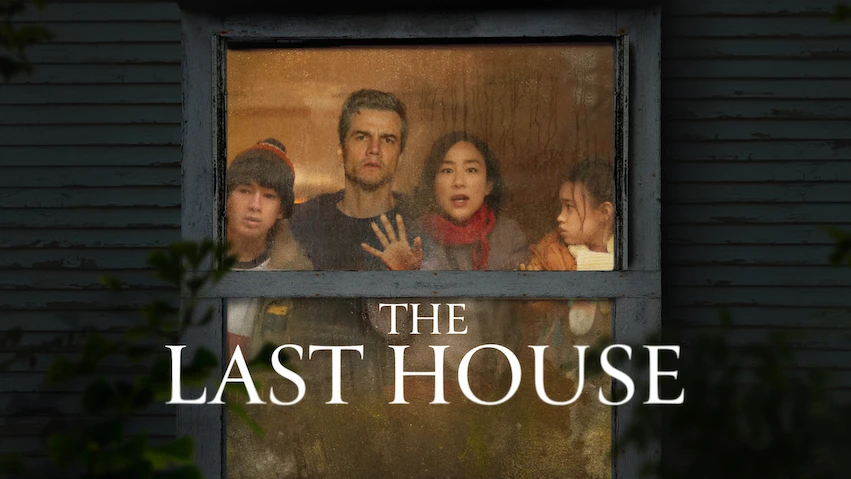
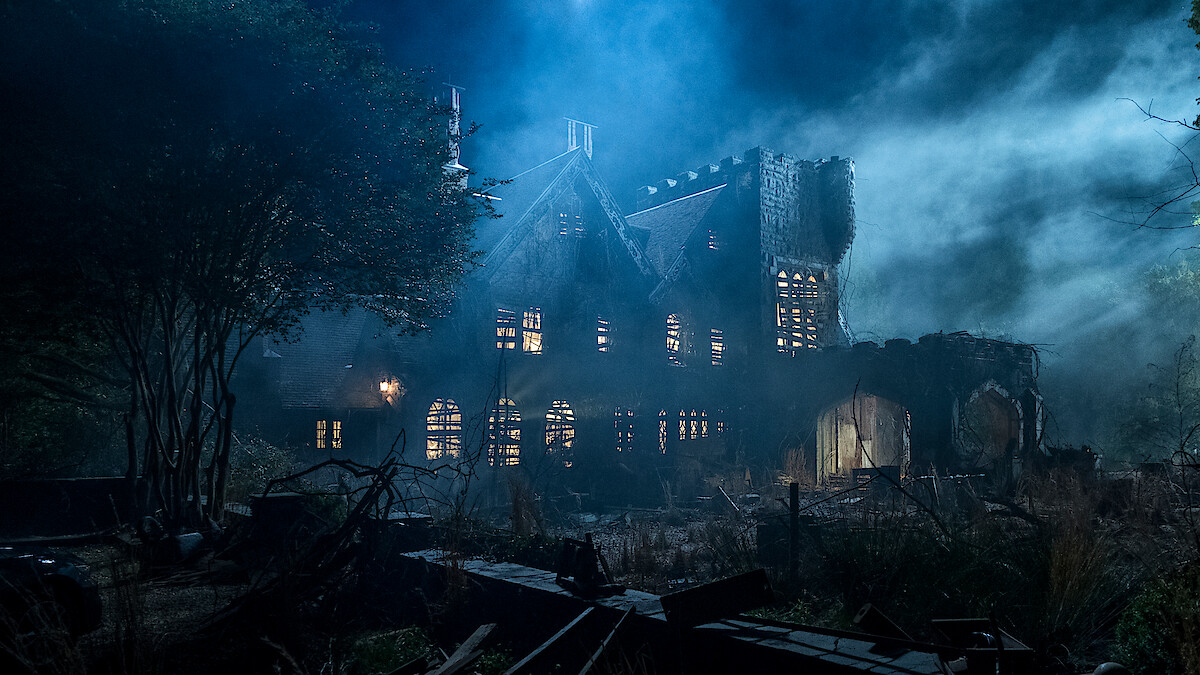
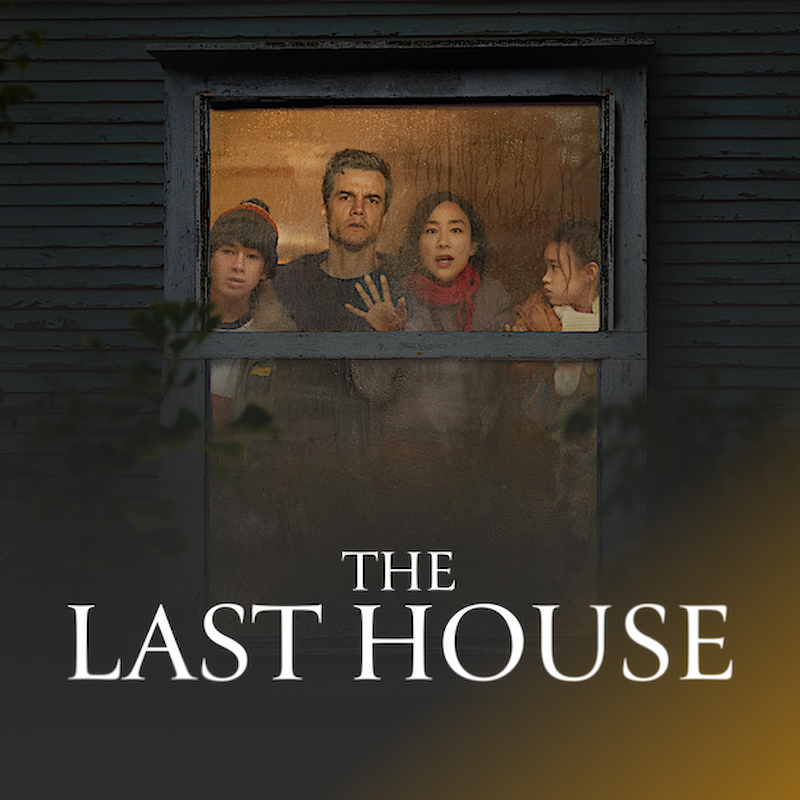
In The Last House, the Delgado family tries to leave home, only to discover that every door and window has been sealed by an invisible force. The same thing has happened throughout their neighborhood, leaving Ann (Greta Lee), Jason (Wagner Moura), and their children, Graham (Noah Alexander Sosnowski and Gabriel Barbosa) and Ruth (Riley Chung and Emma Ho), trapped with no explanation for the mysterious silhouettes moving through the relentless rain outside.
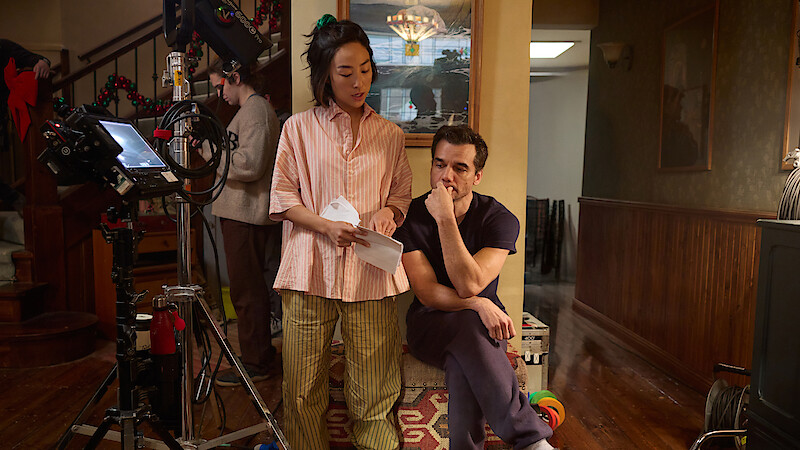
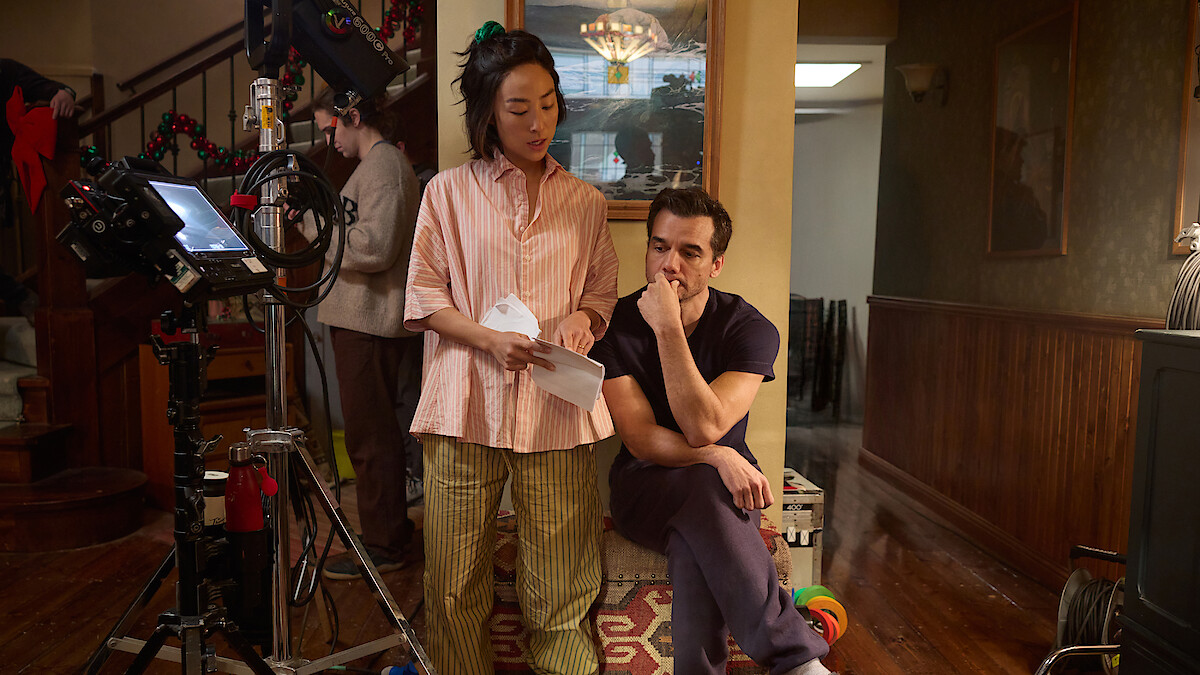
So what exactly has been keeping the family prisoner? Why does Ruth understand the creatures before anyone else? Why do they spare this family? And who delivers that mysterious final “Hello” at the very end? Director Louis Leterrier, stars Moura and Lee, and the film’s creative team explain the answers, from the mythology beneath the ocean to the effects behind the flooded finale. Plus, you’ll learn the meaning of the term “chimney fishing.”
Lock in for some wild answers to the equally wild questions probably swimming through your mind in the wake of The Last House.
Do they survive? How do they hold out for so long?
Yes, and it’s all thanks to the chimney. As the Delgados’ house structure worsens, the chimney cap loosens and falls away, creating a small opening in the otherwise impenetrable barrier. It isn’t large enough to escape through, but Jenkins calls it “one little chink in the armor” that the family learns to take advantage of.
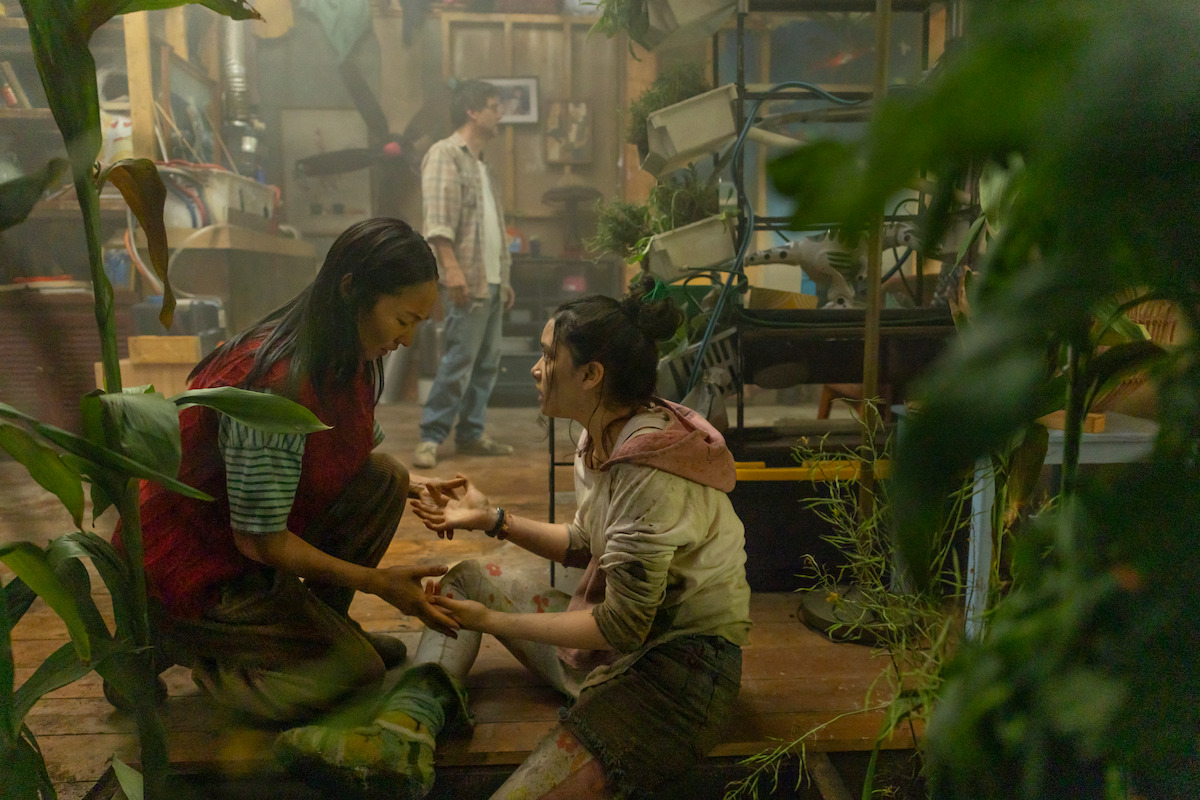
Jason uses the opening to build traps, catch animals — on set, it was called “chimney fishing” — and, alongside other improvised water‑collection systems, helps feed a network of pipes that irrigates the crops growing inside the house. Nearly everything around them is repurposed, from bicycle parts and vacuums to clothing, furniture, and kitchen tools. Leterrier describes the transformed house as a lifeboat Jason hunts and builds, while Ann grows food and finds inventive new uses for the family’s dwindling materials.
Survival consultant Megan Hine helped ground those ideas in reality, focusing on the family’s most basic needs: shelter, water, food, fire, and sleep. “Thinking outside of the box in a survival situation is absolutely key,” she says. The chimney gives the Delgados their opening — literally — but creativity, teamwork, and routine are what keep them alive for five years.
What are the creatures in The Last House?
You might have assumed the forces keeping everyone locked inside were extraterrestrial. According to Leterrier, they’re ancient ocean dwellers who have lived on Earth far longer than humanity has. “They’ve been there way before us,” he says. “We are living on their planet.” After humans overconsumed, polluted the environment, raised global temperatures, and began “boiling the oceans,” the creatures finally emerged from the depths.
Leterrier and production designer Kevin Jenkins wanted the creatures to feel more mysterious than a recognizable sea animal. Jenkins came up with the design quickly. “It accidentally came from the second drawing I sent to Louis,” he says. “You can do a thousand pictures and go on forever. That came out after just two or three pictures.” The resulting creature is fluid, and, almost like a dancer, stands on its tentacles in a way that can resemble two legs and a flowing train.
How were the creatures designed?
Leterrier and Jenkins wanted to keep an aura of mystery around the creatures. They wanted the audience to fill in the gaps, looking to monster movies such as Jaws, Alien, and The Thing — you’re supposed to glimpse the creatures without fully working out what you’re seeing. “The more you show, the more disappointing it can be,” Jenkins says.
To make those glimpses feel real, the production created a practical silicone creature that could perform inside the flooded house. “We knew we were going to put this in a tank,” Jenkins says, “so one of the early conversations that Louis and I had was that we wanted to do a practical creature.” The heavy suit had to move gracefully through the cramped, claustrophobic rooms, with a puppeteer inside it, before visual effects were used to enhance the final result.
That also means the movie’s apparent invasion is actually a reversal. “We think that it’s an invasion movie,” explains Leterrier, “but we realize that we’re the aliens.” The creatures haven’t come to conquer humanity’s world. They are reclaiming their own — and forcing humans to learn how to share it.
How long is the family trapped in the house?
The Delgados stay trapped inside their home for more than five years. The time-lapse reveal happens suddenly: After watching the family struggle through their first months of confinement, the film jumps forward. For Leterrier, that moment in the script was “genius” — it inspired him to go from filming in “beautiful” 35 mm to a digital format to amplify that transition.
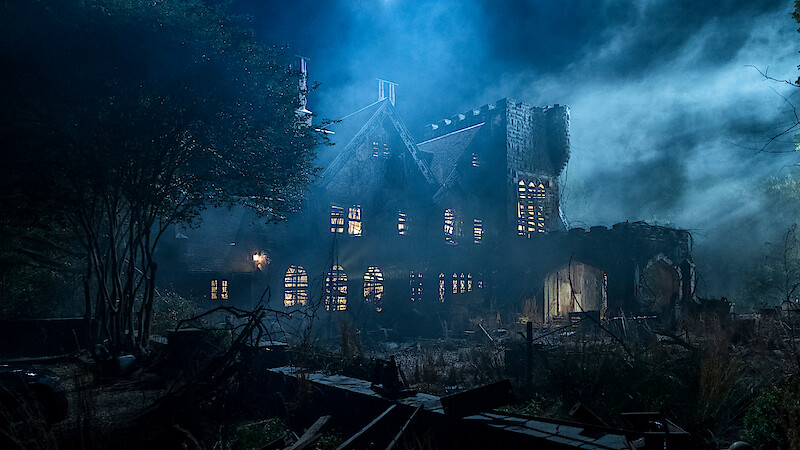
Every other part of the production had to reflect this passage of time. To make it feel physical, Jenkins and his team designed the house’s final, five-years-later condition first, then worked backward, knowing it would eventually have to be filled with water and transformed in countless ways.
During the early parts of the film, the changes are subtle: more plant growth, worn surfaces, and small holes made as Jason scavenges materials. By year five, nearly every available piece of the home has been methodically harvested and repurposed. “We didn’t want it to look like a house was demolished,” Jenkins says. “These people are still living in there as a family.” Instead, the walls, floors, and furniture bear evidence of thousands of desperate survival decisions.
Although the set was designed backward, the production filmed largely in chronological order, allowing the actors to experience that transformation alongside their characters. “What they accomplished was truly astounding,” says Lee of seeing the five-years-later version of the house for the first time. “It felt so essential to us as actors to really feel like the house had aged with us.”
Younger actors Noah Alexander Sosnowski and Riley Chung portray Graham and Ruth at the beginning of the disaster, while Gabriel Barbosa and Emma Ho take over after the time jump. “There was a moment that we had to say goodbye to Riley and Noah and welcome Gabriel and Emma,” recalls Moura. Meanwhile, the adult actors adjusted their performances to reflect prolonged hunger, exhaustion, and the psychological toll of raising children inside an increasingly stripped-down world.
Why do the creatures finally open the doors in the end?
The creatures spare the Delgados when Jason finally stops fighting them. Throughout the film, he responds to every danger by trying to control, fix, or destroy it. But when Ruth recognizes that the creature is communicating rather than simply attacking, Jason trusts his daughter and puts down his weapons.
For Moura, that choice completes Jason’s character arc. “What he wanted is not what he needed,” Moura says. In his determination to protect the family, Jason has overlooked “something more special” that Ruth could see.
That decision also proves the family has understood the creatures’ message. According to Leterrier, they want humanity “to learn how to live together” rather than continuing to dominate one another and the natural world. By choosing trust and coexistence over violence, the Delgados show the creatures that they are capable of changing — and are allowed to live.
How were the underwater scenes filmed?
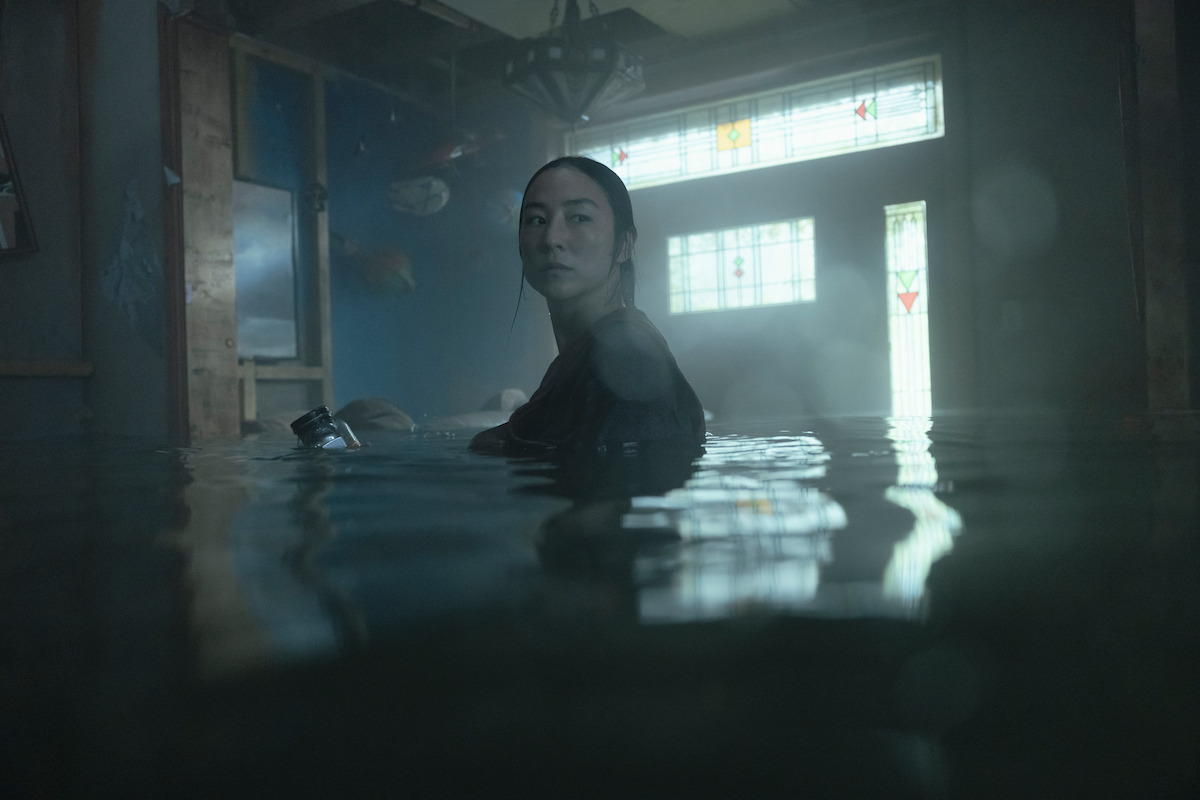
The finale requires Ann to dive into the sewer system under the house before the entire place floods. The underwater sequences were filmed largely in real submersion situations, using specially constructed tanks that allowed the house to flood from within. Leterrier wanted the climax to feel as real as possible, so the actors performed in submerged rooms rather than against blue screens. “We submerged the house underwater,” he says. “The water, the plants, the house — everything is real.”
Marine and diving coordinator Ian Creed put the cast through five underwater training sessions, beginning with basic scuba before progressing to removing masks and regulators, breath-holding, and performing without visible equipment. The cast had to become comfortable with spending entire days submerged. The sequences were carefully choreographed by counts, with performers timing when to dive, turn, retrieve props, and surface.
To make the tank water look murky and green onscreen, broccoli worked better than other ways of dirtying the water — but there was an obvious downside. The cast jokingly called the mixture “broccoli water,” that gave the flooded set a certain green je ne sais quoi.
How does Ruth understand so much about the creatures?
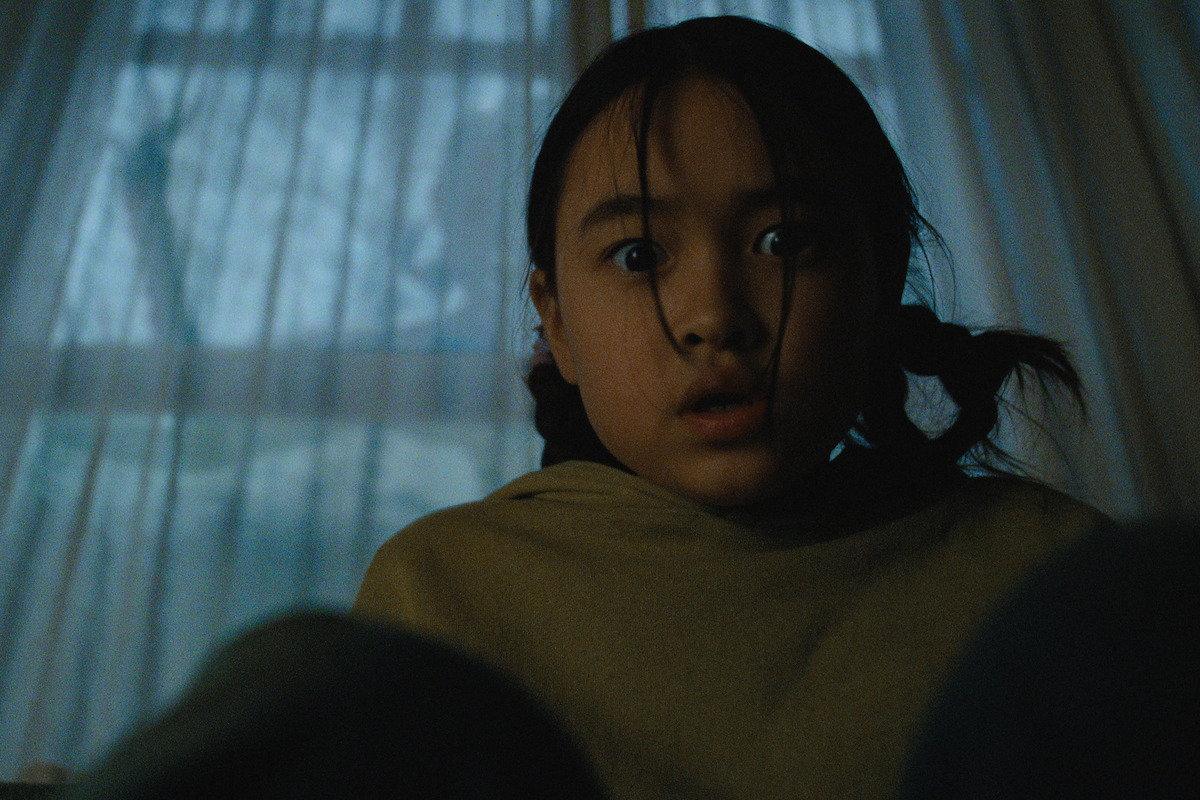
At some points, Ruth seems almost supernaturally attuned to what’s happening, making predictions through art and observations that the rest of her family doesn’t understand — but to Leterrier, it’s not supernatural; it’s intuition and a child’s openness to possibilities. Moura describes Ruth as thinking on “another frequency,” able to recognize what her mom and dad can’t because they’re so consumed with protecting the family. Ruth doesn’t possess secret knowledge, but she intuits that the creatures may be trying to communicate rather than attack.
Are there other survivors in the world?
Yes. Leterrier believes people elsewhere likely survived, particularly those living on higher ground, in high-rises, or in buildings where groups could work together. “I hope for our world that many of us were able to survive,” he says. The film deliberately leaves the scale of humanity’s survival unknown, but the Delgados are not necessarily the last people left on Earth.
Who says “Hello” at the end?
Right before the credits, Ruth asks, into a radio, “Are there any other survivors out there?” A very staticky voice responds, “Hello?” That’s not just any voice, though. Leterrier won’t give up the secret of who it belongs to, but he teases that the voice belongs to “a very, very, very iconic” person — and insists viewers will never know for sure who it is.
The Last House is streaming now, only on Netflix.