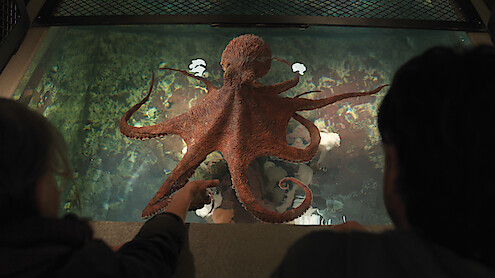
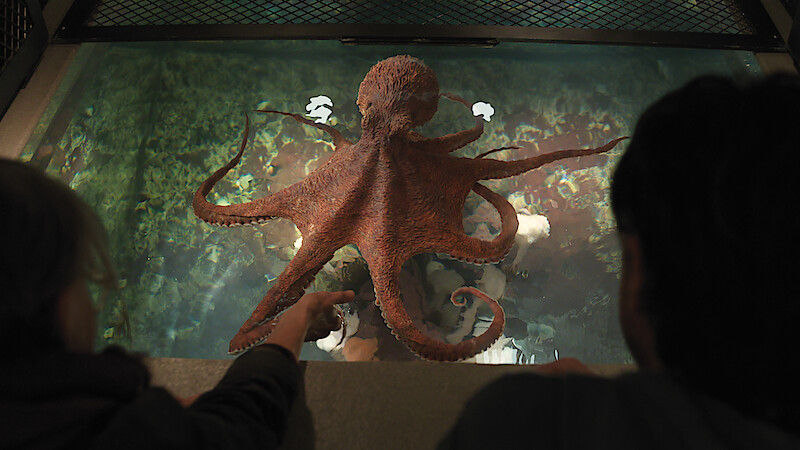
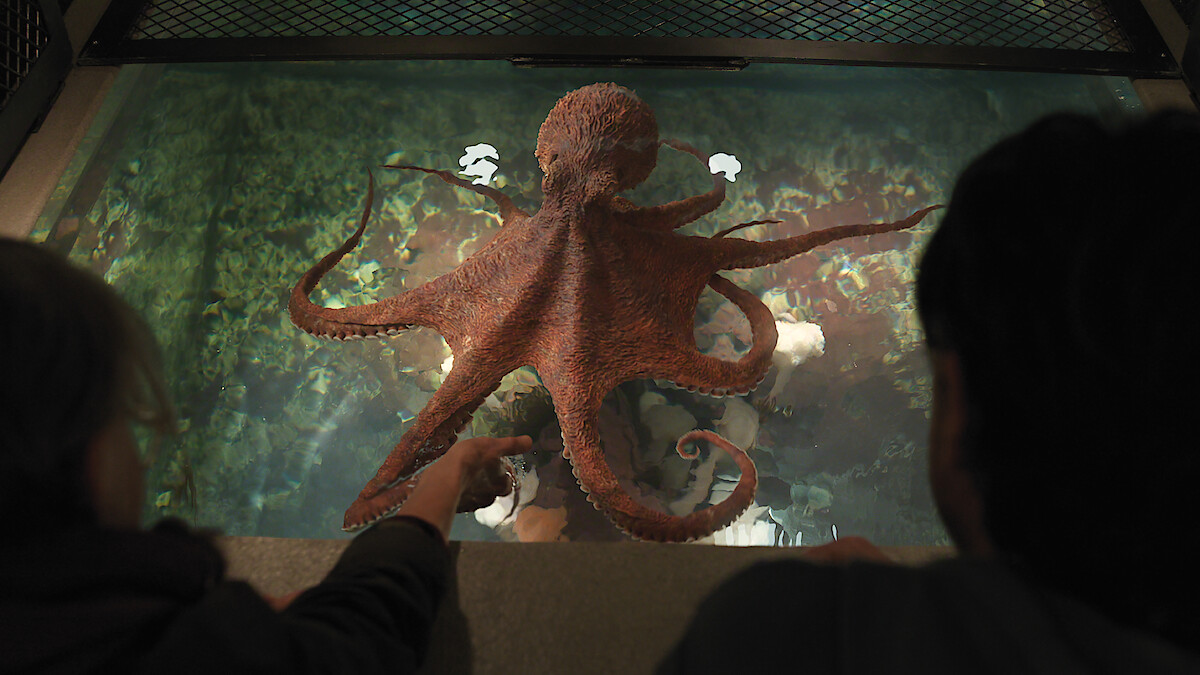
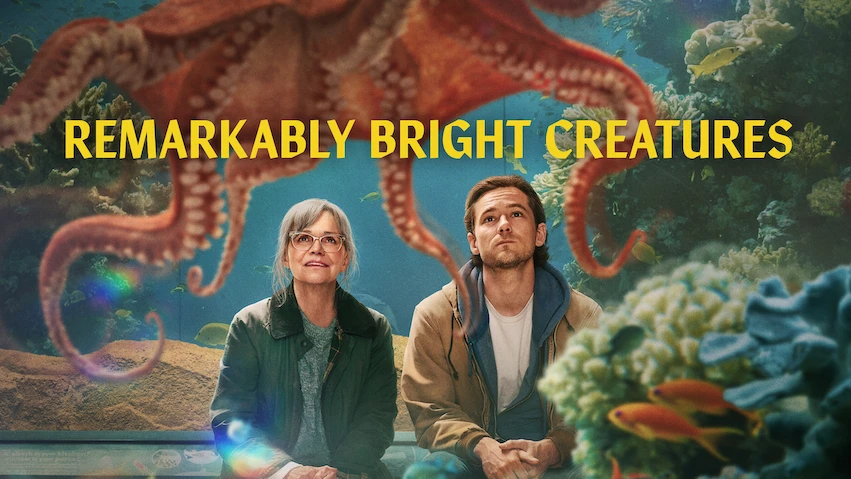
One of the great joys of Remarkably Bright Creatures — the cinematic adaptation of the beloved 2022 novel by Shelby Van Pelt — is that it pulls off a mystical bit of aquatic enchantment: by the time the credits roll, you feel you’ve found an unlikely new underwater friend in Marcellus, the squishy, sharp-witted octopus who sits at the heart of the story.
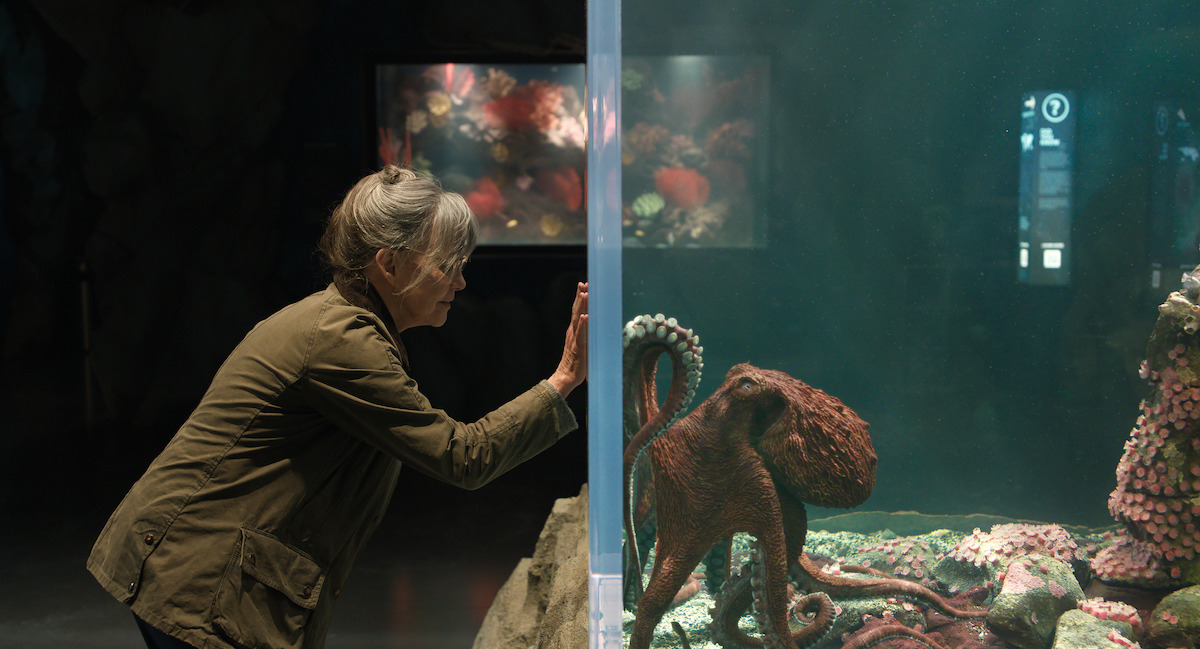
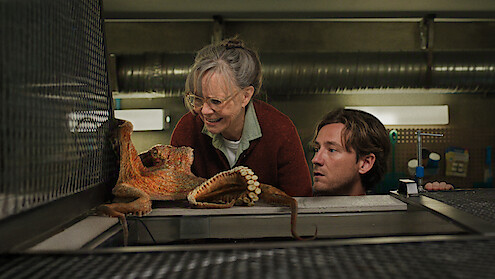
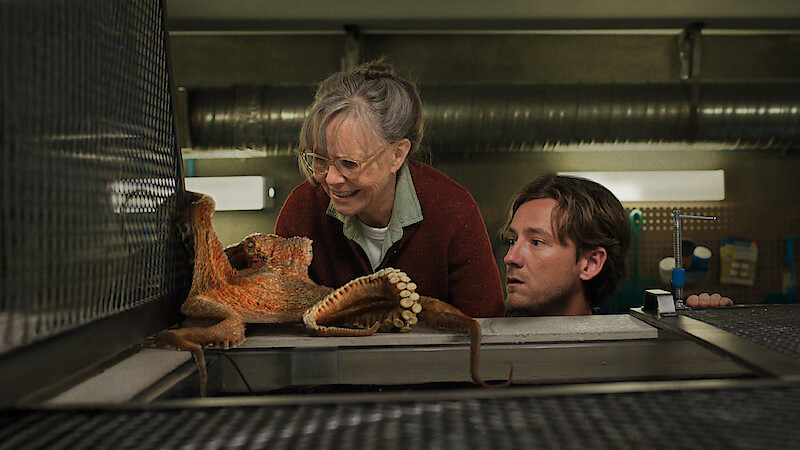
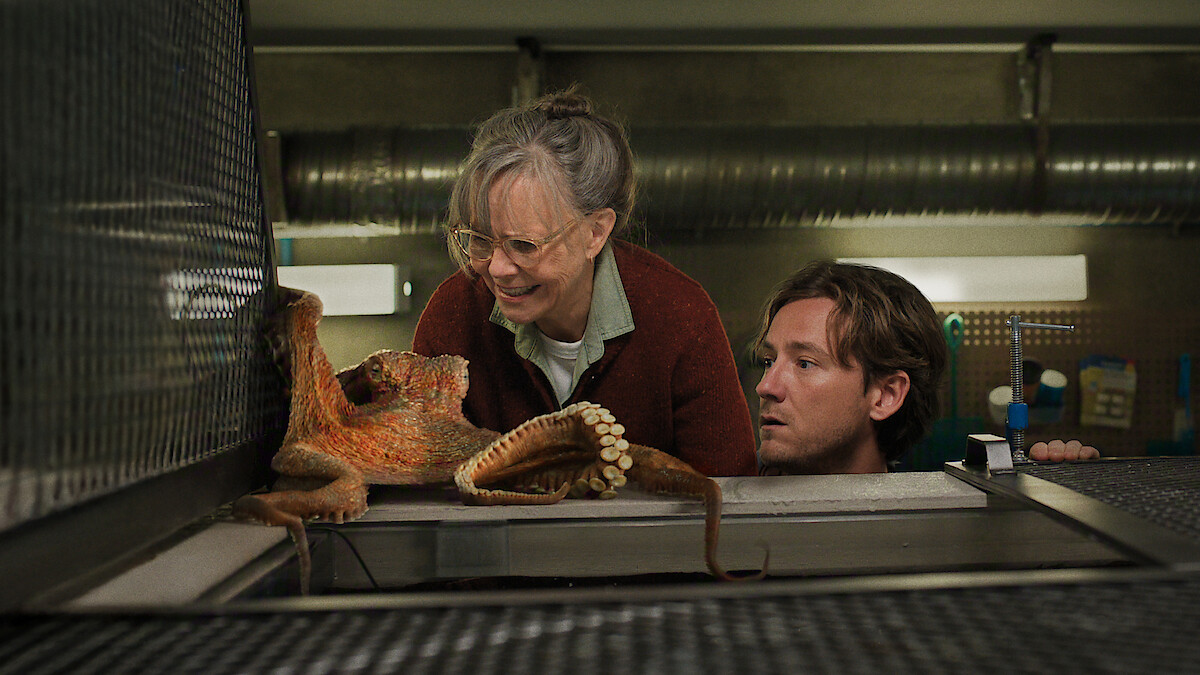
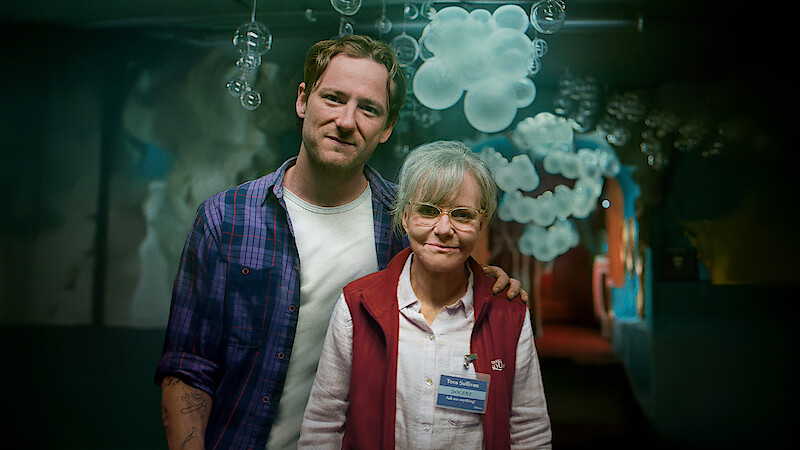
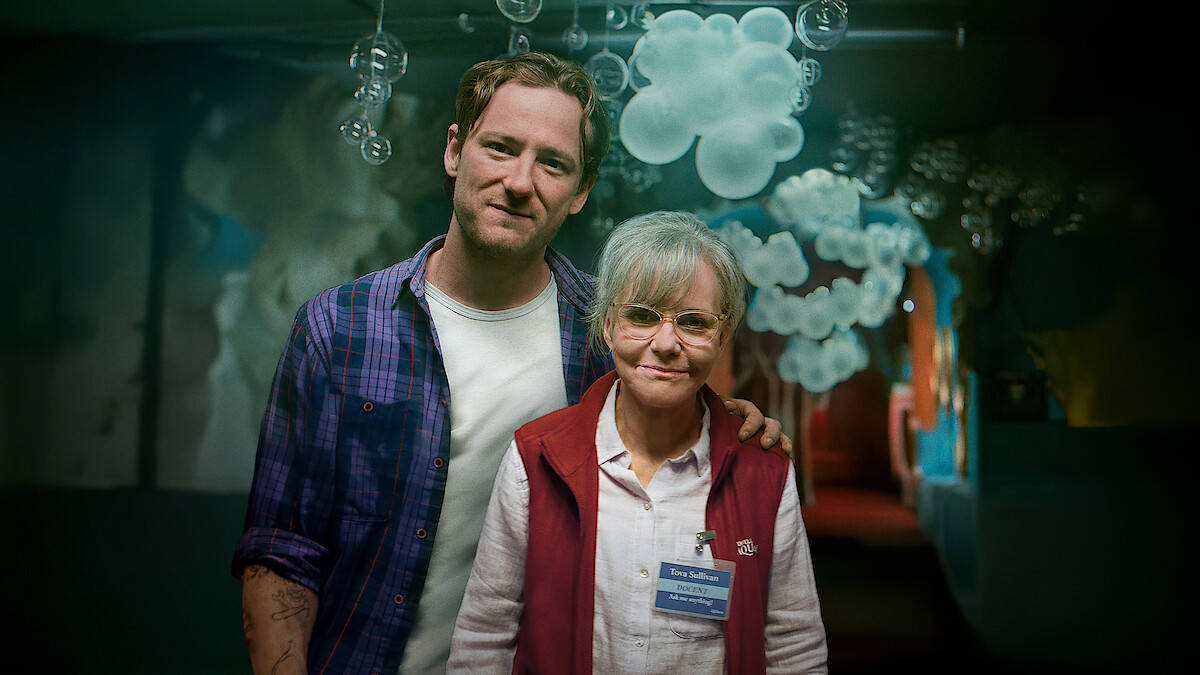
Marcellus is a formerly wild sea creature who acts as something of a Greek chorus. Living at a local aquarium, he observes and comments on the humans in the outside world, developing an unusual extrasensory bond with the two people whose job it is to clean his tank: the lonely widow Tova, played by Sally Field, and the rudderless seeker Cameron, played by Lewis Pullman. “Marcellus is her confidant, the only thing that she really talks to,” Field says. “She cuts herself off from her friends and everything else in the world except this octopus that she comes and talks to and tells everything.”
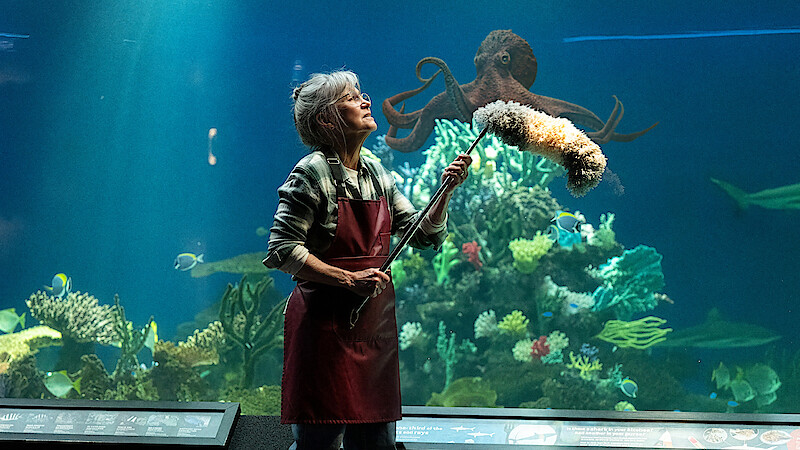
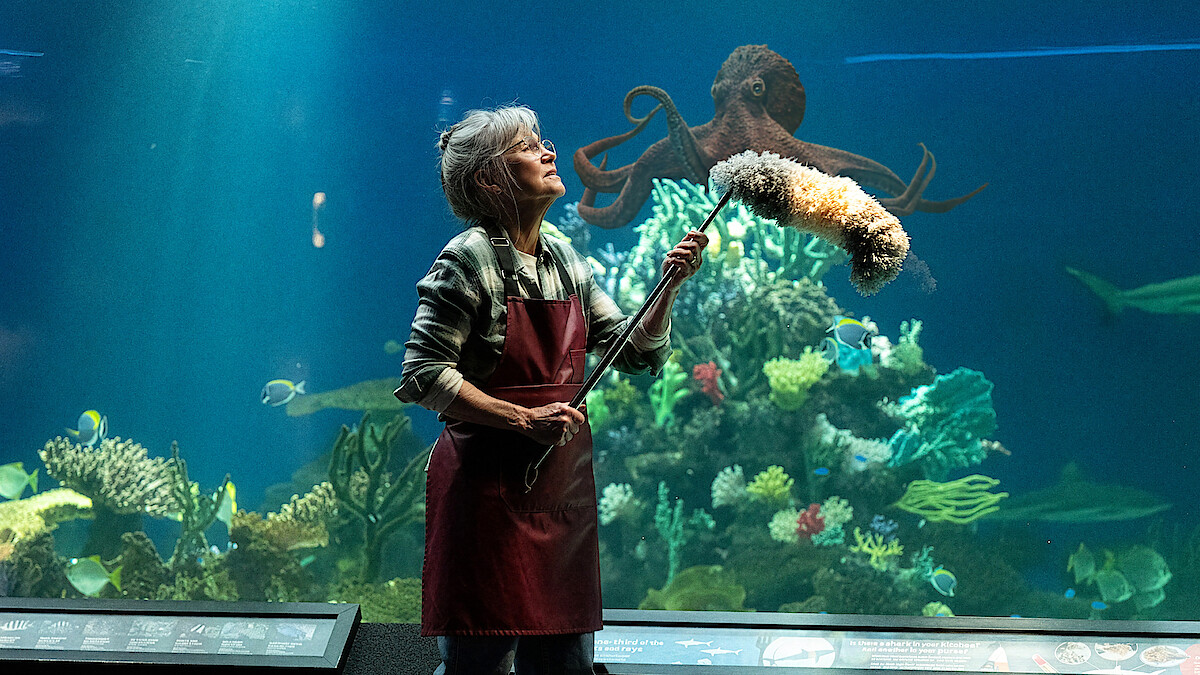
As genuine and emotionally resonant as he seems, Marcellus is a fully animated VFX creation, meticulously added into each shot after filming on set concluded. His presence would not be possible without the wonderful people who brought him to life — not just Alfred Molina, who voices the creature with spunky, sardonic irony, but the art and production team who worked tirelessly to make Marcellus feel so vivid and vivacious. Here, in this Olivia Newman-directed film, is an example of the best of what imaginative cinema can offer us: By the movie’s conclusion, after having watched Marcellus quietly push Tova and Cameron along on their journeys of self-discovery, this eight-tentacled ocean creature feels as real as the humans he acts across from — an awe-inspiring new buddy who absolutely lights up the screen.
Read on to see how the film’s VFX and production team brought Marcellus into such fully realized existence.
How real is Marcellus?
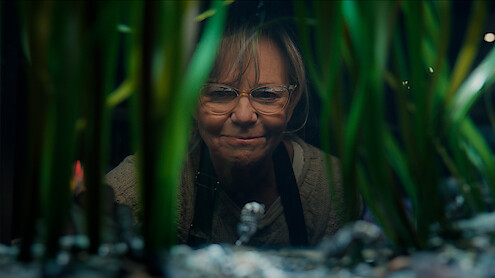
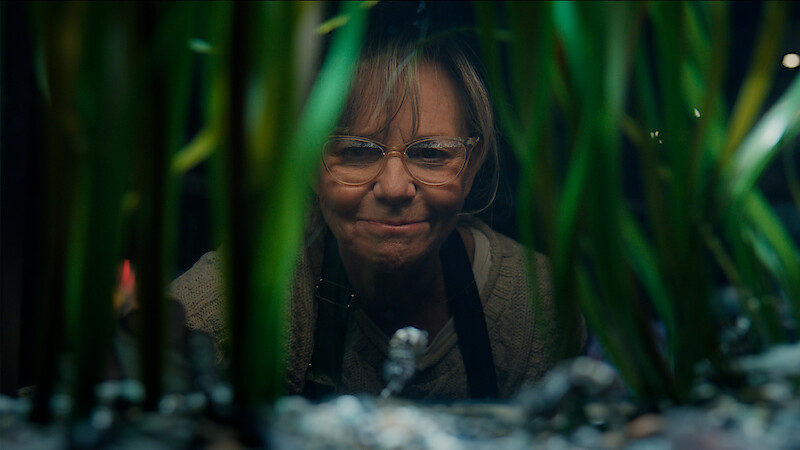
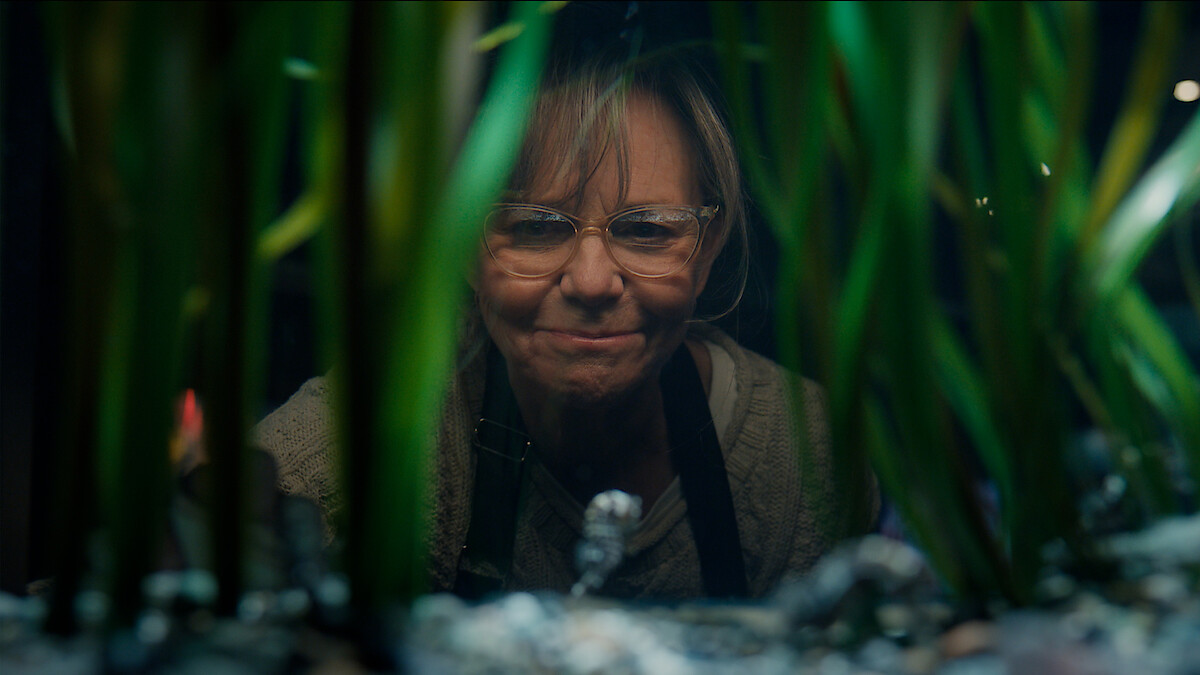
As authentic as Marcellus feels in the film, he was a VFX creation, meaning for the bulk of filming, Field — the Oscar-winning actor with the most scenes opposite Marcellus — had to become fully at ease playing against an octopus who often existed only in her imagination. “Well, it’s just acting. You always create something within yourself. In a lot of ways, whether you’re acting across from an actual human being or something manufactured in front of you in an aquarium that isn’t really there, you create an imaginary life,” she says. “It feels real to you.”
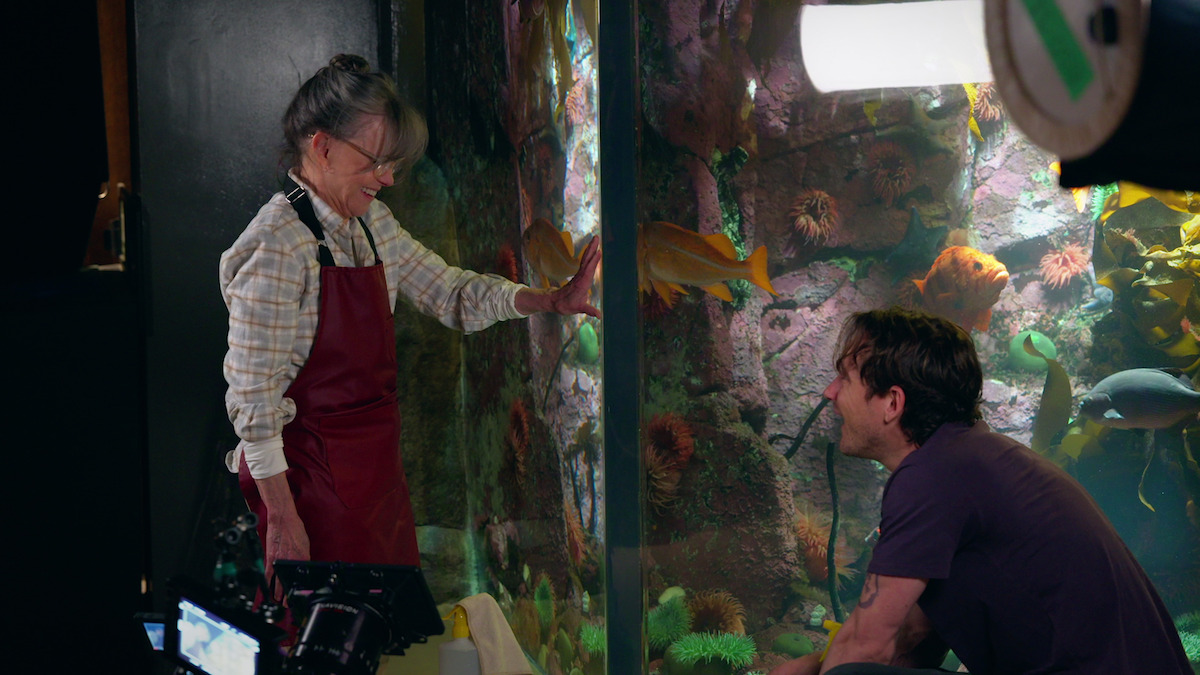
The VFX and production teams worked closely with Field to help her find her marks opposite the tank — a fully-functioning tank which they built specially for the set — but because Marcellus would ultimately be created in post, they were free to build the performance around her instincts, shaping the octopus to match what she gave them, rather than the other way around. “First and foremost, I didn’t want to interrupt her performance, so anything that she wanted to do, I wanted Marcellus to be able to react to it. She could dictate the performance,” says Chris Ritvo, visual effects supervisor for the film. “She’s been doing this forever, and she’s an expert at it.”
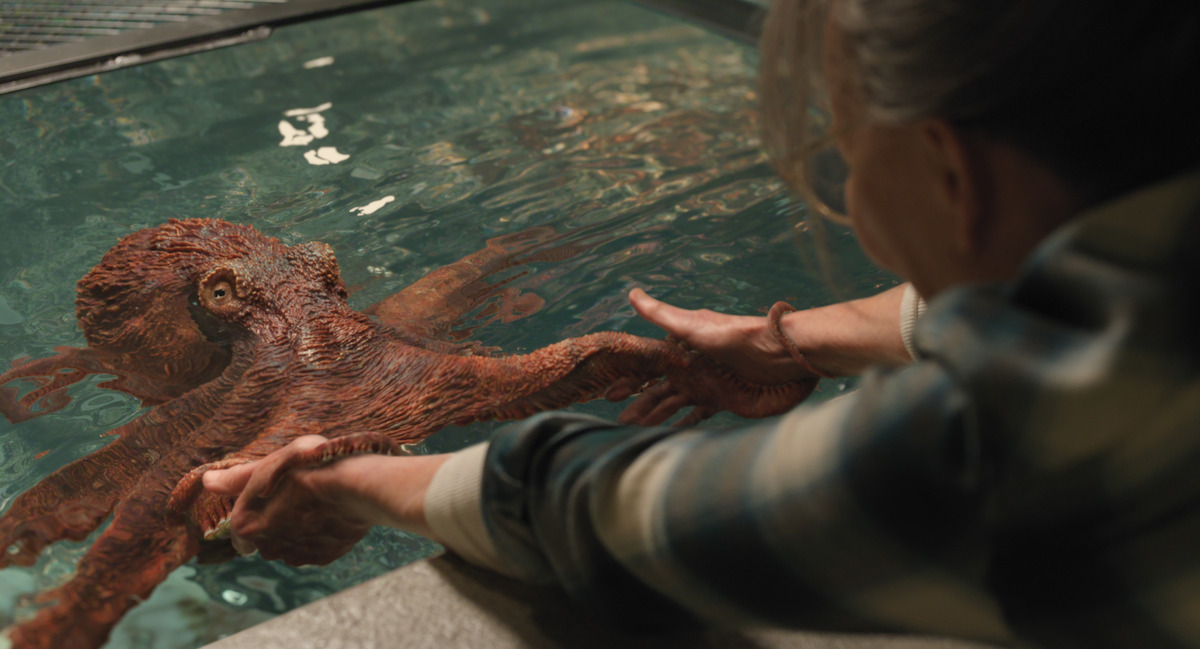
In some scenes, Field had to interact more physically with Marcellus, lifting him off the floor when he escapes the tank. This involved her acting with a bespoke puppet the production team had made. “The stuffed animal was pretty light at first. And then I was talking to Sally, and she asked for it to be heavier, so I opened up a seam and stuffed more weight into him — sandbags basically,” he says. The art team also had a silicone model built that they could drop into the tank to light it correctly. But much of the time, Field had no stand-in at all, performing opposite empty space — pouring herself into an invisible scene partner, addressing nothing more than a tank of water and the vivid, imagined presence of her aquatic counterpart. “Actually, I found Marcellus to be the most cooperative actor I’ve ever worked with,” she says. “He was just there, you know?”
How was Marcellus brought to life?
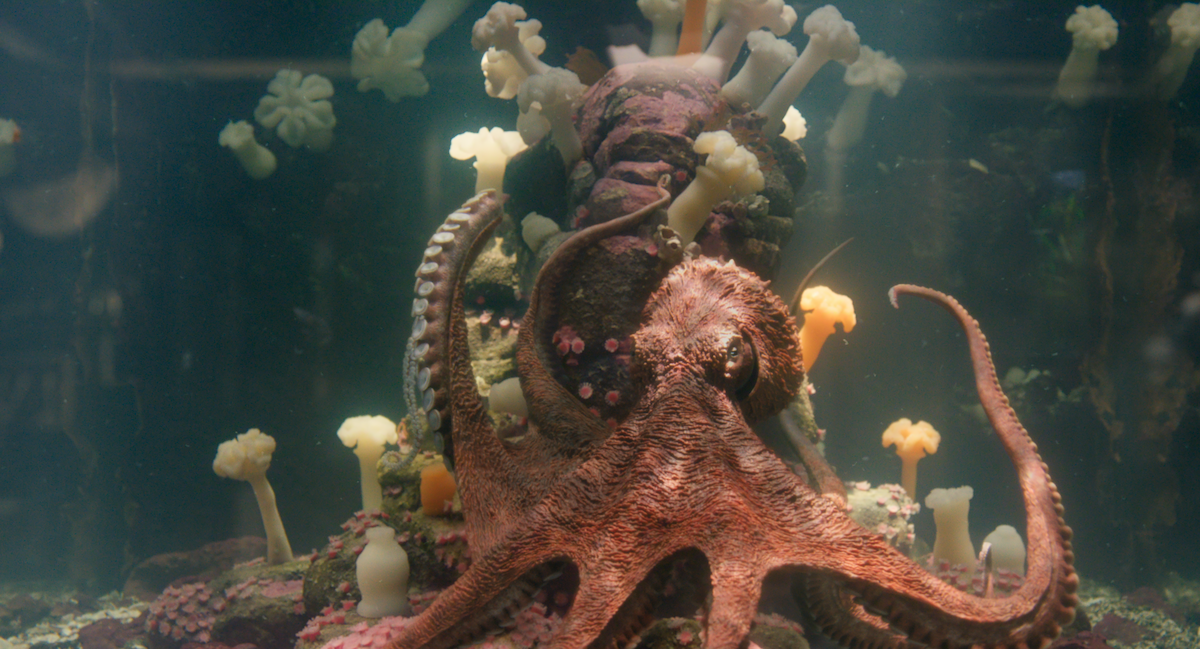
As the VFX team discovered that octopuses are deceptively complex — restless, elastic creatures, forever in motion, slipping and reshaping themselves as they gloop and glop into an endless array of improbable, gelatinous forms. “They’re such bizarre creatures. If you watch one in the wild or in the tank, they don’t look real. They’re so otherworldly. They’re basically aliens. They can change pretty much into any color they want at a whim. Their skin is always moving, floating. All the eight tentacles are going in different directions, doing different things. All the suckers on the tentacles are moving all at once,” Ritvo says. “Marcellus has something like 270 suckers per tentacle. All his little ridges and crevices could grow and shrink. Everything had to be modeled individually, able to move independently and interact with the environment.”
They sculpted Marcellus in a 3D program and, for every scene, he was then hand-animated by the team. Each scene he was in took about 12 weeks of work. And it wasn’t enough just to make Marcellus look real — they wanted to give him a sense of personality and character. “I think you could get bogged down just trying to make him as real-looking as possible. But I don’t think that would’ve worked for Marcellus. He needs to be lovable — you need the audience to attach to him. So we needed to find moments where he could display little bits, a glimmer of the eye or a little bit of a raised eyebrow or something that gave him personality,” Ritvo says. “He doesn’t technically have a face that we’re accustomed to. They say [octopuses] have about the same brain power as a dog, essentially. So I watched my dog, and I’d use those gestures a lot, bring those ideas into the animators.”
Is Marcellus inspired by a real-life octopus?
Before animation even began, Ritvo spent hours and hours with two real-life octopuses — Brando and Agnetha — at an aquarium in Vancouver, where the movie was filmed. “Agnetha was quite shy and hid for most of the visit. She came out right at the end, which was amazing,” he says. “But Brando came out as if he was auditioning for something — in full spectacle, swimming back and forth in this giant tank. And he was huge. He was 12 feet long!”
Ritvo shot reels of reference footage so he could try to have examples of an entire array of underwater movement. Once Agnetha warmed up, Ritvo developed a particularly close kinship with her. “She’s definitely very curious. I think she was attracted to the lens — I don’t know if she could see herself — because I was always holding a camera up with me. She apparently recognized me, because she would come up to the tank when I was filming. She’s pretty tenacious. She’s pretty funny,” he says. “I got to do a feeding with her a couple of times. When she wanted something — when she was grabbing a crab from me — it was a fairly aggressive event, which was fun.”
Who gave voice to Marcellus?
Though Marcellus originates on the page, there’s no prescribed way an octopus is meant to sound — no built-in voice, cadence, or emotional register to fall back on. That absence became an opportunity for Molina, the Tony-winning actor who voices the creature: The character had to be invented from the inside out, ultimately allowing Molina to give Marcellus his own brand of unique sass and sarcasm. “Olivia [Newman] and I got into the studio, and I had no preconceptions about what she wanted. We tried it with an American accent. We tried it with a British accent. Would he have a posh British accent? Or would he be a bit more working class? It was a wonderful, playful day where we were giggling and making each other laugh about it,” he says. “I didn’t turn up with any preconceived ideas of how octopuses sound. If you’re voicing a human, then there are certain criteria you have to fulfill. But an octopus, who knows? There’s a lot of playfulness involved.”
Remarkably Bright Creatures is streaming on Netflix.